How to Say Master's Degree in Spanish | MostUsedWords.com
As of 2026, pursuing higher education across different languages has become increasingly common, making it essential to know how to convey educational achievements like a "master’s degree" in Spanish. The direct translation of this term is maestría, which corresponds to the academic title awarded upon completing a graduate program.

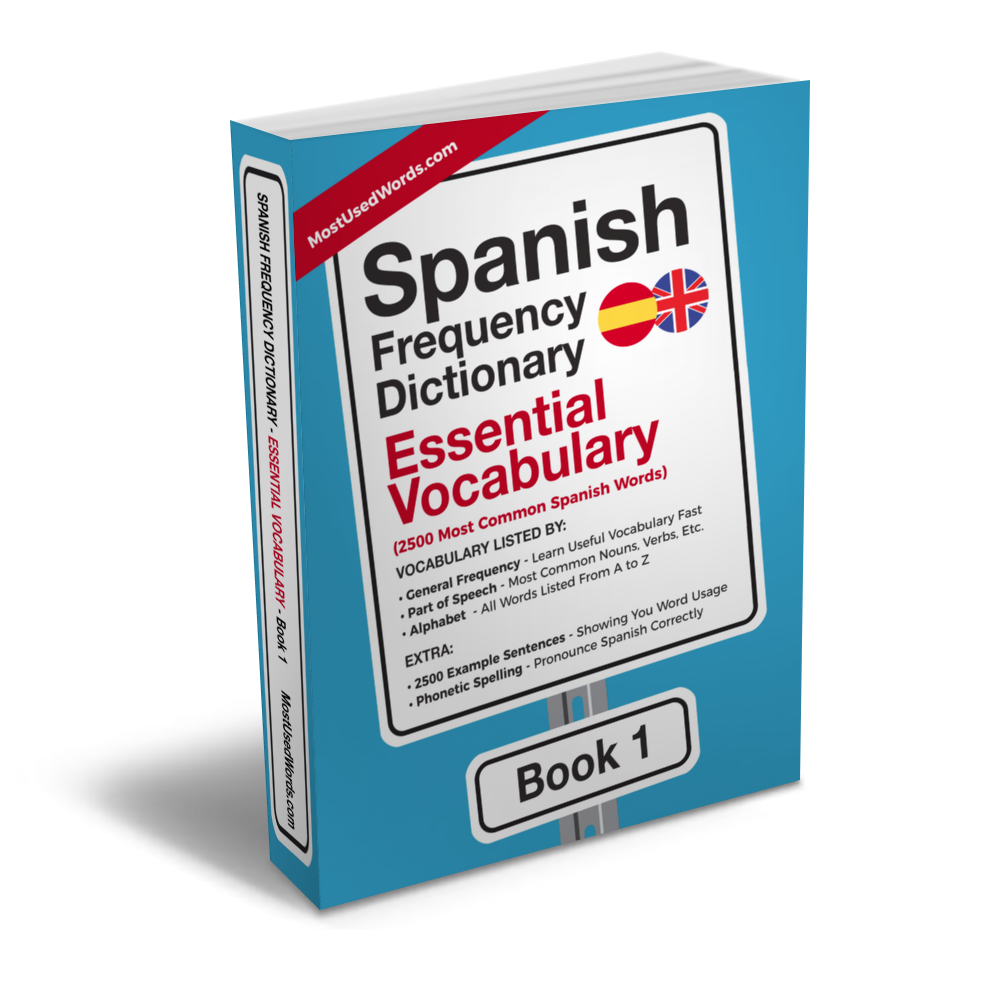
2,500 most common Spanish words with IPA pronunciation & bilingual example sentences
What is "Master's Degree" in Spanish?
The term maestría (IPA: /ma.esˈtɾi.a/) is the most common translation of a master’s degree in Spanish. It signifies an advanced academic qualification obtained after completing graduate-level studies and is widely recognized across Spanish-speaking countries.
Meaning of "Master's Degree" in Spanish
Want to improve your Spanish?
The Spanish Frequency Dictionary series covers the 10,000 most common Spanish words — ranked by how often native speakers actually use them, with IPA pronunciation, English translations, and bilingual example sentences at every level.
Browse all 4 volumes →The term maestría carries the same meaning as its English counterpart, indicating a high level of expertise within a specific field. In some regions, such as Spain and Mexico, you might also encounter the term máster (IPA: /ˈmaistər/), which is gaining popularity due to international influences.
Comparison with Other Academic Degrees
In addition to "master's degree," it’s important to distinguish this from other academic titles. For instance, a bachelor's degree translates to licenciatura or título de licenciado/a, while a doctoral degree is known as doctorado (IPA: /doθɾaˈðo/).
Usage in Formal Documents and Resumes
When writing formal documents such as resumes or academic transcripts, it’s crucial to use the correct terminology. For example, if you are from Spain, you would typically write máster en X, whereas in Latin American countries like Mexico, you might prefer maestría en X.
Regional References and Variations
While "maestría" is the most common term across Spanish-speaking regions, there are regional variations:
- In Mexico and Central America: maestría (IPA: /ma.esˈtɾi.a/)
- In Spain: máster (IPA: /ˈmaistər/)
- In Argentina, Uruguay, and other South American countries: posgrado (IPA: /pozˈɣraðo/), which encompasses postgraduate studies including master's degrees.
- How to Say Great in Spanish | MostUsedWords.com
- How to Say Hang Out in Spanish | MostUsedWords.com
How to Say "Master's Degree" in Spanish: Sample Sentences
Here are five sample sentences you can use:
-
Obtuve mi maestría en Administración de Empresas en una universidad en Madrid.
(I earned my master’s degree in Business Administration at a university in Madrid.)
-
Ella está estudiando un máster en Ingeniería Civil en la Universidad Autónoma de Barcelona.
(She is studying a master's degree in Civil Engineering at the Autonomous University of Barcelona.)
-
Juan decidió realizar un posgrado en Derecho Internacional en la Universidad de Buenos Aires.
(Juan decided to pursue a master’s degree in International Law at the University of Buenos Aires.)
-
Mi hermana está por terminar su maestría en Psicología Clínica en México.
(My sister is about to finish her master's degree in Clinical Psychology in Mexico.)
-
El programa de maestría en Ciencias Ambientales es reconocido a nivel internacional.
(The master’s degree program in Environmental Sciences is internationally recognized.)
Related Articles
Build Your Spanish Vocabulary Systematically
The fastest way to grow your Spanish vocabulary is to start with the words you'll actually encounter every day. The Spanish Frequency Dictionary covers the 2,500 most common Spanish words, each with IPA pronunciation, an English translation, and bilingual example sentences.
Browse the full range of Spanish frequency dictionaries to find the volume that matches your level.