How to Say I'm Tired in Spanish | MostUsedWords.com
As of 2026, the phrase "how to say im tired in spanish" continues to be a common query for language learners. In this article, we will explore how to express fatigue in Spanish, including various regional expressions and sample sentences.
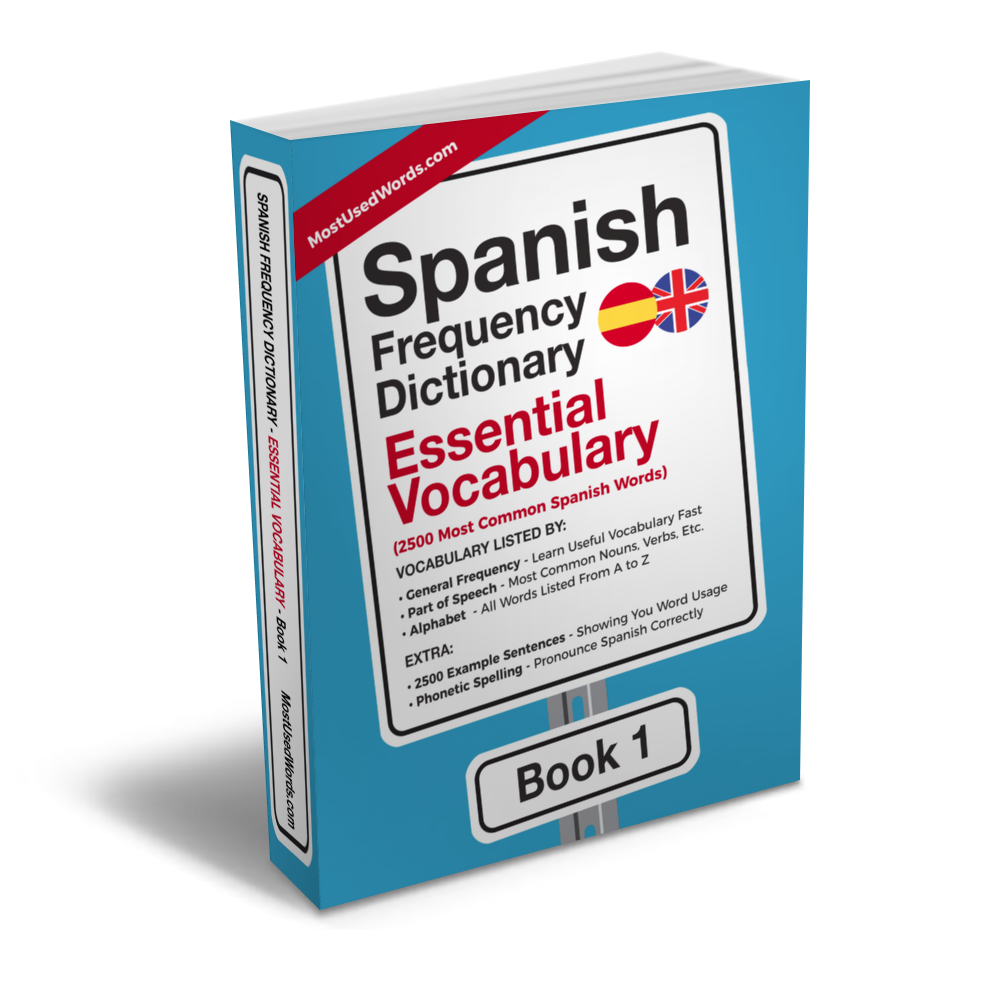
2,500 most common Spanish words with IPA pronunciation & bilingual example sentences
How to Say 'I'm Tired' in Spanish
The phrase "I'm tired" can be translated to Spanish as estoy cansado (IPA: /es.ˈtoy kan.ˈsa.ðo/) for males or estoy cansada (IPA: /es.ˈtoy kan.ˈsa.ða/) for females. This expression is widely used across the Spanish-speaking world to convey physical or mental exhaustion.
Synonyms and Alternative Phrases
Want to improve your Spanish?
The Spanish Frequency Dictionary series covers the 10,000 most common Spanish words — ranked by how often native speakers actually use them, with IPA pronunciation, English translations, and bilingual example sentences at every level.
Browse all 4 volumes →In addition to "cansado/cansada," there are several other phrases you can use depending on your context:
- Estoy agotado/agotada: This phrase conveys a stronger sense of exhaustion, often used after intense physical activity.
- Estoy fatigado/fatigada: Similar to "cansado/cansada," but can imply a more prolonged state of tiredness.
- Estoy hecho/hecha polvo: Used in Argentina, this phrase means you are completely worn out or shattered.
- Estoy reventado/reventada: Common in Spain, it indicates being extremely exhausted or dead tired.
Regional Variations and Pronunciation Guide
The pronunciation of "cansado/cansada" can vary slightly by region. For instance:
- Mexico: /kan.ˈsa.do/ (for males), /kan.ˈsa.da/ (for females)
- Argentina: /es.ˈtoy a.ˈɣo.to/ (for males), /es.ˈtoy a.ˈɣo.ta/ (for females)
- Spain: /es.ˈtoy re.ˈβen.ta.do/ (for males), /es.ˈtoy re.ˈβen.ta.da/ (for females)
How to Say 'I'm Tired' in Spanish: Sample Sentences
To help you understand how these phrases are used, here are some sample sentences:
- Estoy cansado después de trabajar todo el día.
(I'm tired after working all day. )
- Ella está cansada de estudiar para los exámenes.
(She is tired from studying for the exams. )
- Estoy agotada después de correr una maratón.
(I'm exhausted after running a marathon. )
- Mi hermano está fatigado por el calor intenso.
(My brother is fatigued from the intense heat. )
- Estoy hecho polvo después de la fiesta anoche.
(I'm worn out after last night's party. )
Build Your Spanish Vocabulary Systematically
The fastest way to grow your Spanish vocabulary is to start with the words you'll actually encounter every day. The Spanish Frequency Dictionary covers the 2,500 most common Spanish words, each with IPA pronunciation, an English translation, and bilingual example sentences.
Browse the full range of Spanish frequency dictionaries to find the volume that matches your level.