How to Say 46 in Spanish - Cardinal and Ordinal Numbers Guid
Updated for 2026, learning how to say numbers in a new language is an essential step for effective communication. In Spanish, the cardinal form of forty-six is "cuarenta y seis" (IPA: /kwaˌɾenta i ˈseis/).
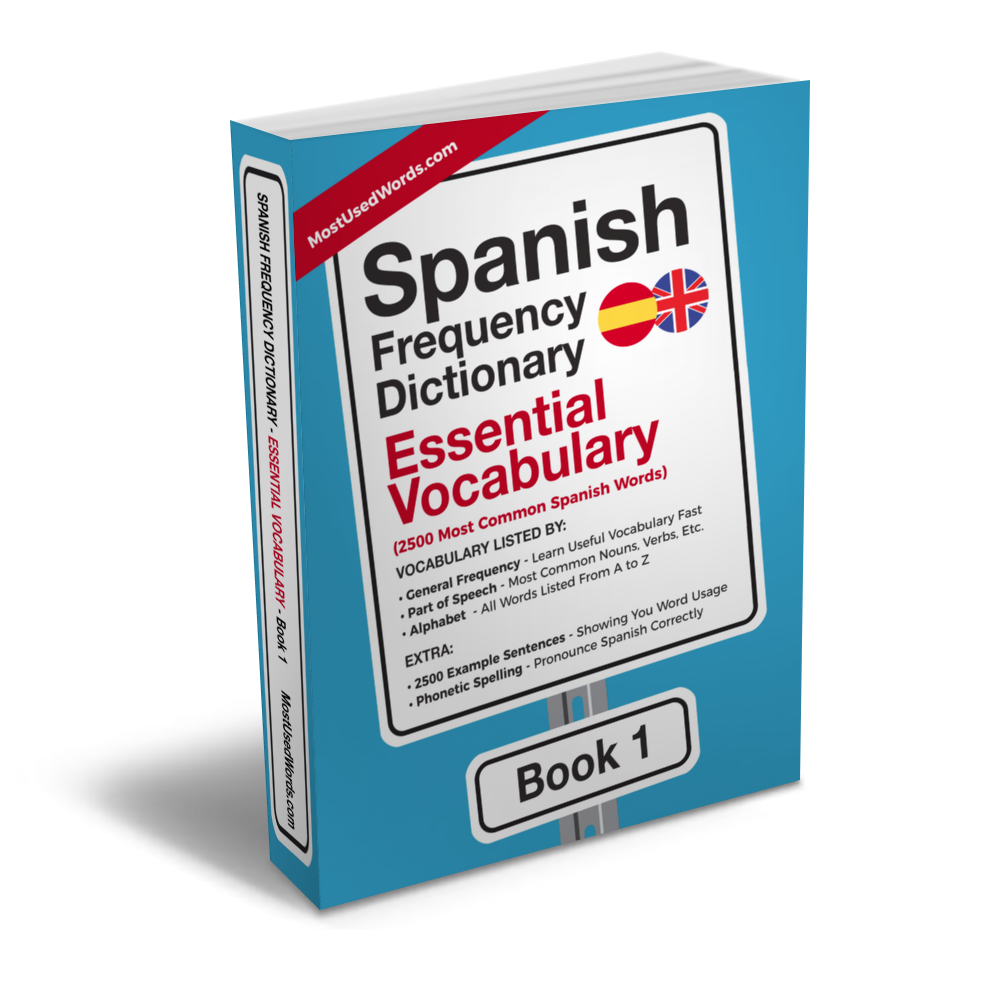
2,500 most common Spanish words with IPA pronunciation & bilingual example sentences
How to Say Forty-Six in Spanish
In Spanish, understanding both cardinal and ordinal numbers like “cuarenta y seis” can greatly enhance your communication skills. Cardinal numbers are used for counting items or expressing quantities, while ordinal numbers indicate position within a sequence.
Pronunciation Guide: How to Say "Cuarenta Y Seis"
Want to improve your Spanish?
The Spanish Frequency Dictionary series covers the 10,000 most common Spanish words — ranked by how often native speakers actually use them, with IPA pronunciation, English translations, and bilingual example sentences at every level.
Browse all 4 volumes →Here’s how you break down “cuarenta y seis”:
- "Cuarenta": This means "forty" and is pronounced as /kwa.ɾen.ta/.
- "Y": This means "and" and is pronounced as /i/.
- "Seis": This means "six" and is pronounced as /ˈseis/.
The ordinal form of forty-six in Spanish is “cuadragésimo sexto” (IPA: /kwadɾaˌxesimo ˈseɡsto/).
Ordinal Number Breakdown: "Cuadragésimo Sexto"
- "Cuadragésimo": This means "fortieth" and is pronounced as /kwadɾaˌxesimo/.
- "Sexto": This means "sixth" and is pronounced as /ˈseɡsto/.
As you can see, Spanish cardinal numbers are relatively straightforward. However, ordinal numbers require more complex vocabulary. To form ordinal numbers in Spanish, use the suffix "-avo" or "-ésimo," depending on the gender and number of the noun. In this case, "cuarenta y seis" becomes “cuadragésimo sexto” by adding "-dragésimo" to the first syllable of “cuarenta” (“cua”) and using the cardinal form of “seis”: "sexto."
Cultural Context: Using Forty-Six in Spanish
Numbers play a significant role in Spanish culture, often used in dates, addresses, and everyday conversations. For instance, forty-six is commonly mentioned in age milestones, sports scores, and historical events.
Common Mistakes When Pronouncing "Cuarenta Y Seis"
- Mistake: Mispronunciation of “y” as /e/ instead of /i/.
- Mistake: Forgetting to add the space between “cuarenta” and “y.”
- Correction: Remember that "y" is a separate word, not part of either number.
Interactive Learning: Numbers from 40-50 in Spanish
To enhance your learning experience, try interactive quizzes or games focused on numbers from forty to fifty. This will help you memorize and practice the pronunciation of these numbers effectively.
Tips for Counting in Spanish
Mastering numbers is crucial for everyday communication in Spanish. Here are some tips:
- Practice regularly with flashcards or apps that focus on number sequences.
- Listen to native speakers and pay attention to how they use numbers in context.
How-to-Count-in-Spanish Guide
This guide covers the basics of counting from one to a hundred, including cardinal and ordinal forms. It’s an essential resource for anyone learning Spanish.
Spanish Number Pronunciation Guide
A comprehensive pronunciation guide that includes all numbers up to 100 with their corresponding IPA symbols will help you sound more natural when speaking Spanish.
Cultural Examples of "Cuarenta Y Seis"
- "La respuesta a la pregunta número cuarenta y seis es correcta."
- "¿Cuántas páginas tiene el capítulo cuarenta y seis?"
- "En el calendario, hoy es el cuadragésimo sexto día del año."
- "Mi abuela cumplirá cuarenta y seis años en noviembre."
(The answer to question number forty-six is correct.)
(How many pages does chapter forty-six have?)
(On the calendar, today is the forty-sixth day of the year.)
(My grandmother will turn forty-six in November.)
Build Your Spanish Vocabulary Systematically
The fastest way to grow your Spanish vocabulary is to start with the words you'll actually encounter every day. The Spanish Frequency Dictionary covers the 2,500 most common Spanish words, each with IPA pronunciation, an English translation, and bilingual example sentences.
Browse the full range of Spanish frequency dictionaries to find the volume that matches your level.
Improve Your Spanish with a Frequency Dictionary (Updated 2026)
Research consistently shows that mastering the top 1,000–3,000 most common words unlocks comprehension of 80–95% of everyday text and conversation. Our Spanish Frequency Dictionary series is built around this principle: curated frequency-ranked word lists, bilingual example sentences in context, phonetic pronunciation, and part-of-speech data — covering A1 through C2 levels.