

Learn How to Say Mom in German - Mama and More
Updated for 2026, the word "mom" in German is often expressed as Mama, which resonates deeply within the culture. In Germany, this term conveys unconditional love and care, much like it does in many other cultures around the world.
In different regions of Germany, the way people refer to their mothers can vary slightly. For instance, while Mama is widely used across the country, some areas might prefer terms like Mutti, which carries a nostalgic and affectionate tone.
To understand the term better, it's helpful to compare how other European languages express similar sentiments. In French, for example, "mom" is often referred to as ma mère or the more affectionate Maman. This comparison highlights the unique cultural nuances of each language.
The term Mama in German is pronounced [ˈmɑmaː] in IPA transcription. Here are a few examples to help you practice:
- Mama, ich habe Hunger! – Mom, I'm hungry!
- Kannst du mich zu Mama bringen? – Can you take me to mom?
In addition to Mama, there are other terms used in German that express endearment towards mothers. For instance, the diminutive forms (das) Mütterchen and (das) Mütterlein, while somewhat outdated, still hold a special place in literature and media.
- Mutter, ich liebe dich! – Mom, I love you!
- Du erinnerst mich an meine Mutti. – You remind me of my mom.
The term (die) Mutter, which is the formal way to say "mother," can also be used in more formal or distant contexts. However, it's less common in everyday conversation compared to Mama.
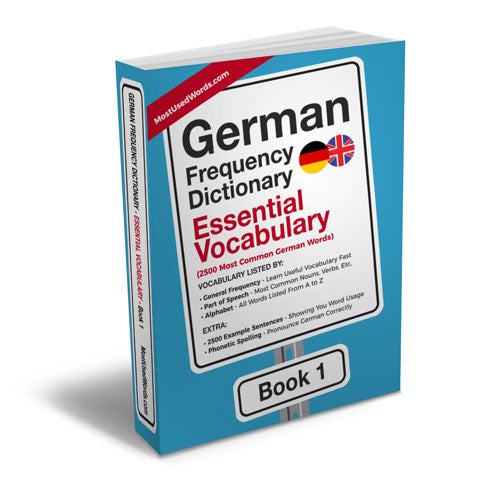
2,500 most common German words with IPA pronunciation & bilingual example sentences
Build Your German Vocabulary Systematically
Want to improve your German?
The German Frequency Dictionary series covers the 10,000 most common German words — ranked by how often native speakers actually use them, with IPA pronunciation, English translations, and bilingual example sentences at every level.
Browse all 4 volumes →The fastest way to grow your German vocabulary is to start with the words you'll actually encounter every day. The German Frequency Dictionary covers the 2,500 most common German words, each with IPA pronunciation, an English translation, and bilingual example sentences.
Browse the full range of German frequency dictionaries to find the volume that matches your level.