How to Say Will in Spanish | Future Tense and Volition Expla
Updated for 2026, understanding how to say "will" in Spanish is crucial for expressing future intentions or desires accurately.
The English word "will" can be translated into Spanish using several forms depending on the context. When referring to future actions, the most common translation involves the use of auxiliary verbs like "voy a," "tengo la intención de," and "pienso." For expressions of volition or desire, you might use words such as "voluntad" or "querer."
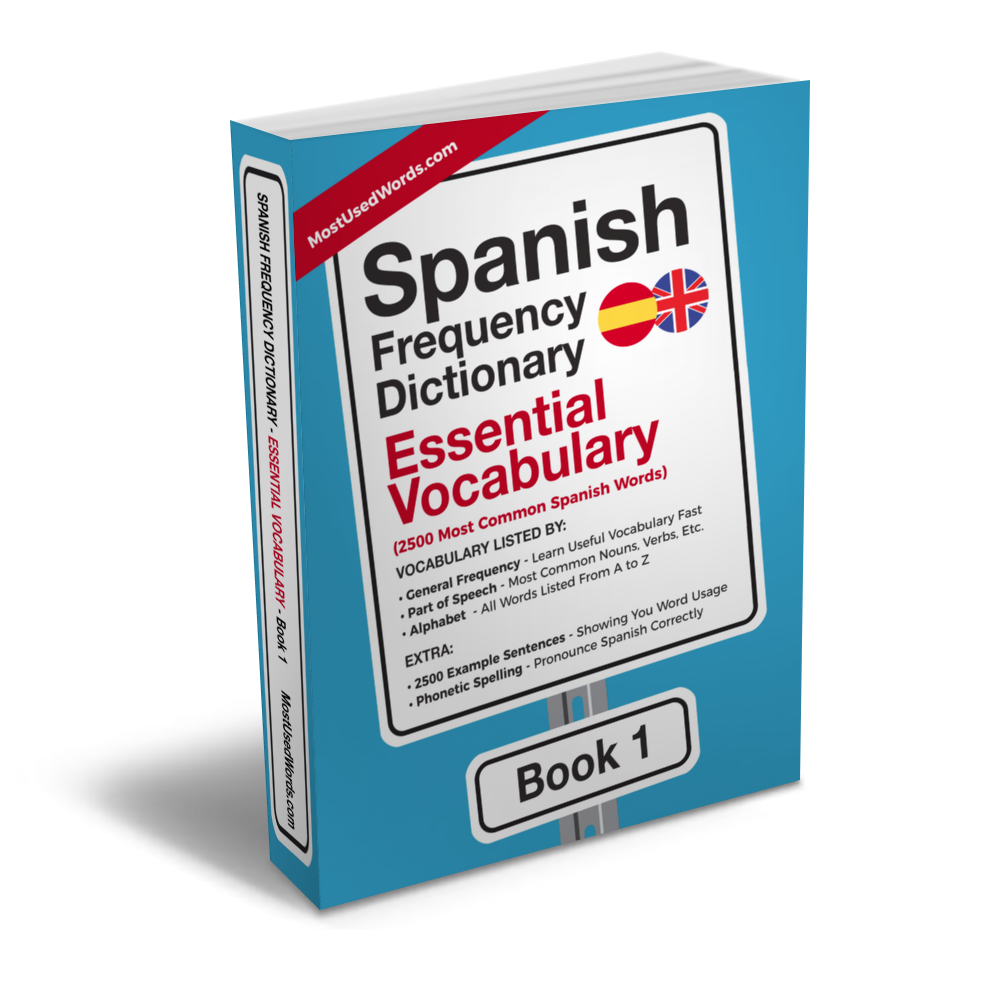
2,500 most common Spanish words with IPA pronunciation & bilingual example sentences
Expressions of Will in Spanish
The word "will" can be used to express future intentions, desires, or legal documents. In Spanish, these different meanings are conveyed through various phrases and verbs:
Future Tense Auxiliary Verb Usage
Want to improve your Spanish?
The Spanish Frequency Dictionary series covers the 10,000 most common Spanish words — ranked by how often native speakers actually use them, with IPA pronunciation, English translations, and bilingual example sentences at every level.
Browse all 4 volumes →- Voy a + infinitive: This is the most common way to express immediate future actions in Latin America.
- Tengo la intención de + infinitive: Used for expressing plans or intentions, often in more formal settings.
- Pienso + infinitive: Similar to "tengo la intención," but slightly less formal and used widely across Spanish-speaking countries.
Volition and Desire Usage
- Voluntad (IPA: /bo.lũn̪ˈt̪að/): Refers to the power of making decisions or expressing one's wishes. For example, "Ella tiene voluntad propia" means "She has her own will."
- Deseo: Used when referring to a strong desire for something.
- Querer: Expresses wanting or desiring something.
Legal Document Usage
- Testamento (IPA: /te.stam.ˈto/): Used in legal documents to refer to a will or testament.
Usage in Conditional Sentences
In conditional sentences, "will" can be translated using the future tense of verbs. For example:
- If I win the lottery, I will buy a house.
- Si gano la lotería, compraré una casa.
Regional Variations in Spanish Usage
The way "will" is expressed can vary significantly across different regions of the Spanish-speaking world. For instance:
- In Spain: Voy a + infinitive and Tengo la intención de + infinitive are commonly used.
- In Latin America: Voy a + infinitive is more prevalent, especially in informal settings.
Formal vs Informal Usage of Will in Spanish
The choice between formal and informal expressions depends on the context. For instance:
- Informal: Voy a estudiar mañana.
- Formal: Tengo la intención de asistir al evento.
Build Your Spanish Vocabulary Systematically
The fastest way to grow your Spanish vocabulary is to start with the words you'll actually encounter every day. The Spanish Frequency Dictionary covers the 2,500 most common Spanish words, each with IPA pronunciation, an English translation, and bilingual example sentences.
Browse the full range of Spanish frequency dictionaries to find the volume that matches your level.