How to Say We in Spanish - Nosotros/Nosotras Pronouns Guide
Updated for 2026, if you are looking to learn Spanish, one of the first things you need is how to say "we" in Spanish. The pronoun "nosotros" (IPA: /noˈsotɾos/) or "nosotras" (/noˈsotɾas/) refers to a group including yourself and can be used interchangeably across most Spanish-speaking countries, depending on gender.
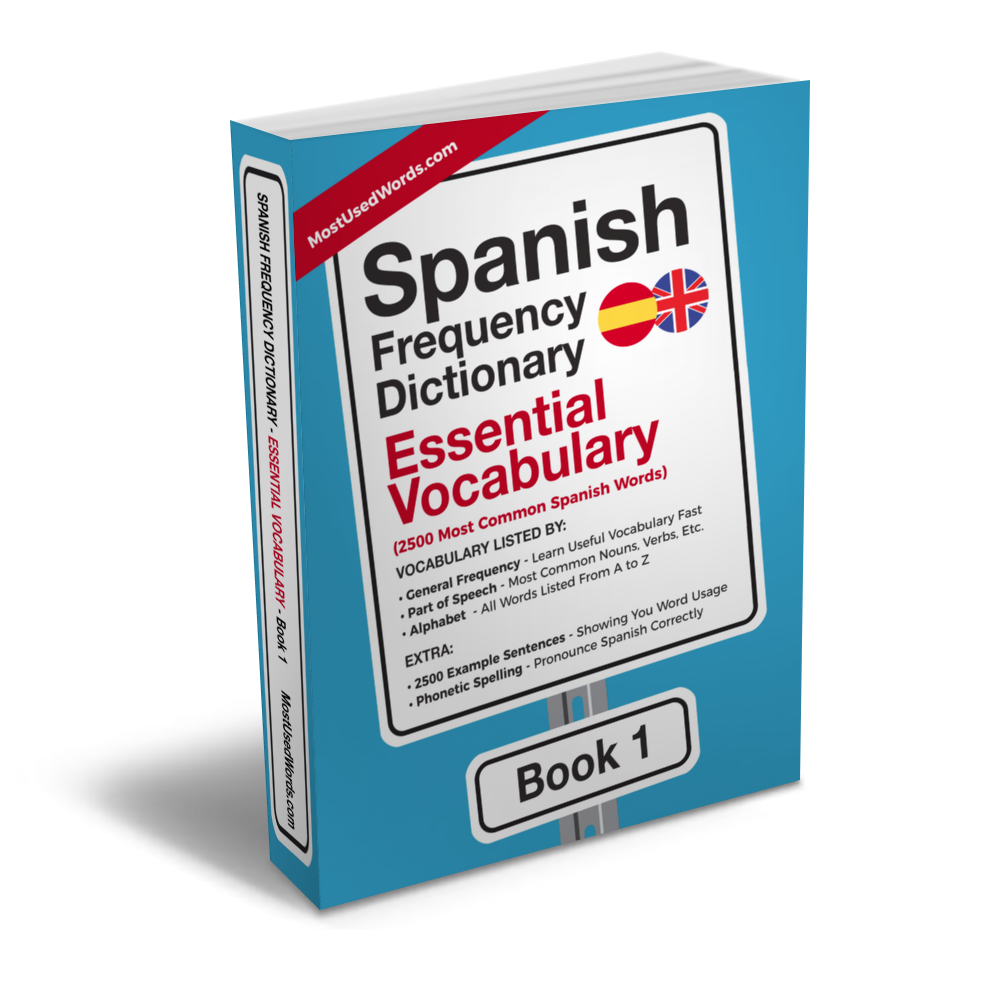
2,500 most common Spanish words with IPA pronunciation & bilingual example sentences
What is "We" in Spanish?
The pronoun for "we" in Spanish is "nosotros" or "nosotras." These forms are used to refer to a group of two or more people and vary based on gender. For example, when talking about a mixed-gender group, you would use "nosotros," while for an all-female group, you'd use "nosotras." Here are some examples:
- Nosotros vamos a la playa mañana. (We're going to the beach tomorrow.)
- Nosotras creemos que es importante cuidar el medio ambiente. (We believe it's important to take care of the environment.)
- Nosotros también queremos ayudar. (We also want to help.)
Usage of "Nosotros/Nosotras" in Different Tenses
Want to improve your Spanish?
The Spanish Frequency Dictionary series covers the 10,000 most common Spanish words — ranked by how often native speakers actually use them, with IPA pronunciation, English translations, and bilingual example sentences at every level.
Browse all 4 volumes →The pronoun "nosotros/nosotras" is used across various tenses and moods. Here are some examples:
- Nosotros estudiaremos para el examen de español. (We will study for the Spanish exam.)
- Nosotras habríamos ido al cine si no hubiera llovido. (We would have gone to the cinema if it hadn't rained.)
- Nosotros nos sentimos felices de estar aquí. (We feel happy to be here.)
Comparison with Other Languages
In English, the pronoun "we" is used universally without gender distinction. However, in Spanish, you must use "nosotros/nosotras," depending on the group's composition. This contrasts with languages like French or German, which also have gendered forms for first-person plural.
Regional Differences and Usage of "Vosotros/Ustedes"
In addition to "nosotros/nosotras," Spanish speakers use "vosotros" (IPA: /boˈsoɾos/) or "ustedes" (/usˈteðes/). Here are some examples:
- Vosotros vais a la playa mañana. (You guys are going to the beach tomorrow. This is common in Spain, especially Madrid and other northern regions.)
- Ustedes van a la playa mañana. (You all are going to the beach tomorrow. Common in Latin America for both formal and informal situations.)
Formal vs. Informal Usage of "We"
The choice between "nosotros/nosotras," "vosotros," and "ustedes" depends on the formality level:
- Informal settings: Use "nosotros/nosotras" or "vosotros."
- Formal settings: Use "ustedes."
Common Phrases Using "Nosotros/Nosotras"
Here are some common phrases using "nosotros/nosotras":
- Nosotros estamos estudiando para el examen de español.
- Nosotras somos amigas desde la infancia.
- Nosotros queremos ir al cine esta noche.
(We're studying for the Spanish exam.)
(We're friends since childhood.)
(We want to go to the cinema tonight.)
Build Your Spanish Vocabulary Systematically
The fastest way to grow your Spanish vocabulary is to start with the words you'll actually encounter every day. The Spanish Frequency Dictionary covers the 2,500 most common Spanish words, each with IPA pronunciation, an English translation, and bilingual example sentences.
Browse the full range of Spanish frequency dictionaries to find the volume that matches your level.