How to Say Vowel in Spanish | MostUsedWords.com
As of 2026, understanding how certain linguistic terms translate from English to Spanish is crucial for language learners. The term "vowel" translates to vocal (IPA: /boˈkal/) in Spanish, a fundamental concept in phonetics and linguistics.

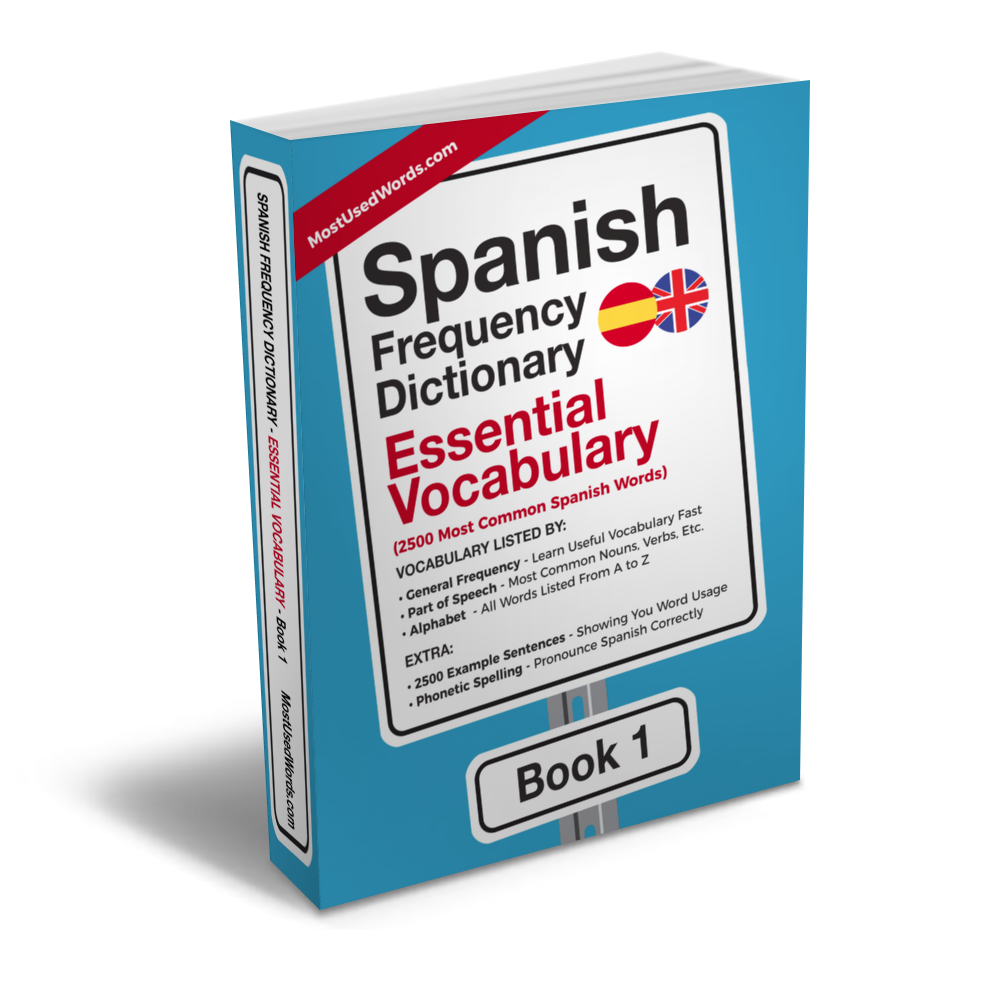
2,500 most common Spanish words with IPA pronunciation & bilingual example sentences
How to Pronounce Vowels in Spanish
The English term "vowel" translates to vocal (IPA: /boˈkal/) in Spanish. This word is pronounced with the 'v' sound transitioning smoothly into a 'b' sound, adhering to Spanish phonetic rules. In Latin American Spanish, this pronunciation remains consistent, whereas in Peninsular Spanish, the 'c' can be pronounced with a "th" sound.
Meaning of Vowel in Spanish
Want to improve your Spanish?
The Spanish Frequency Dictionary series covers the 10,000 most common Spanish words — ranked by how often native speakers actually use them, with IPA pronunciation, English translations, and bilingual example sentences at every level.
Browse all 4 volumes →In Spanish linguistics, a vocal (IPA: /boˈkal/) is defined as a speech sound produced without significant constriction or closure in the vocal tract. Vowels are crucial for forming syllables and providing auditory structure to words.
Spanish Language Vowels
The Spanish language has five vowels: a, e, i, o, and u. Each vowel can have different sounds depending on its position in a word or the surrounding consonants. For instance, the 'u' in "buena" is pronounced differently from the 'u' in "bueno."
Common Mistakes When Pronouncing Vowels in Spanish
A common mistake for non-native speakers is pronouncing the 'c' in "vocal" as an 's.' In some Latin American countries, this pronunciation might be acceptable, but it's important to understand that the standard pronunciation remains /boˈkal/.
Sample Sentences Using Vowel
Here are five sample sentences using the word "vocal":
- La palabra "manzana" contiene tres vocales.
(The word "apple" contains three vowels.)
- El idioma español tiene cinco vocales.
(The Spanish language has five vowels.)
- ¿Puedes identificar la vocal en el medio de la palabra "elefante"?
(Can you identify the vowel in the middle of the word "elephant"?)
- Repite después de mí: A, E, I, O, U son vocales.
(Repeat after me: A, E, I, O, U are vowels.)
- La vocal "U" puede tener diferentes sonidos en palabras en español.
(The vowel "U" can make different sounds in Spanish words.)
Build Your Spanish Vocabulary Systematically
The fastest way to grow your Spanish vocabulary is to start with the words you'll actually encounter every day. The Spanish Frequency Dictionary covers the 2,500 most common Spanish words, each with IPA pronunciation, an English translation, and bilingual example sentences.
Browse the full range of Spanish frequency dictionaries to find the volume that matches your level.