How to Say To Watch in Spanish - Ver vs Mirar Differences
Updated for 2026, the word "to watch" in Spanish can be translated as "ver" or "mirar." Both verbs are essential when learning how to say "watch" in Spanish. This article will delve into their meanings, differences, and provide sample sentences to help you master these verbs.
The word “to watch” can be translated as “ver” (IPA: /ˈber/) or “mirar” (IPA: /miˈɾar/). Although both verbs are often used interchangeably, they have distinct nuances that make them suitable for different contexts.
Differences Between Ver and Mirar
Ver: Use this verb when you want to express the act of seeing or observing something. For example: Veo una película. (I am watching a movie.).
Mirar: This verb is typically used for looking at specific objects or people and can imply a sense of focus or concentration. For instance, you would say Miro la pintura en el museo. (I am looking at the painting in the museum.).
Cultural Contexts Where Ver and Mirar Are Used
Want to improve your Spanish?
The Spanish Frequency Dictionary series covers the 10,000 most common Spanish words — ranked by how often native speakers actually use them, with IPA pronunciation, English translations, and bilingual example sentences at every level.
Browse all 4 volumes →In Spanish-speaking cultures, “ver” is often used for watching media or performances, while “mirar” can be preferred when talking about looking at objects or people. For example, you might hear someone say “Veo la televisión” to mean they are watching TV, but use “Miro el retrato de mi abuela” to express that they are looking at a portrait of their grandmother.
Comparison with Other Languages: Ver vs Mirar in French and Italian
In other languages like French or Italian, the distinction between “ver” (voir) and “mirar” (guardare) is similar. For instance, in French, “Je regarde la télévision” uses a verb that emphasizes looking at something specifically, while “J’observe le film” might use a more general term for seeing.
Sample Sentences Using Ver and Mirar
To further illustrate the differences:
- Veo una película. (I am watching a movie.).
- Miro la televisión. (I am watching TV.).
- Miro la pintura en el museo. (I am looking at the painting in the museum.).
- Veo un partido de fútbol. (I am watching a football match.).
Common Mistakes When Using Ver and Mirar
A common mistake is to use “ver” when you should be using “mirar,” or vice versa. Remember, “ver” emphasizes the act of seeing something in general, while “mirar” focuses on looking at specific objects or people.
Regional Differences in Usage
The verbs “ver” and “mirar” are used differently across Spanish-speaking regions. In some areas, such as Spain, “ver” might be more common for watching media or performances, while in Latin America, “mirar” could be preferred when talking about looking at objects or people.
Common Phrases Related to Watching Media
Here are some common phrases related to watching media:
- To watch a movie: Ver una película
- To watch a TV show: Ver una serie
- To watch a game or match: Ver un partido
- To watch a performance: Ver un espectáculo
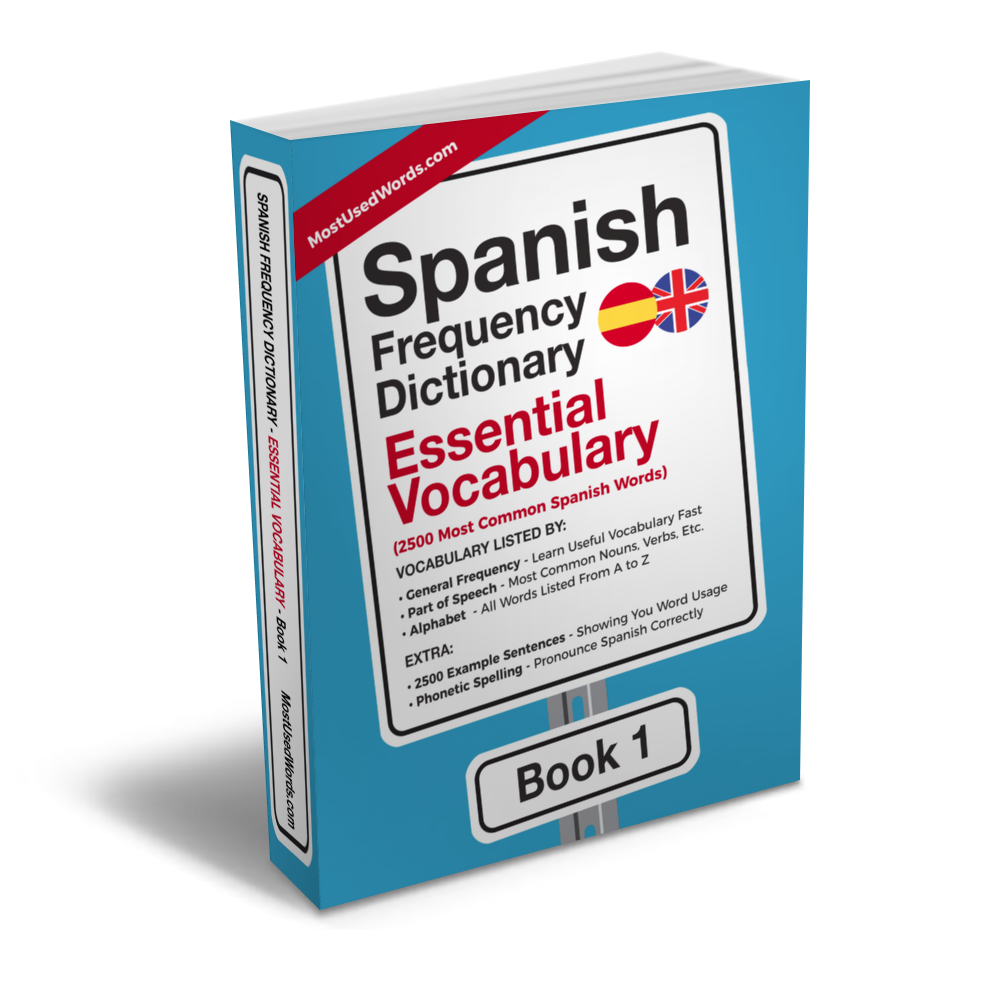
2,500 most common Spanish words with IPA pronunciation & bilingual example sentences
Build Your Spanish Vocabulary Systematically
The fastest way to grow your Spanish vocabulary is to start with the words you'll actually encounter every day. The Spanish Frequency Dictionary covers the 2,500 most common Spanish words, each with IPA pronunciation, an English translation, and bilingual example sentences.
Browse the full range of Spanish frequency dictionaries to find the volume that matches your level.