How to Say To Tell in Spanish | MostUsedWords.com
As of 2026, the English verb "to tell" translates to decir (IPA: /deˈθir/) in Spanish. This versatile verb is crucial for conveying information, narrating stories, and expressing thoughts or ideas across various contexts.
In Spanish, just as in English, the verb form changes when addressing multiple individuals. When saying "to tell" to a group, remember to use the appropriate plural form of "decir," which is dicen (IPA: /diˈθen/). Understanding these nuances helps you communicate effectively with Spanish speakers from different regions.
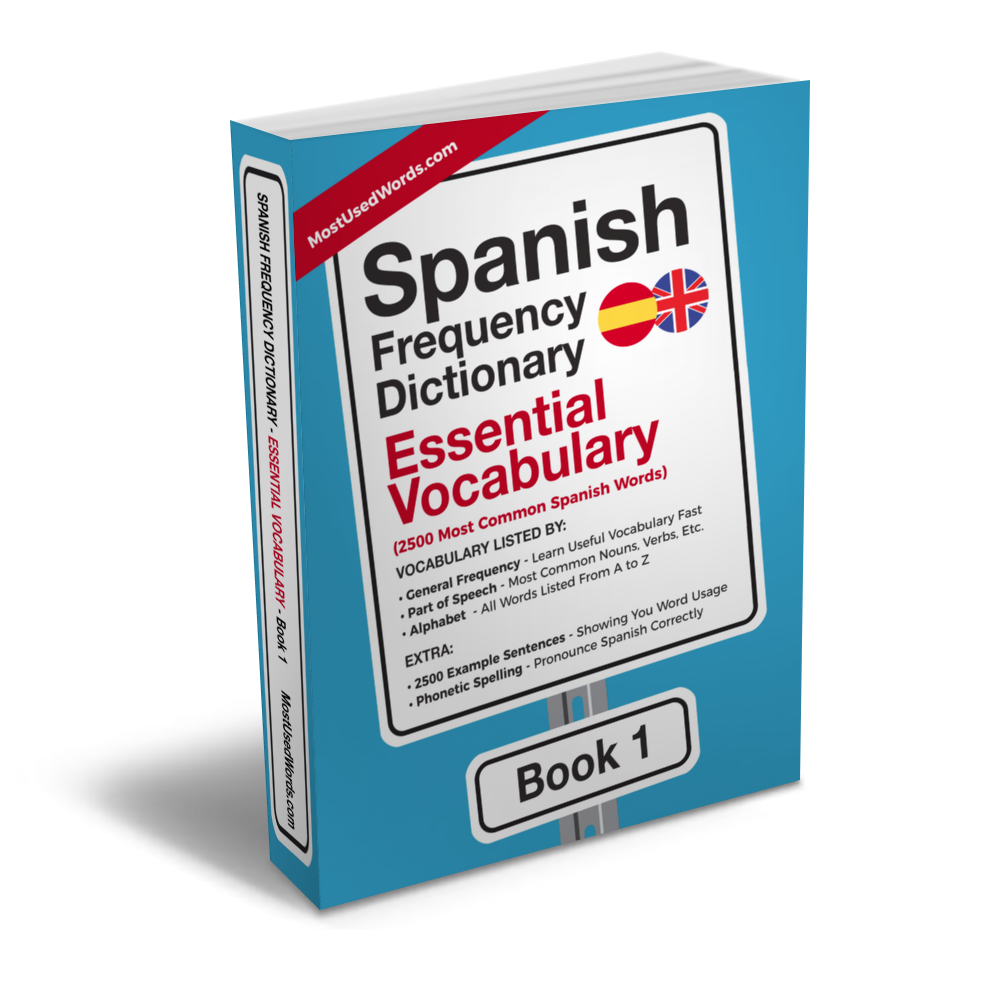
2,500 most common Spanish words with IPA pronunciation & bilingual example sentences
Regional Dialects and Variations of 'To Tell'
Spanish has rich regional dialects, each with its own unique way of expressing "to tell." For instance, in some Latin American countries, you might hear dijiste instead of the standard dijiste (decir + tú). It's important to be aware of these variations when communicating.
Usage in Formal vs Informal Settings
Want to improve your Spanish?
The Spanish Frequency Dictionary series covers the 10,000 most common Spanish words — ranked by how often native speakers actually use them, with IPA pronunciation, English translations, and bilingual example sentences at every level.
Browse all 4 volumes →The verb "decir" can be used formally or informally depending on the context. In formal settings, such as business meetings or academic presentations, you might use dice (él/ella). For informal conversations with friends or family, te digo is more appropriate.
Examples of How to Use 'Decir'
Here are some practical examples that illustrate the usage of "decir" in different contexts:
- Sharing Information: Use "decir" to communicate facts, opinions, or instructions.
- Narrating Stories: Employ "decir" to tell stories, anecdotes, or personal experiences.
- Quoting Speech: When quoting someone's words, "decir" is the go-to verb.
- Expressing Thoughts: Use "decir" to convey thoughts, feelings, or intentions.
Ella me dijo la dirección del restaurante. (She told me the restaurant's address.)
Él contó una historia fascinante sobre sus viajes. (He told a fascinating story about his voyages.)
Ella le dijo: "Estaré allí para las 5 de la tarde". (She told him, "I'll be there by 5 PM.")
Nos dijeron que estaban emocionados por el próximo evento. (They told us that they were excited about the upcoming event.)
Common Phrases Using 'Decir'
Here are some common phrases where "decir" is used:
- No sé qué decir. (I don't know what to say.)
- Dime la verdad. (Tell me the truth.)
- Eso no se puede decir. (You can't say that.)
- No puedo decir nada más. (I can't say anything else.)
Synonyms of 'To Tell' in Spanish
Here are some synonyms of "decir" in Spanish along with their meanings:
- Manifestar (IPA: /manifesˈtar/): To make something known or evident through words or actions.
- Expresar (IPA: /ekspreˈsar/): To communicate thoughts, feelings, or ideas through words, gestures, or other means.
- Comunicar (IPA: /komuniˈkar/): To share information, ideas, or feelings with someone else through various forms of communication.
- Afirmar (IPA: /afiɾˈmar/): To assert or declare something as true or certain.
- Aseverar (IPA: /aseveˈrar/): To state or declare something confidently and with strong belief.
- Mencionar (IPA: /mɛsjonˈaɾ/): To refer to, speak of, or name someone or something briefly in conversation.

Build Your Spanish Vocabulary Systematically
The fastest way to grow your Spanish vocabulary is to start with the words you'll actually encounter every day. The Spanish Frequency Dictionary covers the 2,500 most common Spanish words, each with IPA pronunciation, an English translation, and bilingual example sentences.
Browse the full range of Spanish frequency dictionaries to find the volume that matches your level.