How to Say Shower in Spanish | MostUsedWords.com
As of 2026, if you are looking to learn how to say shower in Spanish, this article provides comprehensive guidance on the term "ducha" along with other regional alternatives used across different Spanish-speaking countries. Knowing how to say "ducha" and related terms can be incredibly useful whether you are traveling or simply expanding your vocabulary.
Fast track your vocabulary with the 10,000 most common Spanish words!
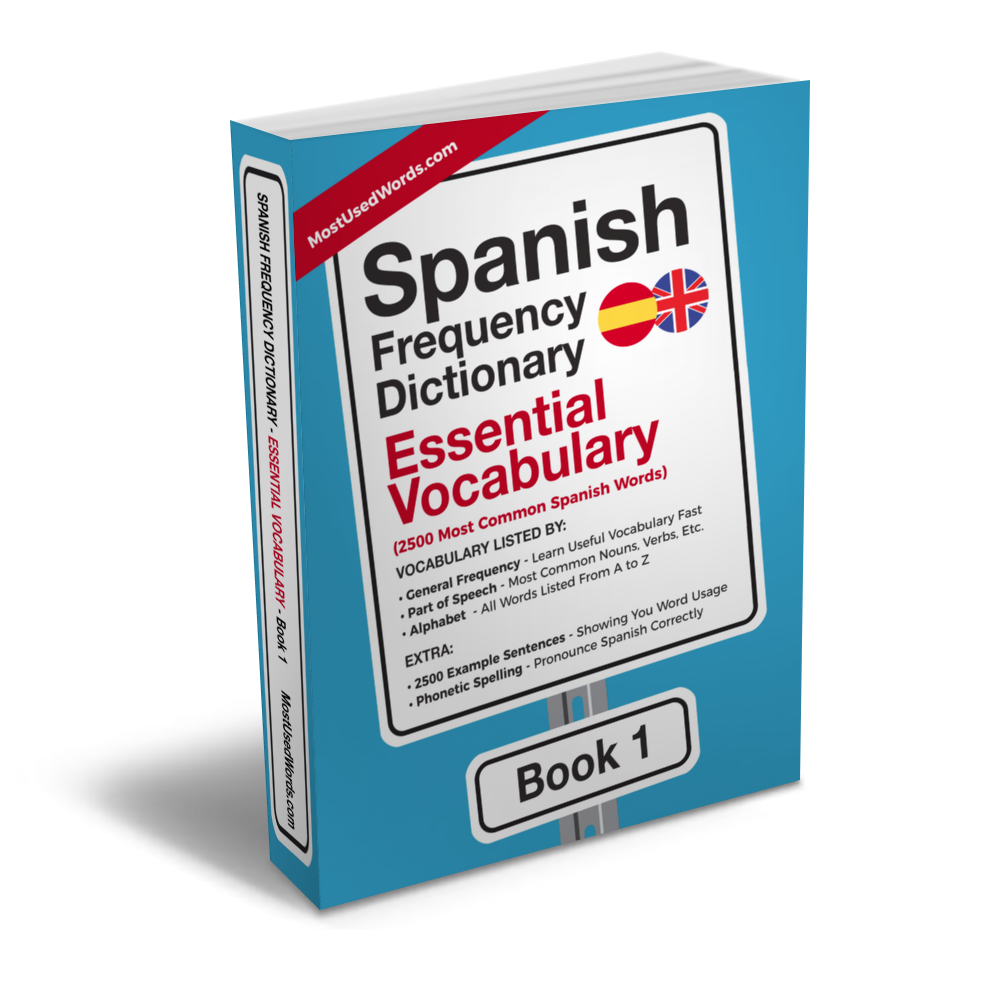
2,500 most common Spanish words with IPA pronunciation & bilingual example sentences
What is "Shower" in Spanish?
The word for "shower" in Spanish is ducha (IPA: /ˈdu.tʃa/). This term is pronounced as "DOO-cha", with the emphasis on the first syllable. It's important to note that there are regional variations for this word, such as "regadera" in some Latin American countries and "ducha eléctrica" in Argentina.
Cultural Context of Showering in Spanish-Speaking Countries
In many Spanish-speaking cultures, showering is a daily ritual that reflects personal hygiene habits. The term "ducha" not only refers to the act of taking a shower but also encompasses the equipment used for it. Understanding these nuances can help you communicate more effectively when traveling or engaging with native speakers.
Meaning of "Shower" in Spanish
Want to improve your Spanish?
The Spanish Frequency Dictionary series covers the 10,000 most common Spanish words — ranked by how often native speakers actually use them, with IPA pronunciation, English translations, and bilingual example sentences at every level.
Browse all 4 volumes →The term ducha not only refers to the showerhead but also encompasses the act of taking a shower. It can be used as both a noun and a verb, for example: "Me voy a duchar" means "I'm going to take a shower". Additionally, regadera (IPA: /re.ɡa.ˈde.ɾa/) is commonly used in Mexico.
Regional Differences and Pronunciation Tips
The word for "shower" can vary depending on the region:
- In Mexico, regadera (IPA: /re.ɡa.ˈde.ɾa/) is often used instead of "ducha". Pronunciation varies slightly with a stress on the second syllable.
- In Argentina, "ducha eléctrica (IPA: /ˈdu.tʃa e.ˈlek.tɾi.ka/)" may be preferred. The term emphasizes an electric shower, which is common in this region due to its climate.
- In Spain, the term ducha (IPA: /ˈdu.tʃa/) is commonly used, but other variations like "ducha de agua caliente" or "ducha de hidromasaje" may be employed to describe different types of showers.
Common Phrases Related to Showering in Spanish
Beyond just the word "shower," here are some common phrases related to bathing and hygiene:
- ¿Dónde está la ducha? (Where is the shower?)
- Necesito tomar una ducha. (I need to take a shower.)
- ¿Puedes arreglar la ducha? (Can you fix the shower?)
- El agua de la ducha está fría. (The water in the shower is cold.)
- Voy a comprar una ducha nueva. (I'm going to buy a new shower.)
- Tengo que cepillarme los dientes después de la ducha. (I have to brush my teeth after the shower.)
- No me gusta bañarme en agua fría. (I don't like taking a cold bath/shower.)
Conclusion
In conclusion, learning how to say "shower in Spanish" can be incredibly useful. While "ducha" is the most common term, regional variations like "regadera" and "ducha eléctrica" are also important to know for effective communication.
Build Your Spanish Vocabulary Systematically
The fastest way to grow your Spanish vocabulary is to start with the words you'll actually encounter every day. The Spanish Frequency Dictionary covers the 2,500 most common Spanish words, each with IPA pronunciation, an English translation, and bilingual example sentences.
Browse the full range of Spanish frequency dictionaries to find the volume that matches your level.