How to Say More in Spanish | Regional Differences Explained
Updated for 2026, understanding how to say "much" or "more" in Spanish is crucial for enhancing your language skills. In this article, we delve into the nuances of expressing quantity and degree in Spanish, covering translations like mucho, bastante, and montón. We also explore regional differences that can affect how these words are used.
The word "much" in English generally conveys the idea of a large quantity or degree. In Spanish, there are multiple translations for this versatile term depending on the context:
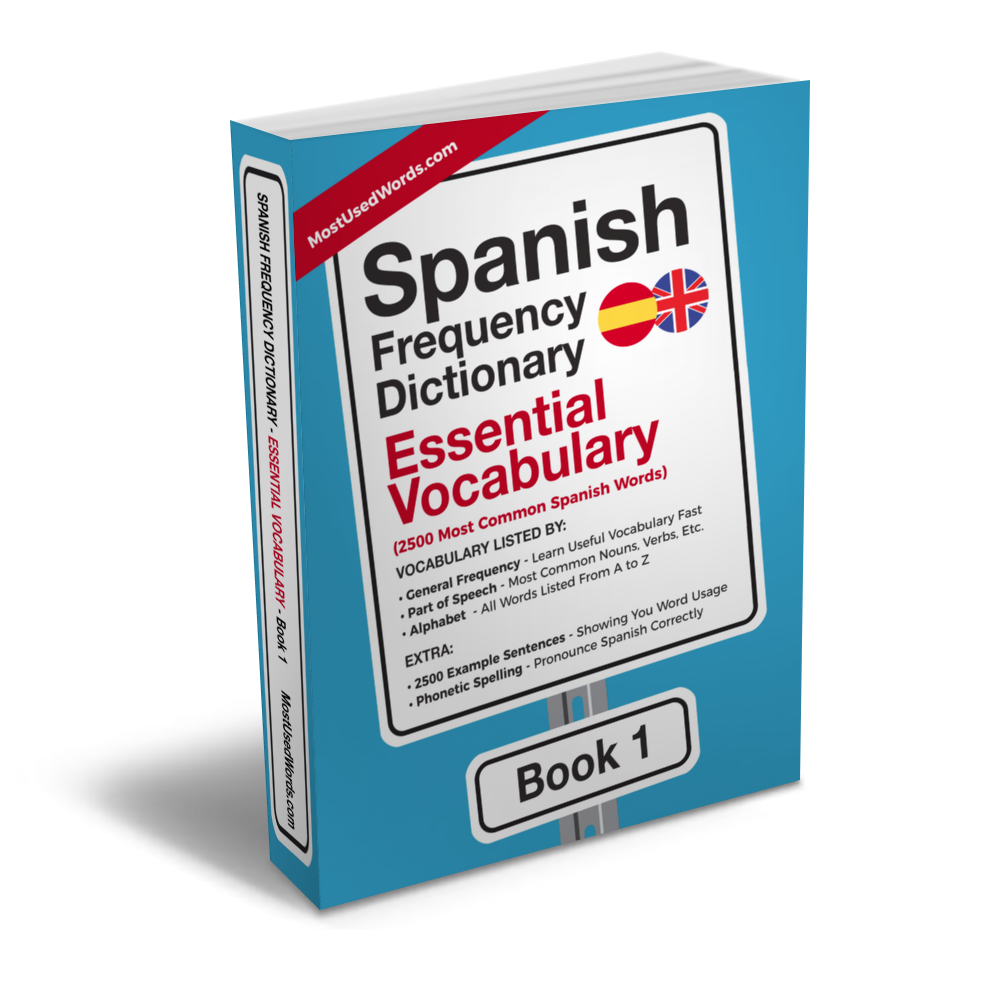
2,500 most common Spanish words with IPA pronunciation & bilingual example sentences
How to Say "Much" in Spanish
- Mucho (IPA: /ˈmu.tʃo/):
- Mucho is the most common translation for "much" in Spanish. It is used to express a large amount or a high degree of something.
- Example: Me gusta mucho el chocolate. (I really like chocolate.)
Regional Differences of "Much" in Spanish
Want to improve your Spanish?
The Spanish Frequency Dictionary series covers the 10,000 most common Spanish words — ranked by how often native speakers actually use them, with IPA pronunciation, English translations, and bilingual example sentences at every level.
Browse all 4 volumes →The meaning and usage of "much" can vary across different regions. For instance, while bastante is widely understood to mean "enough," it might be used more frequently in some areas than others.
Bastante (IPA: /basˈtan.te/)
- Bastante means "enough" or "plenty" and is often used when referring to an adequate or sufficient amount.
- Example: Hay bastante comida en la nevera. (There is plenty of food in the fridge.)
Mucho/a/aos/as (IPA: /ˈmu.tʃo/)
- In certain contexts, "mucho" can be used as an adjective to mean "many" or "a lot of" when referring to countable nouns.
- Example: Tengo muchos amigos en España. (I have many friends in Spain.)
Montón (IPA/monˈton/)
- "Montón" refers to a "pile" or "heap" and is used to describe a large quantity or a great number of things.
- Example: Hay un montón de libros en la biblioteca. (There are a lot of books in the library.)
How to Pronounce "Mucho," "Bastante," and "Montón"
To ensure you use these words correctly, it's essential to know how they're pronounced. We recommend checking out our video tutorial on pronunciation for a clearer understanding.
Sample Sentences
- ¿Tienes mucho dinero?
(Do you have much money?)
- Necesito mucho tiempo para terminar este proyecto.
(I need much time to finish this project.)
- Hay mucho tráfico en la ciudad hoy.
(There is much traffic in the city today.)
- Me gusta mucho bailar.
(I really enjoy dancing.)
- Comí mucho en la cena de anoche.
(I ate a lot at last night's dinner.)
Build Your Spanish Vocabulary Systematically
The fastest way to grow your Spanish vocabulary is to start with the words you'll actually encounter every day. The Spanish Frequency Dictionary covers the 2,500 most common Spanish words, each with IPA pronunciation, an English translation, and bilingual example sentences.
Browse the full range of Spanish frequency dictionaries to find the volume that matches your level.