How to Say Me in Spanish | MostUsedWords.com
As of 2026, learning how to say "me" in Spanish is a fundamental step for anyone starting their journey into the language. In Spanish, "me" (IPA: /me/) is the first person singular reflexive pronoun used to refer to oneself in various contexts.
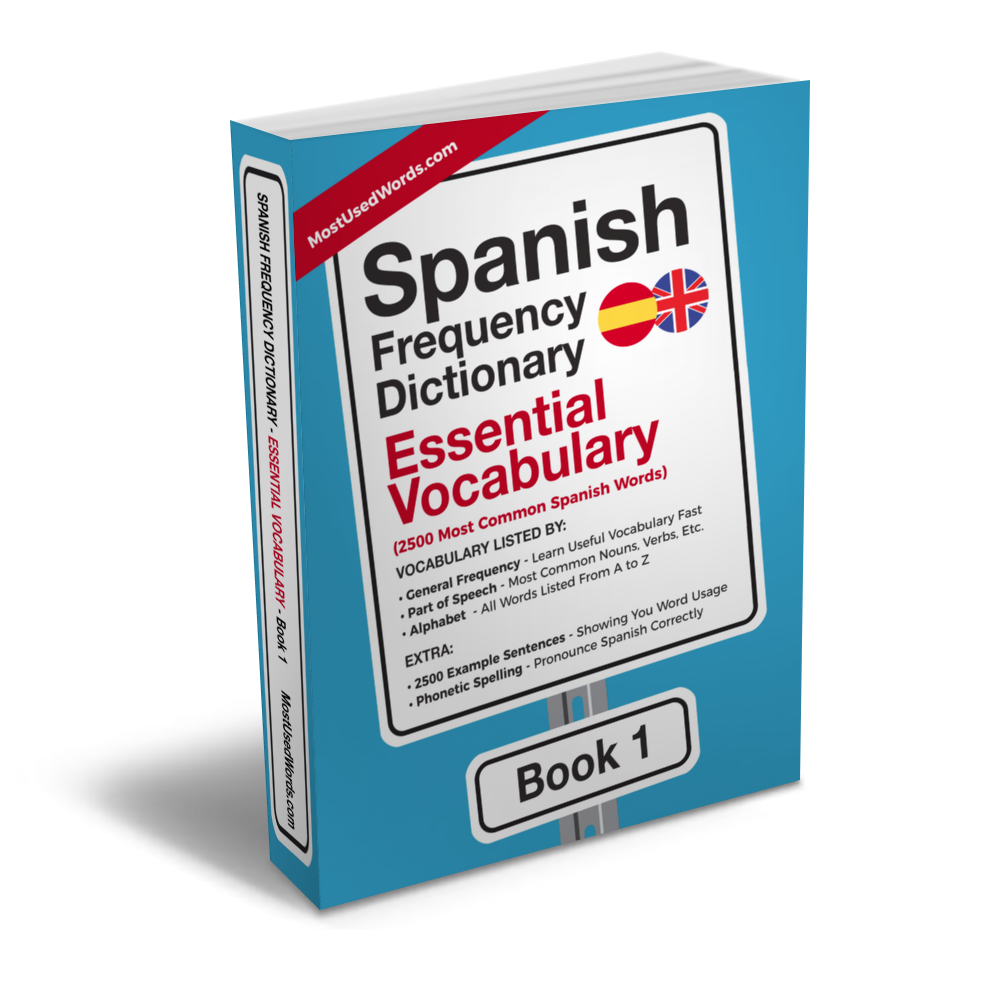
2,500 most common Spanish words with IPA pronunciation & bilingual example sentences
What is "Me" in Spanish?
The Spanish word "me" serves multiple purposes and can be used as a reflexive pronoun, indicating actions done to oneself or emotions experienced. It's important to note that the placement of "me" within sentences varies depending on the context:
- Actions done to oneself: Me lavo las manos. (I wash my hands.)
- Emotions or sensations experienced: Me duele la cabeza. (My head hurts.)
- Possession or belonging: Esta mochila es mía, me la regaló mi mamá. (This backpack is mine, my mom gave it to me.).
How to Use "Me" in Spanish Correctly
Want to improve your Spanish?
The Spanish Frequency Dictionary series covers the 10,000 most common Spanish words — ranked by how often native speakers actually use them, with IPA pronunciation, English translations, and bilingual example sentences at every level.
Browse all 4 volumes →To use "me" correctly in Spanish sentences:
- "She gave me the book" would be "Ella me dio el libro", with "me" preceding the verb.
- "I hurt myself" is expressed as "Me lastimé", again with "me" before the verb.
Common Mistakes When Using "Me"
A common mistake when using "me" in Spanish involves its placement within sentences. Another frequent error occurs in formal situations where learners might use informal pronouns incorrectly, leading to misunderstandings or awkwardness.
Regional Differences of "Me" in Spain and Latin America
In some regions, such as parts of Latin America, people may opt for the reflexive pronoun "se" instead of "me". For instance, "Ella se baña" (She takes a shower) is used rather than "Ella me baña". In Spain, plural reflexive pronouns like "os" are utilized in certain contexts.
How to Say Me in Spanish: Sample Sentences
To better understand the use of "me" in different scenarios, here are some sample sentences:
- Me gusta bailar.
(I like to dance.)
- ¿Me puede ayudar?
(Can you help me?)
- Me siento cansado.
(I feel tired.)
- No me importa.
(I don't care.)
- Me llamo Ana.
(My name is Ana.)
Conclusion
Mastery of the Spanish reflexive pronoun "me" enhances your ability to communicate effectively in various situations. Understanding its nuances and regional variations will significantly improve your proficiency.
Build Your Spanish Vocabulary Systematically
The fastest way to grow your Spanish vocabulary is to start with the words you'll actually encounter every day. The Spanish Frequency Dictionary covers the 2,500 most common Spanish words, each with IPA pronunciation, an English translation, and bilingual example sentences.
Browse the full range of Spanish frequency dictionaries to find the volume that matches your level.