How to Say In in Spanish - Preposition Guide
Updated for 2026, the English word "in" translates to two primary prepositions in Spanish: "en" and "dentro de."
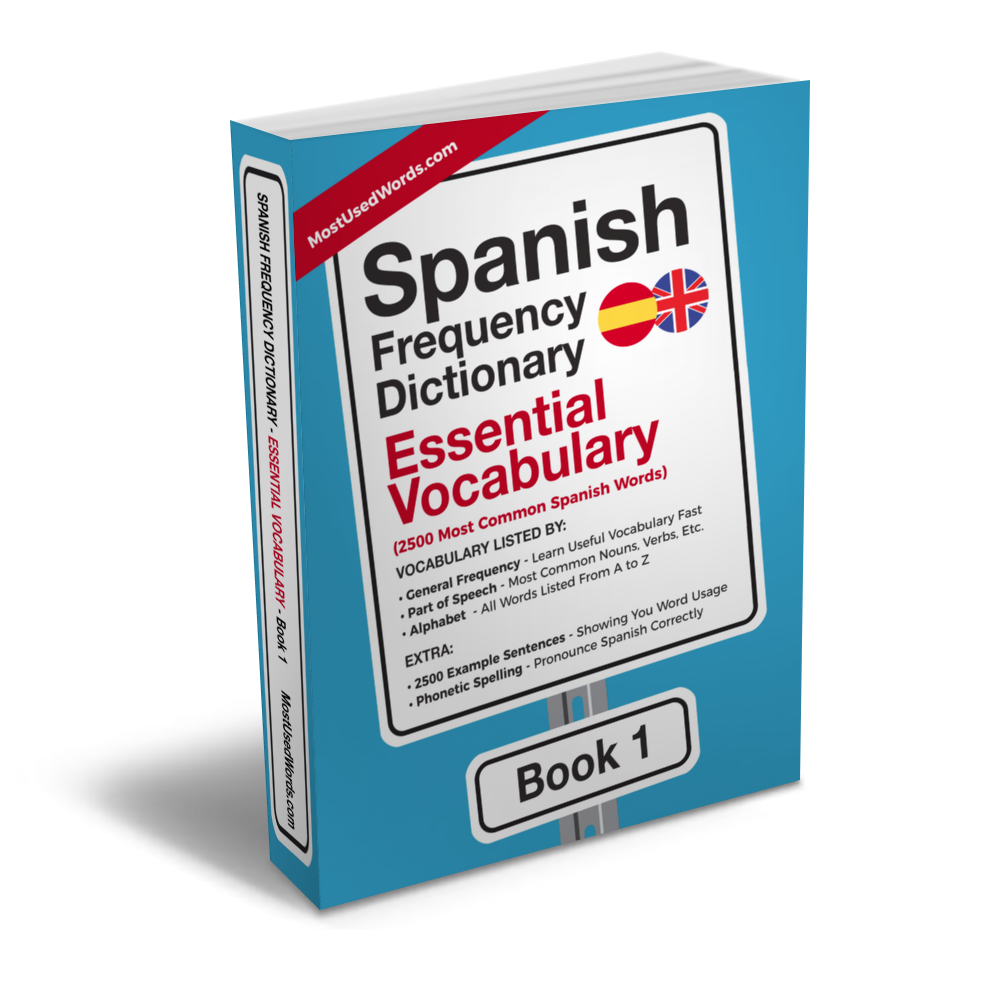
2,500 most common Spanish words with IPA pronunciation & bilingual example sentences
What is "In" in Spanish?
The Spanish language uses "en" (IPA: /en/) and "dentro de" (IPA: /ˈdentɾo ðe/) to convey the meaning of "in." These prepositions are crucial for indicating position, location, or time.
Meaning of "In" in Spanish
Want to improve your Spanish?
The Spanish Frequency Dictionary series covers the 10,000 most common Spanish words — ranked by how often native speakers actually use them, with IPA pronunciation, English translations, and bilingual example sentences at every level.
Browse all 4 volumes →"En": This versatile preposition is used to indicate the position or location of something or someone. For example, "El libro está en la mesa" means "The book is on the table." Additionally, it can be used in time expressions such as "Estoy en la universidad desde hace dos años" (I have been at the university for two years).
"Dentro de": Used when indicating that something or someone is inside a place or object. For instance, "El lápiz está dentro de la caja" translates to "The pencil is inside the box.
Usage of 'en' and 'dentro de' in Idiomatic Expressions
In addition to their literal meanings, "en" and "dentro de" are used in various idiomatic expressions. For example, "Vivir en la luna" means "To live in a dream world." Understanding these expressions can greatly enhance your fluency in Spanish.
Comparison with Other Prepositions Like 'a', 'de'
While "en" and "dentro de" are commonly used to express location, other prepositions like "a", "de", etc., also play significant roles in Spanish. For example, "a" is often used for movement towards a place ("voy a la escuela"), while "de" can indicate origin or possession ("soy de Madrid").
Regional Differences with Specific Examples from Different Spanish-Speaking Countries
The meanings of these prepositions are generally consistent across Spanish-speaking regions, but there may be some regional differences in their usage. For instance, in Mexico and Central America, "en" can sometimes indicate a more approximate location, while "dentro de" is used for a more specific one.
Common Mistakes Made by Learners When Using These Prepositions
Learners often confuse the use of "en" with other prepositions like "a", leading to incorrect sentences. For example, saying "Voy en la escuela" instead of "Voy a la escuela". To avoid such mistakes, practice using these prepositions in various contexts.
How to Say "In" in Spanish: Sample Sentences
Here are five sample sentences you can use to say "in" in Spanish:
- Hay tres gatos en mi casa.
(There are three cats in my house.)
- El museo está en el centro de la ciudad.
(The museum is in the center of the city.)
- Hay un regalo en la caja.
(There is a present in the box.)
Build Your Spanish Vocabulary Systematically
The fastest way to grow your Spanish vocabulary is to start with the words you'll actually encounter every day. The Spanish Frequency Dictionary covers the 2,500 most common Spanish words, each with IPA pronunciation, an English translation, and bilingual example sentences.
Browse the full range of Spanish frequency dictionaries to find the volume that matches your level.