How to Say Face in Spanish | MostUsedWords.com
As of 2026, knowing how to say basic words like "face" is crucial for anyone learning Spanish. The word for "face" in Spanish is "cara", pronounced /ˈka.ɾa/. This term is widely used across all Spanish-speaking countries and forms a fundamental part of your vocabulary.
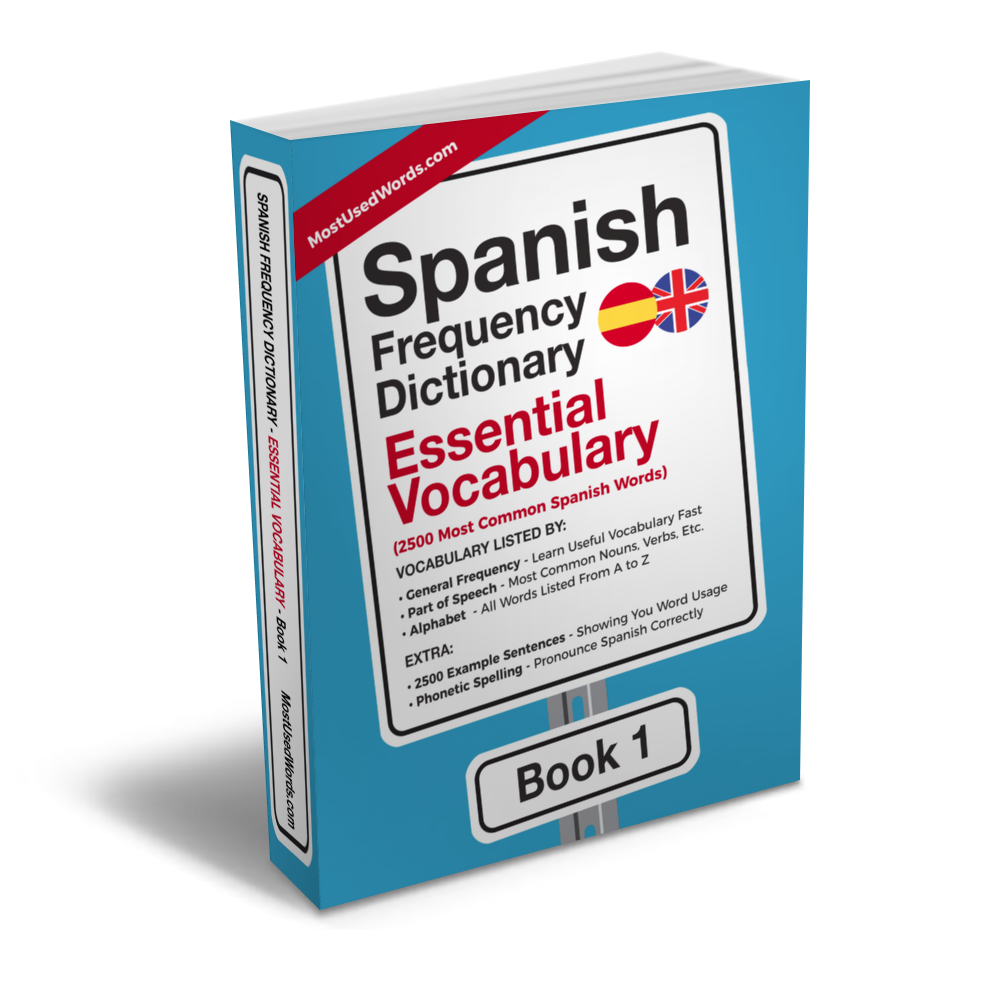
2,500 most common Spanish words with IPA pronunciation & bilingual example sentences
What is "Face" in Spanish?
The most common translation for "face" in Spanish is cara. It refers to the front part of the head where eyes, nose, mouth, and chin are located. Additionally, it can describe a person's facial expression or appearance. In some contexts, such as describing the surface of objects, "cara" denotes the exterior face.
Meaning and Usage
Want to improve your Spanish?
The Spanish Frequency Dictionary series covers the 10,000 most common Spanish words — ranked by how often native speakers actually use them, with IPA pronunciation, English translations, and bilingual example sentences at every level.
Browse all 4 volumes →In Spanish, cara is used in various idiomatic expressions and phrases that highlight its versatility:
- Cara a cara: Face to face (literally "face to face")
- Tener cara de: To look like or have the appearance of something
- Dar en la cara: To hit someone in the face
To further enrich your understanding, here are some other terms for "face" and their usage:
- Rostro (IPA: /ˈrostɾo/): More formal than cara, often used in literature or art contexts to describe facial features.
- Faz (IPA: /fas/): An archaic term, still used in some regions like Mexico for a poetic description of the face.
- Caraza (IPA: /kaˈɾasa/): A regional variation mostly used in Central America.
- Belfo (IPA: /ˈbelfo/): Refers specifically to the mouth or lips, not commonly used for the whole face.
Regional Differences and Cultural Significance
While cara is widely accepted, there are regional variations:
- In Central America and Mexico, rostro might be preferred in formal settings or literature.
- In Argentina, faz has a poetic connotation but is less common in everyday speech.
- In Spain, careto can be heard informally to describe an unpleasant face.
Sample Sentences and Idiomatic Expressions
To better understand the usage of "face" in Spanish:
- Cara: "Ella tiene una cara hermosa." (She has a beautiful face.)
- Rostro: "El pintor retrató el rostro de la modelo con precisión." (The painter captured the model's face with precision.)
- Faz: "La faz del poeta reflejaba su profunda tristeza." (The poet’s face reflected his deep sadness.)
- Cara a cara: "Nos encontramos cara a cara en la conferencia de prensa." (We met face to face at the press conference.)
Build Your Spanish Vocabulary Systematically
The fastest way to grow your Spanish vocabulary is to start with the words you'll actually encounter every day. The Spanish Frequency Dictionary covers the 2,500 most common Spanish words, each with IPA pronunciation, an English translation, and bilingual example sentences.
Browse the full range of Spanish frequency dictionaries to find the volume that matches your level.