How to Say Day in Spanish - Most Used Words
Updated for 2026, the term for "day" in Spanish is "día," a masculine noun that signifies the period from sunrise to sunset or midnight to midnight.
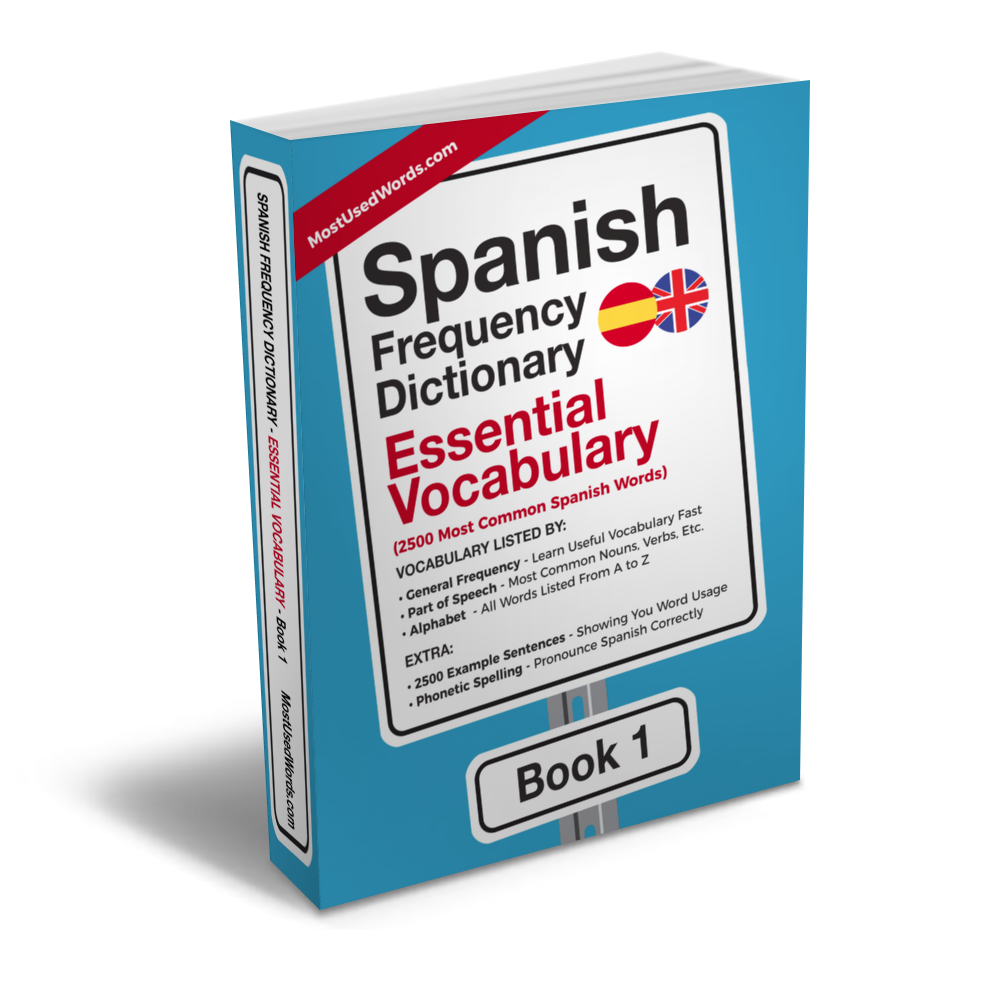
2,500 most common Spanish words with IPA pronunciation & bilingual example sentences
What is "Day" in Spanish?
The term for "day" in Spanish is "día," a masculine noun pronounced as /'di.a/. Remember the accent mark over the letter 'i,' which changes its meaning from "jewel" to "day."
Pronunciation Tips for Non-Native Speakers
Want to improve your Spanish?
The Spanish Frequency Dictionary series covers the 10,000 most common Spanish words — ranked by how often native speakers actually use them, with IPA pronunciation, English translations, and bilingual example sentences at every level.
Browse all 4 volumes →The pronunciation of "día" varies slightly depending on regional accents. In Spain, it is pronounced with a clear 'd' sound, while in some Latin American countries, the 'd' might be softer or even sound like a 'th.'
Meaning and Usage of "Day" in Spanish
"Día" refers to the period from sunrise to sunset or midnight to midnight. It can also denote specific days of the week such as "el día lunes" (Monday) or "el día sábado" (Saturday). Additionally, it is used in idiomatic expressions like "buen día" (Good day) and "mal día" (Bad day).
Sample Sentences with Different Contexts
Here are five sample sentences to help you use "día" effectively:
- Hoy es un buen día para ir al parque.
(Today is a good day to go to the park.)
- ¿Qué día es hoy?
(What day is today?)
- Ayer fue un día muy cansado.
(Yesterday was a very tiring day.)
- El día de mañana vamos a visitar el museo.
(Tomorrow we're going to visit the museum.)
- El próximo día festivo es el Día de la Independencia.
(The next holiday is Independence Day.)
Cultural Significance of Certain Days in Spanish-Speaking Countries
Understanding the cultural significance of certain days can enrich your language learning experience. For example, "Día de los Muertos" (Day of the Dead) is a significant holiday celebrated in Mexico and other Latin American countries.
Regional Variations of "Day"
- In some parts of Spain, such as Andalusia and Valencia, the word jornada (IPA: /xor.'na.ða/) can be used to refer to a workday or a day's work.
- In certain Latin American countries, including Mexico and Colombia, "día" can also denote the date or the day of the month. For instance, you might hear someone say "el día de tres de mayo" (May 3rd).
- In the Caribbean, the word "día" is often pronounced with a softer 'd' sound, almost like a 'th', making it sound like "thee-ah".
Comparison with Other Languages
The concept of "day" in Spanish shares similarities and differences with other languages. In French, the word is "jour," while in Italian, it's "giorno." Each language has its unique pronunciation and usage contexts.
Conclusion
In conclusion, "día" is the standard term for "day" in Spanish, but it's important to be aware of regional variations and cultural nuances. Understanding these aspects will enhance your proficiency in Spanish.
Build Your Spanish Vocabulary Systematically
The fastest way to grow your Spanish vocabulary is to start with the words you'll actually encounter every day. The Spanish Frequency Dictionary covers the 2,500 most common Spanish words, each with IPA pronunciation, an English translation, and bilingual example sentences.
Browse the full range of Spanish frequency dictionaries to find the volume that matches your level.