How to Say Crazy in Spanish - Guide and Pronunciation
As of 2026, learning how to say "crazy" in Spanish is essential for anyone looking to expand their vocabulary. This article provides an in-depth look at the various translations and regional variations of this term, along with pronunciation guides and practical usage examples.

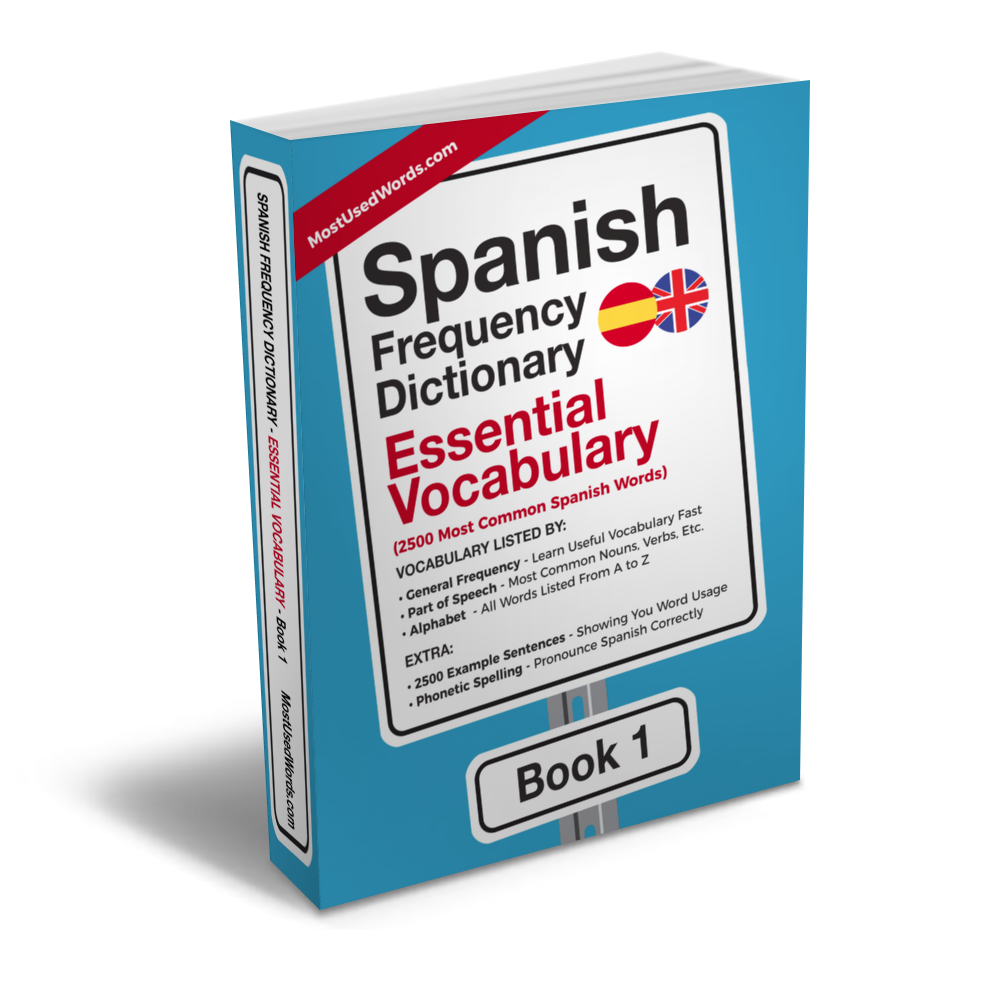
2,500 most common Spanish words with IPA pronunciation & bilingual example sentences
How to Say "Crazy" in Spanish: A Comprehensive Guide
In Spanish, there are several ways to express the concept of being "crazy," each with its own nuances and regional preferences. The most commonly used terms include loco(a), chiflado(a), pirado(a), and demente. Here’s a closer look at each:
Pronunciation Guide for Common Terms
Want to improve your Spanish?
The Spanish Frequency Dictionary series covers the 10,000 most common Spanish words — ranked by how often native speakers actually use them, with IPA pronunciation, English translations, and bilingual example sentences at every level.
Browse all 4 volumes →- Loco (loko): This term is widely used across Spanish-speaking regions to describe someone who is crazy or eccentric. It can also be used in the context of situations, such as "Está completamente loco" (He is completely crazy). Pronunciation guide: IPA /'loko/.
- Chiflado (tʃi'flaðo): Common in Mexico and parts of Central America, this term describes someone as eccentric or slightly crazy. It has a lighter connotation compared to "loco." Pronunciation guide: IPA /tʃi'flaðo/.
- Pirado (pi'ɾaðo): In Spain, particularly in colloquial language, this term is often used to describe someone who acts unpredictably or is mentally unstable. Pronunciation guide: IPA /pi'ɾaðo/.
- Demente (de'mente): This term translates to "insane" and carries a stronger connotation than "loco." It is less commonly used in everyday speech but can be found in more formal contexts. Pronunciation guide: IPA /de'mente/.
Regional Slang for "Crazy"
In addition to the standard terms, there are various regional slang words used to express being crazy or eccentric. For instance, in Argentina and Uruguay, you might hear vivejo (vi'βeʃo), which means someone who is very lively but also a bit crazy.
How to Use "Crazy" in Different Contexts
The term "crazy" can be used to describe both people and situations. Here are some sample sentences that demonstrate the usage of each term:
- Está completamente loco.
(He is completely crazy.).
- Esa idea es de un chiflado.
(That idea is from a crazy person.).
- No le hagas caso, está pirado.
(Don't pay attention to him, he's crazy.).
- Mi tío es demente, necesita ayuda profesional.
(My uncle is insane, he needs professional help.).
- Están haciendo una locura con ese proyecto.
(They are doing something crazy with that project.).
Build Your Spanish Vocabulary Systematically
The fastest way to grow your Spanish vocabulary is to start with the words you'll actually encounter every day. The Spanish Frequency Dictionary covers the 2,500 most common Spanish words, each with IPA pronunciation, an English translation, and bilingual example sentences.
Browse the full range of Spanish frequency dictionaries to find the volume that matches your level.