How to Say But in Spanish | MostUsedWords.com
Updated for 2026, learning how to say "but" in Spanish is crucial for effective communication. The word "but" can be translated into several Spanish conjunctions depending on context.
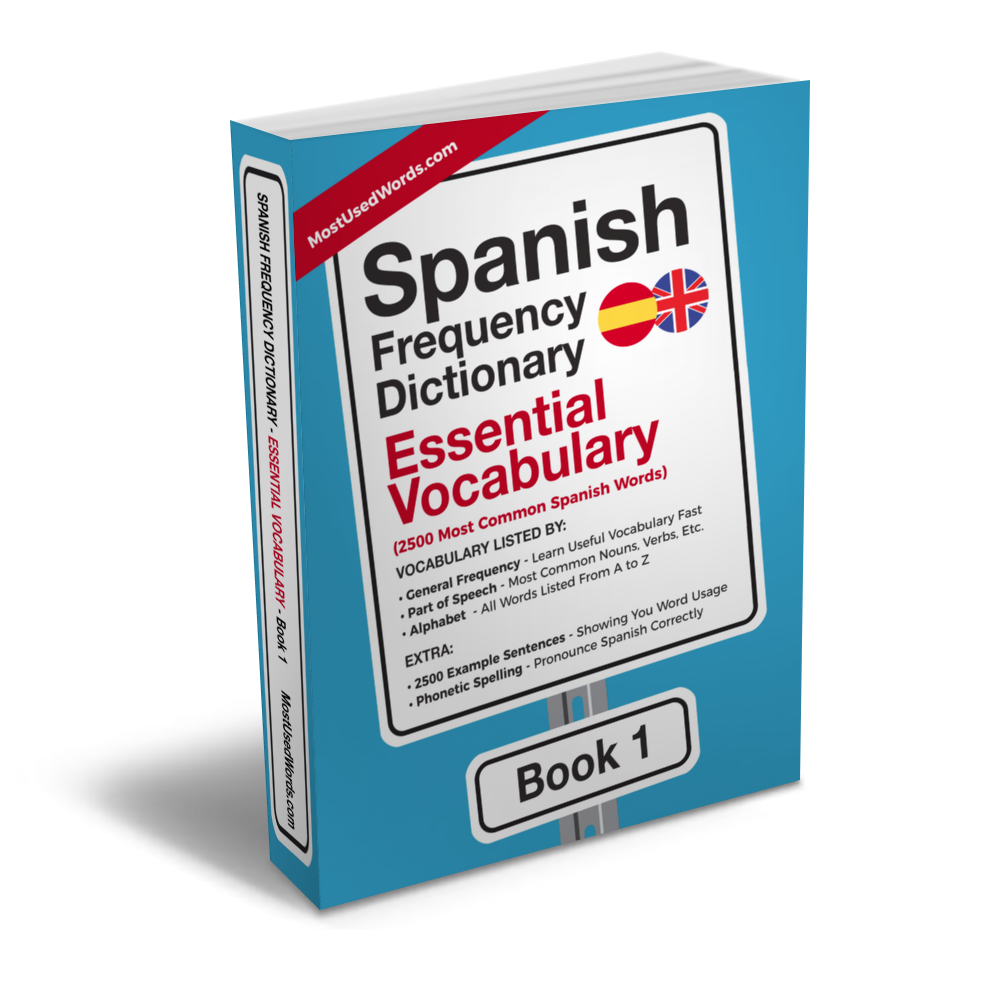
2,500 most common Spanish words with IPA pronunciation & bilingual example sentences
How to Say But in Spanish
The word "but" in Spanish can be expressed using different conjunctions and expressions, each with its own nuance:
- Pero: This is the most common translation of "but". It's used to contrast two ideas or situations that seem opposing.
- Sin embargo: Translates as "however" or "nevertheless", introducing a contrast between two ideas or situations.
- Aunque: Meaning "although" or "even though", it introduces a subordinate clause expressing a contrast to the main clause.
- Sino: Can be translated as "but rather" or "except". It's used to introduce a statement that contradicts a previous negative statement.
- Mas: Less common, but occasionally seen in literature. It can mean "but" or "more", depending on the context.
Usage of 'Pero' vs. 'Aunque'
Want to improve your Spanish?
The Spanish Frequency Dictionary series covers the 10,000 most common Spanish words — ranked by how often native speakers actually use them, with IPA pronunciation, English translations, and bilingual example sentences at every level.
Browse all 4 volumes →The choice between pero and aunque depends largely on the intended meaning:
- Pero: Used to introduce a contrasting idea or situation.
- Aunque: Introduces a subordinate clause that expresses a contrast or contradiction to the main clause.
Examples of 'Mas' in Literature
The conjunction mas, though less common, appears frequently in literary works. For example:
- Mas no puedo negar que...
(But I cannot deny that....).
Pronunciation Tips for "Pero"
- IPA: /ˈpeɾo/
- Note: Emphasize the 'e' sound at the beginning.
Pronunciation Tips for "Sin embargo"
- IPA: /sin em.baɾ.ˈɣo/
- Note: The 'g' in "embargo" is silent.
Pronunciation Tips for "Aunque"
- IPA: /aˈkwan/
- Note: The 'n' at the end is pronounced softly.
Pronunciation Tips for "Sino"
- IPA: /ˈsi.no/
- Note: Emphasize the first syllable.
Build Your Spanish Vocabulary Systematically
The fastest way to grow your Spanish vocabulary is to start with the words you'll actually encounter every day. The Spanish Frequency Dictionary covers the 2,500 most common Spanish words, each with IPA pronunciation, an English translation, and bilingual example sentences.
Browse the full range of Spanish frequency dictionaries to find the volume that matches your level.