How to Say Bored in Spanish | Cultural Contexts & Regional V
Updated for 2026, expressing boredom in Spanish can vary widely depending on the context and region. If you are learning Spanish, it is important to know how to express this feeling accurately in various cultural contexts across Spain and Latin America.
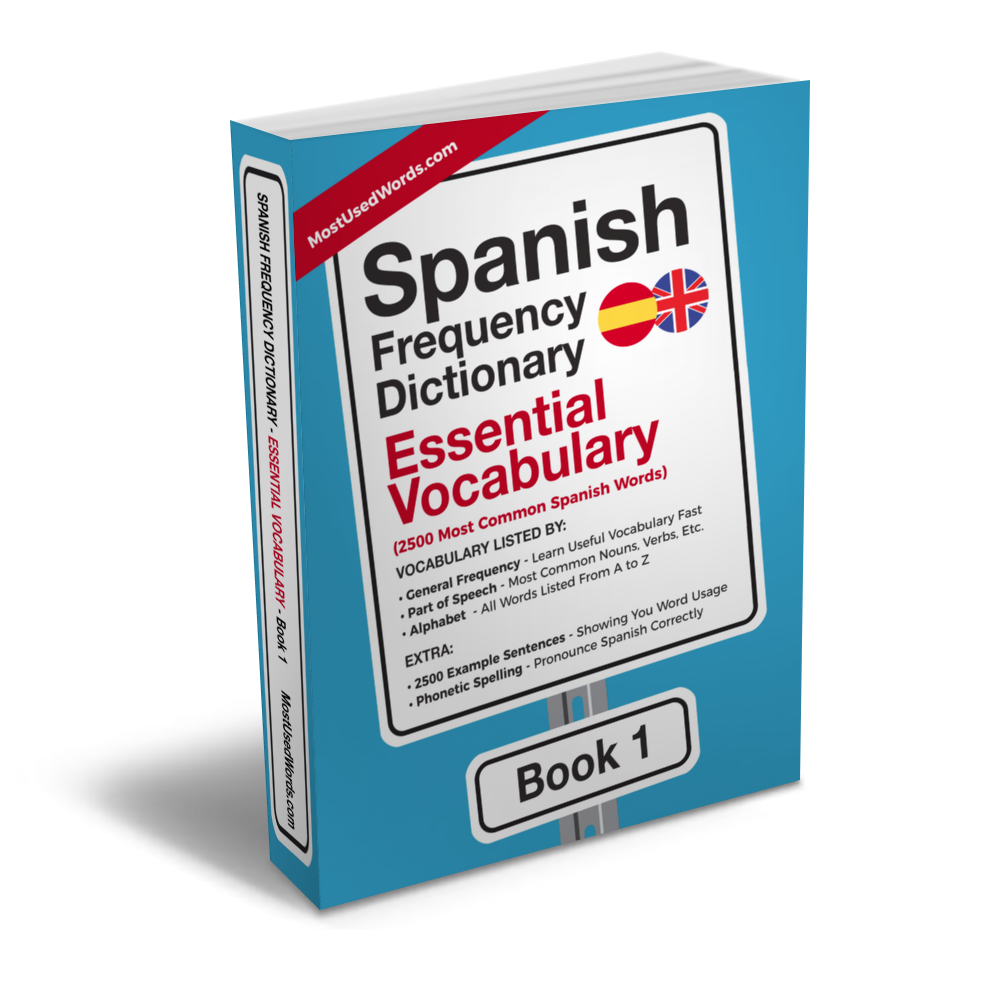
2,500 most common Spanish words with IPA pronunciation & bilingual example sentences
What Does "Bored" Mean in Spanish?
The most common word for expressing boredom in Spanish is "aburrido" (IPA: /a.bu.'ri.ðo/), pronounced as "ah-boo-REE-doh". This adjective can be used to describe a feeling of being uninterested, unengaged, and uninspired.
Synonyms for Bored in Spanish
Want to improve your Spanish?
The Spanish Frequency Dictionary series covers the 10,000 most common Spanish words — ranked by how often native speakers actually use them, with IPA pronunciation, English translations, and bilingual example sentences at every level.
Browse all 4 volumes →While "aburrido" is the standard term, there are several other words that can express boredom:
- Aburrimiento (IPA: /a.bu.ri.'mjɛn.to/): This noun means "boredom."
- Hastiado/a (IPA: /as.'tja.ðo/): An adjective that can also mean "bored," often implying a sense of weariness.
- Monótono/a (IPA: /mo.'no.to.no/): This term means "monotonous" or "tedious."
Cultural Contexts for Boredom in Spanish-Speaking Countries
Boredom is a universal feeling, but its expression and cultural significance can vary across different regions. For instance, in Catalonia, the term "estocat" (IPA: /es.tɔ.'kat/) might be used to describe boredom or disinterest.
Regional Variations for Boredom
In addition to standard terms like "aburrido," there are regional variations in vocabulary and usage:
- Argentina and Uruguay: The word "embolado" (IPA: /em.bo.'la.ðo/) is commonly used.
- Mexico: The verb "aburrirse" (IPA: /a.bu.'riɾ.se/) is frequently employed to express boredom.
- Spain: In some regions, the term "cansado" (IPA: /kan.'sa.ðo/), meaning tired or weary, can sometimes be used to describe a feeling of boredom.
How to Ask Someone if They Are Bored in Different Regions
To inquire about someone's state of mind regarding boredom, you might use phrases like:
- In Spain: "¿Estás aburrido?" (Are you bored?) or "¿Te sientes cansado?" (Do you feel tired?)
- In Argentina and Uruguay: "¿Estás embolado/a?" (Are you bored?)
- In Mexico: "¿Aburrirte?" (To be bored?) or "¿Te aburres?" (Do you get bored?)
Synonyms and Usage in Different Contexts
The usage of these terms can vary depending on the context. For example, "apático" (IPA: /a.'pa.ti.ko/) is often used to describe a situation that lacks energy or inspiration.
Real-Life Examples and Scenarios
In Spanish literature and media, you might encounter phrases like:
- "Estoy hastiado de esta rutina." (I am tired of this routine.)
- "La monotonía me abruma." (The monotony overwhelms me.)
- "No puedo evitar sentirme aburrido en este trabajo sin desafíos." (I can't help but feel bored in this job without challenges.)
Build Your Spanish Vocabulary Systematically
The fastest way to grow your Spanish vocabulary is to start with the words you'll actually encounter every day. The Spanish Frequency Dictionary covers the 2,500 most common Spanish words, each with IPA pronunciation, an English translation, and bilingual example sentences.
Browse the full range of Spanish frequency dictionaries to find the volume that matches your level.