How to Say Book in Spanish - Most Used Words Dictionary
As of 2026, mastering basic vocabulary is a crucial step when learning a new language like Spanish. One essential word you'll need to know is how to say "book" in Spanish.
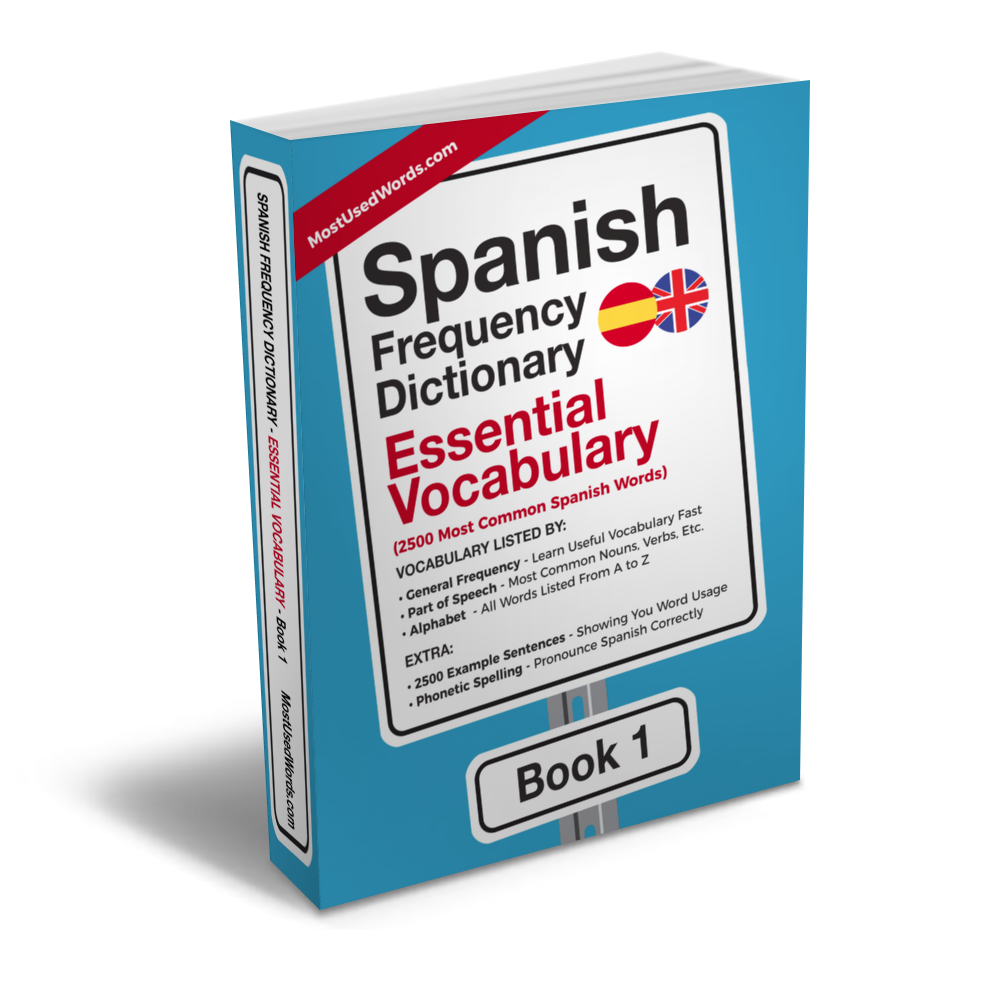
2,500 most common Spanish words with IPA pronunciation & bilingual example sentences
How to Say Book in Spanish
The Spanish word for "book" is "libro" (IPA: /ˈli.βɾo/). It is pronounced with stress on the second syllable and is a masculine noun used across Latin American and European Spanish.
Meaning and Usage
Want to improve your Spanish?
The Spanish Frequency Dictionary series covers the 10,000 most common Spanish words — ranked by how often native speakers actually use them, with IPA pronunciation, English translations, and bilingual example sentences at every level.
Browse all 4 volumes →The term "libro" in Spanish encompasses various types of books, including traditional printed volumes, e-books, audiobooks, and digital formats. It can also refer to notebooks or diaries depending on the context.
Digital Contexts Beyond E-Books and Audiobooks
When discussing digital content such as PDF files or online articles, "libro" is often used metaphorically to describe comprehensive guides or collections of information. For example, a detailed guide might be referred to as "un libro electrónico" (an electronic book).
Comparison with Other Romance Languages
In other Romance languages like Italian and Portuguese, the word for "book" is similar due to their shared Latin roots: in Italian it's "libro," and in Portuguese, it’s also "livro."
Regional Differences
In both Latin American and European Spanish, "libro" is the standard term for book. However, there are regional variations in pronunciation and usage:
- Mexico and some other Latin American countries: The "r" sound is often pronounced as a soft "h", making "libro" sound like "li-boh".
- Spain (various regions): In certain areas, the "r" can be pronounced as a "th" sound ("lee-thro") or trilled.
- Argentina: The word "libro" is sometimes replaced with "cuaderno," which also means notebook.
- Chile: A slang term, "libraco," is used to refer to a big book.
Cultural Significance of Books in Spanish-Speaking Countries
In many Spanish-speaking countries, books hold significant cultural value. They are often central to education systems and literary traditions. For example, the Biblioteca Nacional de España (National Library of Spain) houses millions of volumes that reflect centuries of Spanish literature.
Sample Sentences Using "Libro"
To help you understand the versatility and context-specific usage of "libro," here are some sample sentences:
- "Tengo que leer un libro para mi clase de literatura." (I have to read a book for my literature class.)
- "¿Has comprado el libro electrónico?" (Have you bought the e-book?)
- "Mi hermano tiene una colección increíble de libros sobre historia." (My brother has an incredible collection of books about history.)
Build Your Spanish Vocabulary Systematically
The fastest way to grow your Spanish vocabulary is to start with the words you'll actually encounter every day. The Spanish Frequency Dictionary covers the 2,500 most common Spanish words, each with IPA pronunciation, an English translation, and bilingual example sentences.
Browse the full range of Spanish frequency dictionaries to find the volume that matches your level.