German Frequency Dictionaries





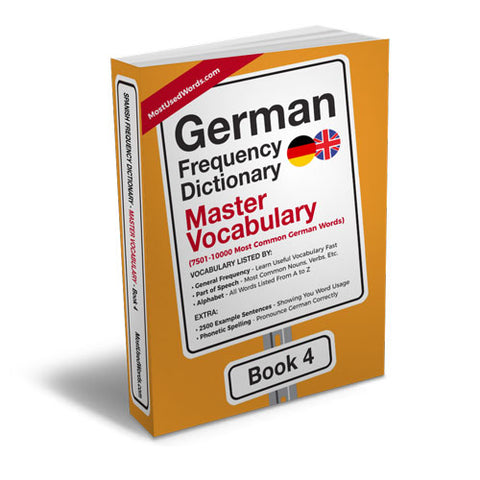
German Frequency Dictionaries: Learn the Words That Actually Matter
A German frequency dictionary lists German words in order of how often they appear in real-world usage — drawn from books, news, subtitles, and conversation. You learn the most useful words first, not whatever a textbook decided was important for chapter three.
The 1,000 most common German words cover roughly 85% of everyday speech. Work up to 5,000 and 10,000 — and you'll handle nearly everything a native speaker throws at you.
What Every Entry Includes
Every word in our German frequency dictionaries comes with:
- German word — ranked by real-world frequency
- English translation
- IPA phonetic transcription — so you always know the correct pronunciation
- Part of speech — noun, verb, adjective, etc.
- Bilingual example sentence in German and English
This format is far more useful than a vocabulary list alone — you see each word in context, understand its grammatical role, and have a real sentence you can use right away.
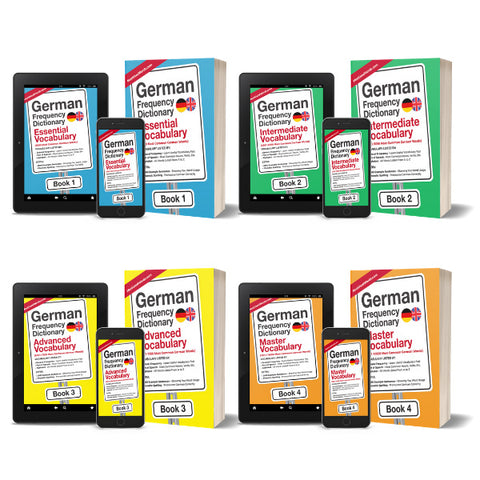
Four Volumes, 10,000 Most Common German Words
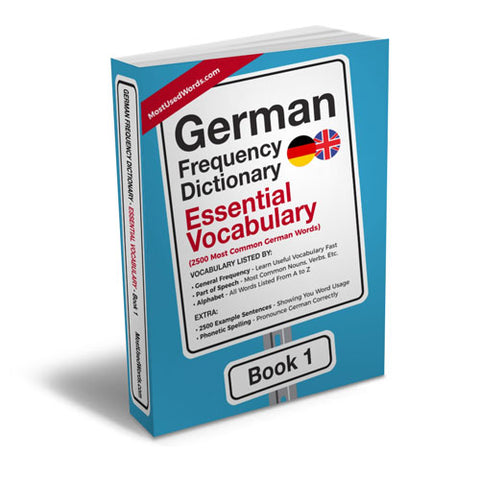
- Volume 1 — Essential Vocabulary: the 2,500 most common German words. The right starting point for beginners.
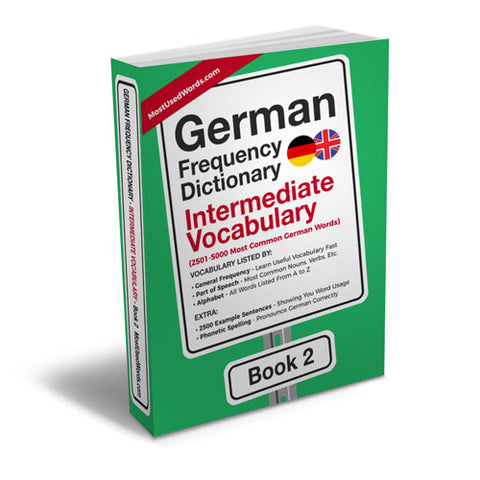
- Volume 2 — Intermediate Vocabulary: words 2,501–5,000. Unlocks most everyday topics and conversations.
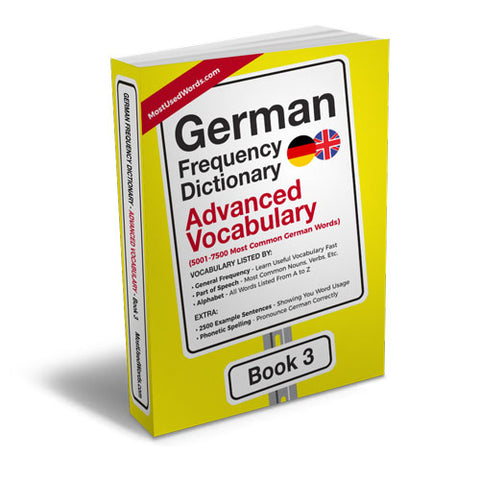
- Volume 3 — Advanced Vocabulary: words 5,001–7,500. Professional, academic, and cultural vocabulary.
- Volume 4 — Master Vocabulary: words 7,501–10,000. Near-native range, including low-frequency formal registers.
PDF (Instant Download) or Paperback
All four German frequency dictionary PDFs are available for instant download from this page. Paperback editions are also on Amazon. The complete 4-volume bundle covers all 10,000 most common German words at the best per-word price.
Who Gets the Most from a German Frequency Dictionary
Beginners use Volume 1 to build a solid vocabulary base in the 2,500 words that appear in nearly every German sentence — a faster start than any theme-based course.
Intermediate learners use Volumes 2–3 to break through the plateau where German feels manageable but native content still outpaces you. Systematic frequency-based study closes that gap faster than immersion alone.
Advanced learners and German heritage speakers use Volumes 3–4 to fill gaps in formal writing, professional contexts, and low-frequency vocabulary where fluency still has rough edges.
Learn ten new German words per day and you'll have the essential vocabulary locked in well under a year — always working on the most useful words first, never wasting time on vocabulary that shows up once every few months.