How to Say Your Welcome in Spanish | MostUsedWords.com
As of 2026, the phrase "Your welcome" in Spanish is commonly translated as de nada (IPA: /de ˈna.da/). This article will help you understand how to say your welcome in Spanish and provide additional regional variations. Whether you're traveling or learning for personal growth, mastering this expression enhances your cultural understanding.
When it comes to expressing gratitude in Spanish, "Your welcome" is typically translated as de nada. This phrase is widely used across the Spanish-speaking world but there are also regional differences and alternative expressions that you should be aware of. Understanding these nuances can help you communicate more effectively.
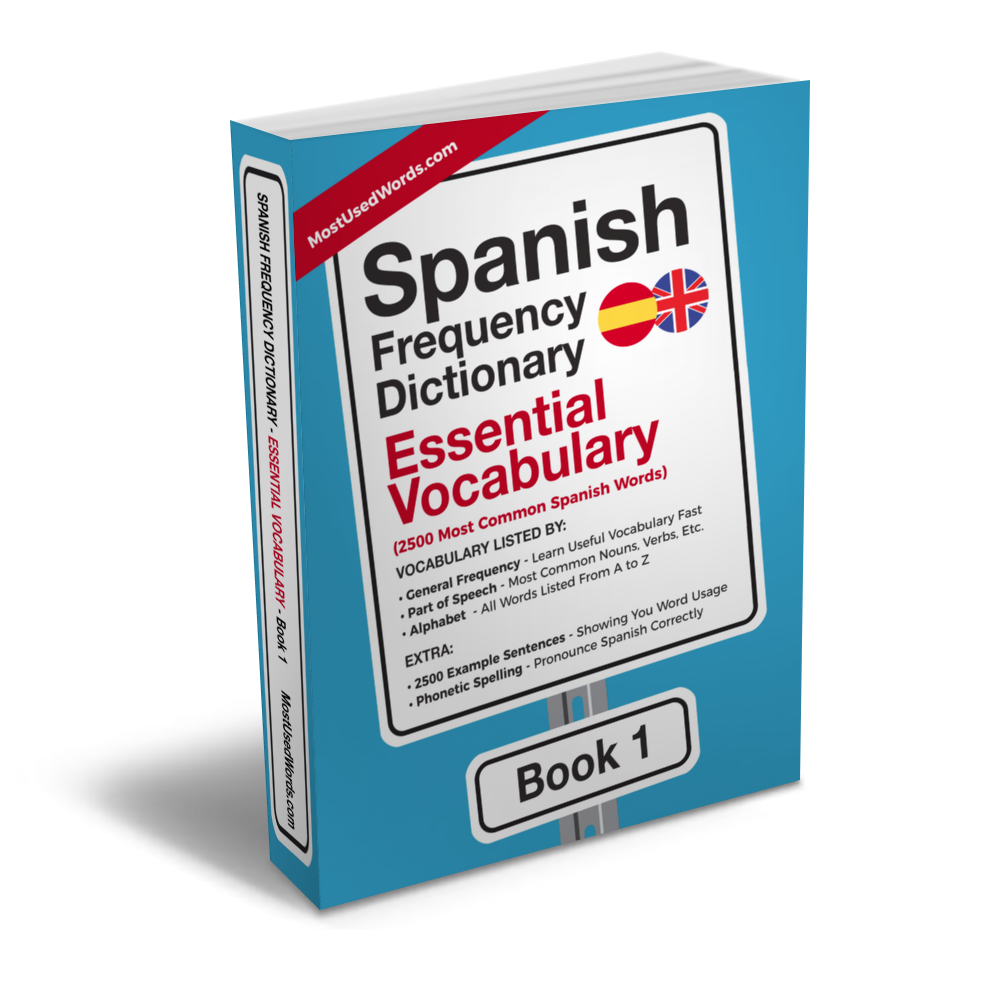
2,500 most common Spanish words with IPA pronunciation & bilingual example sentences
How to Say Your Welcome in Spanish: Primary Translation
The primary translation for "Your welcome" in Spanish is de nada (IPA: /de ˈna.da/). This phrase literally translates to "of nothing," indicating that the favor or assistance given was not a burden. It's universally understood and accepted as a polite response to expressions of gratitude.
Regional Differences for Gratitude Expressions
Want to improve your Spanish?
The Spanish Frequency Dictionary series covers the 10,000 most common Spanish words — ranked by how often native speakers actually use them, with IPA pronunciation, English translations, and bilingual example sentences at every level.
Browse all 4 volumes →In addition to de nada, there are several other ways to express "Your welcome" in Spanish, depending on the region:
- No hay de qué (IPA: /no ˈaj de ke/): This phrase is commonly used in Mexico and Central America. It carries the same meaning as de nada but may be more informal.
- Por nada: Another alternative, particularly popular in Spain, means "for nothing."
- No hay por qué: This phrase is also used in some regions and translates to "there's no reason why."
How to Say Your Welcome in Spanish: Practical Examples
To help you use these expressions confidently, here are several practical examples:
- Gracias por ayudarme con las compras. —De nada.
- Muchas gracias por el regalo. —No hay de qué.
- Por nada, siempre es un placer ayudar.
- No hay por qué, es lo mínimo que puedo hacer.
- Por nada, cuentas conmigo siempre.
These examples demonstrate how to use de nada, no hay de qué, and other regional alternatives in various contexts. Each phrase can be used interchangeably depending on the situation and region.
Conclusion
Mastery of expressions like "Your welcome" in Spanish enhances your ability to communicate effectively across different cultures. By understanding regional variations, you'll be better equipped to respond appropriately to gratitude in any Spanish-speaking country.
Build Your Spanish Vocabulary Systematically
The fastest way to grow your Spanish vocabulary is to start with the words you'll actually encounter every day. The Spanish Frequency Dictionary covers the 2,500 most common Spanish words, each with IPA pronunciation, an English translation, and bilingual example sentences.
Browse the full range of Spanish frequency dictionaries to find the volume that matches your level.