How to Say To Go in Spanish | Most Used Words
Updated for 2026, knowing how to say "to go" in Spanish is crucial for effective communication and navigation in a Spanish-speaking environment.
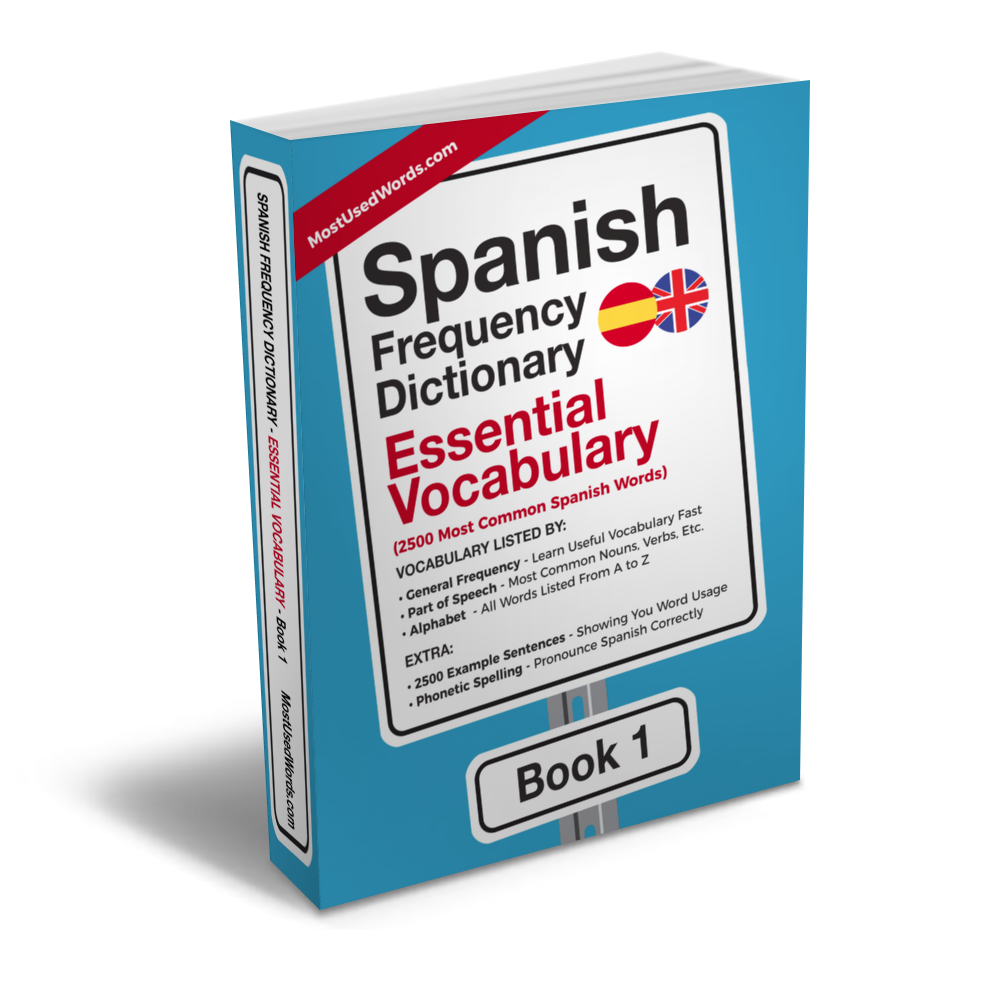
2,500 most common Spanish words with IPA pronunciation & bilingual example sentences
The Verb 'Ir' (To Go) in Spanish
In Spanish, the verb "ir" (IPA: /ir/) means "to go." It's essential to understand how to use it correctly across various contexts. Here’s an overview of its usage and conjugation:
Different Contexts for 'Ir'
Want to improve your Spanish?
The Spanish Frequency Dictionary series covers the 10,000 most common Spanish words — ranked by how often native speakers actually use them, with IPA pronunciation, English translations, and bilingual example sentences at every level.
Browse all 4 volumes →- To go to a place: Ir a (IPA: /iɾ a/) + place
- To leave quickly: Irse de prisa (IPA: /iɾse/)
- To travel or vacation: Ir de vacaciones (IPA: /iɾ de βa.kaˈsjones/)
- To go out: Salir (IPA: /saˈliɾ/)
- To return home: Ir a casa (IPA: /iɾ a ˈkasa/)
How to Use 'Ir' in Spanish
The verb "ir" is versatile and can be used in various tenses. Here’s how it's conjugated:
- Present tense: Yo voy, tú vas, él/ella/usted va, nosotros/nosotras vamos, vosotros/vosotras vais, ellos/ellas/ustedes van.
- Past tense (preterite): Yo fui, tú fuiste, él/ella/usted fue, nosotros/nosotras fuimos, vosotros/vosotras fuisteis, ellos/ellas/ustedes fueron.
- Future tense: Yo iré, tú irás, él/ella/usted irá, nosotros/nosotras iremos, vosotros/vosotras iréis, ellos/ellas/ustedes irán.
Conjugation of 'Ir' in All Tenses
To master the use of "ir", it’s important to know its conjugations across different tenses:
- Past perfect (pluperfect): Había ido, habías ido, había ido, habíamos ido, habíais ido, habían ido.
- Conditional: Yo iría, tú irías, él/ella/usted iría, nosotros/nosotras iríamos, vosotros/vosotras iríais, ellos/ellas/ustedes irían.
- Subjunctive (present): Que yo vaya, que tú vayas, que él/ella/usted vaya, que nosotros/nosotras vamos, que vosotros/vosotras vayáis, que ellos/ellas/ustedes vayan.
Common Mistakes with 'Ir'
A common mistake is confusing "ir" with other verbs like "salir" and "marcharse". While "salir" means "to leave" or "to go out," "irse" specifically implies leaving quickly.
Sample Sentences for Practical Usage
To better understand the usage of "ir", here are some practical sentences:
- Vamos a dar un paseo. (Let's go for a walk.)
- Tengo que largarme de aquí. (I need to get out of here.)
- No me apetece ir hoy. (I don't feel like going today.)
Build Your Spanish Vocabulary Systematically
The fastest way to grow your Spanish vocabulary is to start with the words you'll actually encounter every day. The Spanish Frequency Dictionary covers the 2,500 most common Spanish words, each with IPA pronunciation, an English translation, and bilingual example sentences.
Browse the full range of Spanish frequency dictionaries to find the volume that matches your level.