How to Say To Ask in Spanish | MostUsedWords.com
Updated for 2026, "to ask" in Spanish is translated as preguntar (IPA: /pɾeɣunˈtaɾ/). This versatile verb allows you to inquire about information or seek clarification effectively. Understanding how to use "preguntar" and its variations can significantly enhance your communication skills when speaking Spanish.
Different Ways to Ask Questions in Spanish
While preguntar is commonly used across Spain and Latin America, there are regional differences and alternative phrases you should be aware of. In Spain, it's common to use the phrase "hacer una pregunta" (To make a question) instead of just "preguntar." This variation might also be understood in Latin American countries but is less frequently used.
Polite Forms of Asking
Want to improve your Spanish?
The Spanish Frequency Dictionary series covers the 10,000 most common Spanish words — ranked by how often native speakers actually use them, with IPA pronunciation, English translations, and bilingual example sentences at every level.
Browse all 4 volumes →In formal settings or when addressing someone you do not know well, it's important to use polite forms. For instance, you can say "¿Podría preguntarle algo?" (Could I ask something?) instead of the more direct "Puedo preguntarte algo?". This shows respect and is a common practice in professional environments.
Sample Sentences for Different Contexts
Here are sample sentences you can use to say "to ask" in Spanish, along with context-specific examples:
- ¿Puedo preguntarte algo importante?
(Can I ask you something important?)
- Me pregunto qué hora es.
(I wonder what time it is.)
- Él le preguntó sobre su familia.
(He asked him about his family.)
Common Mistakes When Using "Preguntar"
A common mistake is to use the verb incorrectly in formal situations. For example, saying "¿Puedes preguntarme algo?" instead of the more polite form "¿Podría preguntarle algo?". Another error is using regional variations improperly outside their context.
Regional Variations in Asking Phrases
The Spanish language has rich regional variations, especially when it comes to asking questions. For example, in Mexico, you might hear "¿Me puedes decir?", while in Spain, people often use "¿Podría indicarme?". Understanding these nuances can help you communicate more effectively with native speakers.
How to Ask Questions in Spanish: Travel and Shopping Contexts
In travel situations, it's useful to know how to ask for directions or information politely. For instance, "¿Podría indicarme dónde está la estación de tren?" (Could you tell me where the train station is?). In shopping contexts, asking about prices and availability can be done with phrases like "¿Cuánto cuesta este artículo?" (How much does this item cost?) or "¿Tienen esto en stock?" (Do you have this in stock?). These examples highlight the importance of context-specific language.

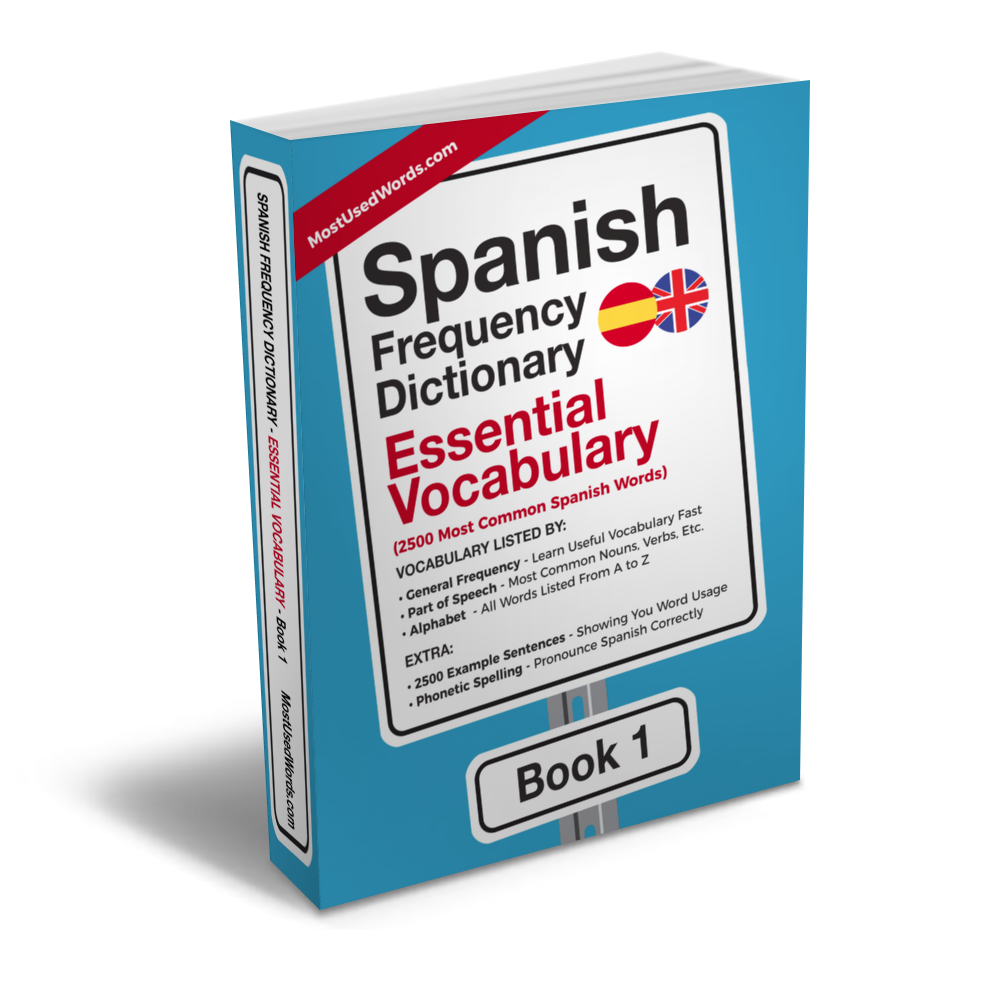
2,500 most common Spanish words with IPA pronunciation & bilingual example sentences
Build Your Spanish Vocabulary Systematically
The fastest way to grow your Spanish vocabulary is to start with the words you'll actually encounter every day. The Spanish Frequency Dictionary covers the 2,500 most common Spanish words, each with IPA pronunciation, an English translation, and bilingual example sentences.
Browse the full range of Spanish frequency dictionaries to find the volume that matches your level.