How to Say Thomas in Spanish | Pronunciation and Cultural Si
Updated for 2026, if you are wondering how to say "Thomas" in Spanish, it translates to "Tomás". The origin of this name dates back to Latin, where it was originally spelled as "Thomas", meaning "twin". Over time, the spelling and pronunciation have evolved into its current form. This article delves into the translation of "Thomas" in Spanish, its cultural significance across various regions, and provides pronunciation tips for non-native speakers.
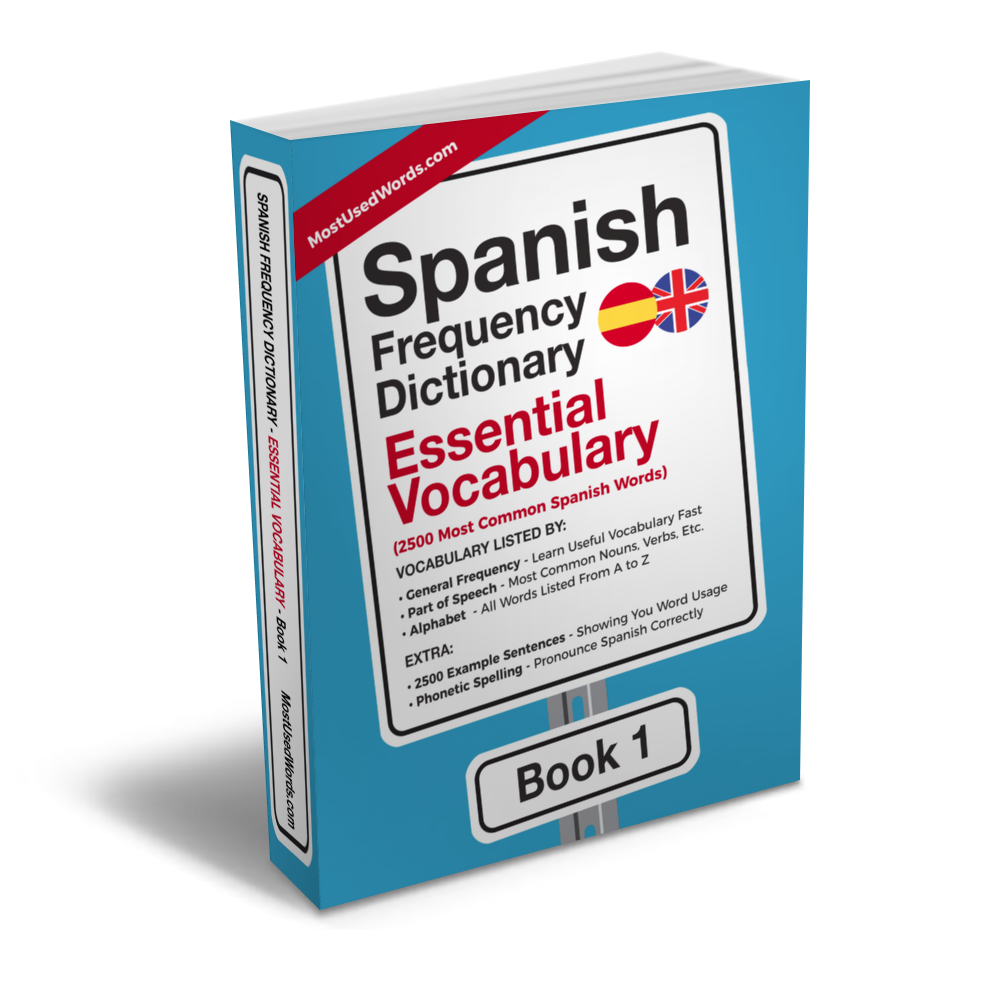
2,500 most common Spanish words with IPA pronunciation & bilingual example sentences
Etymology and Evolution of Tomás
The name "Tomás" has a rich etymological history that traces back to the Latin form "Thomas", meaning "twin". This biblical name was widely used in ancient times and later adopted into various languages, including Spanish. The pronunciation and spelling have adapted over centuries, reflecting linguistic changes across different cultures.
Cultural Significance of Tomás
Want to improve your Spanish?
The Spanish Frequency Dictionary series covers the 10,000 most common Spanish words — ranked by how often native speakers actually use them, with IPA pronunciation, English translations, and bilingual example sentences at every level.
Browse all 4 volumes →The name "Tomás" holds cultural significance across various Spanish-speaking countries. In Spain, it is a traditional name often associated with historical figures and literature. In Mexico, Argentina, Chile, Peru, and other regions, the name has become widely used and carries its own unique connotations.
Popularity Trends of Tomás
The popularity of "Tomás" varies across different Spanish-speaking countries over time. For instance, in Spain, it was more prevalent during certain historical periods due to religious influences. In Latin America, the name gained widespread use in recent decades and is now a common choice for parents.
Pronunciation Tips for Tomás
The pronunciation of "Tomás" can vary slightly depending on the region. Generally, it is pronounced as /to.ˈmas/. The stress falls on the second syllable, and the 'o' sounds similar to the English word "coat". Non-native speakers should practice this pronunciation to sound more natural.
Regional Variations of Pronunciation
In some regions, such as Mexico or Spain, the pronunciation might be slightly different. For example, in Mexico, it could be pronounced with a softer 's' sound at the end. Non-native speakers should listen to native speakers and practice accordingly.
How to Say Thomas in Spanish: Sample Sentences
To enhance practical usage, here are five sample sentences you can use:
- ¿Conoces a Tomás? Es un buen amigo mío.
(Do you know Thomas? He's a good friend of mine.)
- ¿Cómo se dice Tomás en inglés?
(How do you write Thomas in English?)
- Tomás es un nombre muy común en España.
(Thomas is a very common name in Spain.)
- Me gusta el nombre Tomás porque suena bien.
(I like the name Thomas because it sounds good.)
- Tomás es el nombre de mi abuelo.
(Thomas is my grandfather's name.)
Variations and Nicknames for Tomás
Across different Spanish-speaking countries, "Tomás" can have various nicknames or shortened forms. For instance, in some regions, it might be called "Tomasito", while others may use "Tommy". These variations reflect the diverse cultural influences on the name.
Build Your Spanish Vocabulary Systematically
The fastest way to grow your Spanish vocabulary is to start with the words you'll actually encounter every day. The Spanish Frequency Dictionary covers the 2,500 most common Spanish words, each with IPA pronunciation, an English translation, and bilingual example sentences.
Browse the full range of Spanish frequency dictionaries to find the volume that matches your level.
Improve Your Spanish with a Frequency Dictionary (Updated 2026)
Research consistently shows that mastering the top 1,000–3,000 most common words unlocks comprehension of 80–95% of everyday text and conversation. Our Spanish Frequency Dictionary series is built around this principle: curated frequency-ranked word lists, bilingual example sentences in context, phonetic pronunciation, and part-of-speech data — covering A1 through C2 levels.