How to Say There Was in Spanish | MostUsedWords.com
As of 2026, understanding the past tense is crucial when learning Spanish. In this article, we will explore how to express "there was" in Spanish, a common phrase used to describe past occurrences or states.

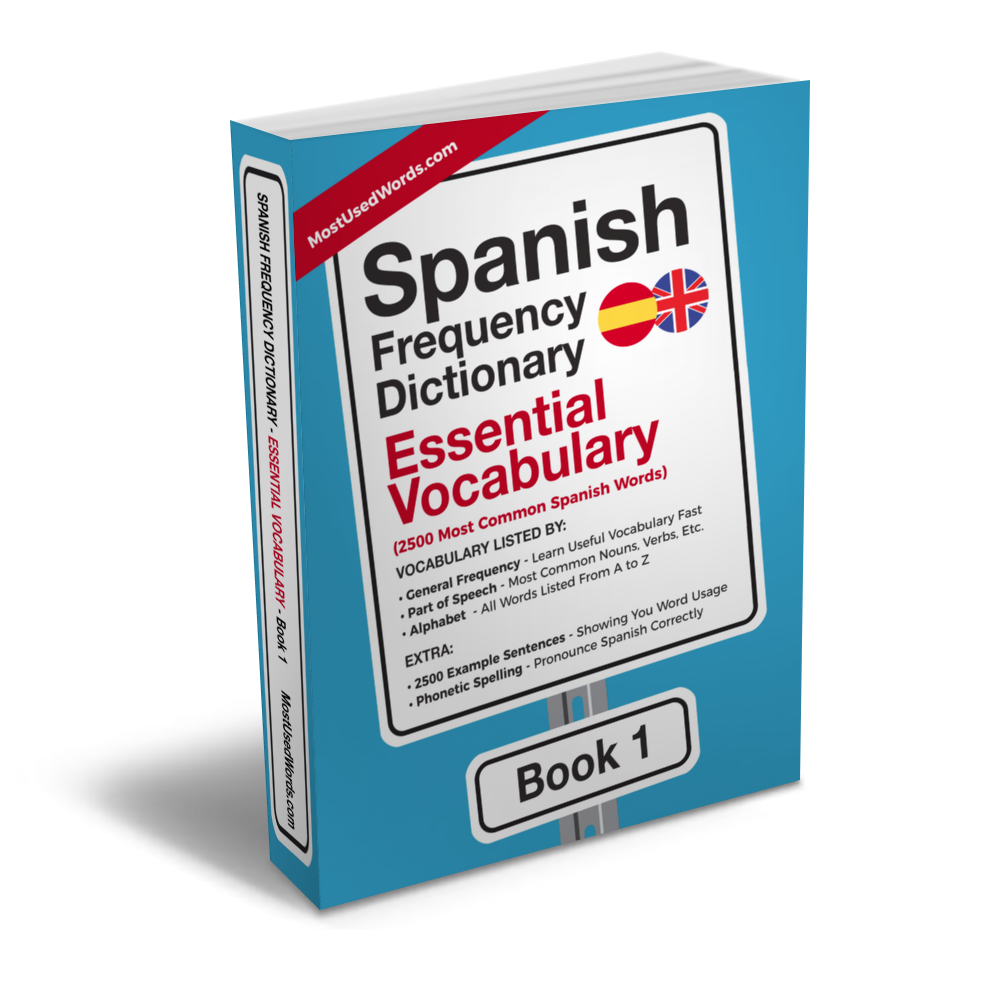
2,500 most common Spanish words with IPA pronunciation & bilingual example sentences
How to Say "There Was" in Spanish
In Spanish, the phrase "there was" can be translated using different forms of the verb haber, which means "to have." The most commonly used translations are había (IPA: /aˈβi.a/) and hubo (IPA: /ˈu.bo/). Both express past existence or occurrence.
Past Tense Usage in Spanish
Want to improve your Spanish?
The Spanish Frequency Dictionary series covers the 10,000 most common Spanish words — ranked by how often native speakers actually use them, with IPA pronunciation, English translations, and bilingual example sentences at every level.
Browse all 4 volumes →- Había: This is the imperfect form of "haber" used to describe ongoing actions or states in the past. For example: Había una casa en el campo. (There was a house in the countryside.).
- Hubo: This is the preterite form, indicating completed actions at a specific point in time. Example: Hubo una fiesta anoche. (There was a party last night.).
 Take a look at our series of frequency dictionaries to learn Spanish words fast. Stop learning hard, and start learning smart!
Pronunciation Tips for "There Was"
To correctly pronounce these phrases:
- Había: Emphasize the stress on the second syllable: aˈβi.a.
- Hubo: Stress falls on the first syllable: ˈu.bo.
Regional Variations in Spanish
Different regions have unique ways of expressing "there was." For example, Había is commonly used across Latin America and Spain for ongoing past states. In contrast, Hubo is more prevalent in Mexico to describe completed actions.
How to Say "There Was" in Spanish: Sample Sentences
Here are five sample sentences you can use:
- Había un perro en el parque.
(There was a dog in the park.).
- Había mucha gente en la playa.
(There were many people at the beach.).
- Hubo un accidente en la carretera.
(There was an accident on the road.).
- Hubo una tormenta durante la noche.
(There was a storm during the night.).
- Había una hermosa puesta de sol en el horizonte.
(There was a beautiful sunset on the horizon.).
Build Your Spanish Vocabulary Systematically
The fastest way to grow your Spanish vocabulary is to start with the words you'll actually encounter every day. The Spanish Frequency Dictionary covers the 2,500 most common Spanish words, each with IPA pronunciation, an English translation, and bilingual example sentences.
Browse the full range of Spanish frequency dictionaries to find the volume that matches your level.