How to Say Then in Spanish | Most Used Words
As of 2026, if you are trying to learn Spanish, one of the first questions that might come up is how to say then in Spanish. This versatile English word can be tricky due to its multiple meanings and uses. In this article, we will explore various translations of then in Spanish, provide detailed explanations for each translation, offer examples of usage, discuss regional differences across different Spanish-speaking countries, and highlight common mistakes learners make when using 'then'. We'll also include a pronunciation guide for key words.
2,500 most common Spanish words with IPA pronunciation & bilingual example sentences
What is Then in Spanish?
The English word then can be used as an adverb, a conjunction, or even an adjective. In Spanish, the translations of then vary based on context and meaning. Here are some common translations:
- Entonces: Used as an adverb to mean "at that time" or "in that case". e.g., Entonces fui a la tienda y compré pan.
- Luego: Can be used as an adverb to mean "after that" or "later", and as a conjunction to mean "then" or "so". e.g., Primero hice la tarea y luego fui al cine.
- Después: Similar in meaning to "luego", used as an adverb or a conjunction. e.g., Comí un bocadillo y después fui a dormir.
- En ese momento: Useful when you want to be more specific, means "at that moment" or "at that time". e.g., Estaba leyendo un libro y en ese momento sonó el teléfono.
- En aquel entonces: Used to refer to a specific time in the past. e.g., En aquel entonces, no había internet.
Detailed Explanations for Each Translation
Want to improve your Spanish?
The Spanish Frequency Dictionary series covers the 10,000 most common Spanish words — ranked by how often native speakers actually use them, with IPA pronunciation, English translations, and bilingual example sentences at every level.
Browse all 4 volumes →Each translation of then has its unique usage and context:
- Entonces: Often used to introduce a sequence or consequence. e.g., Si no te gusta, entonces no lo comas.
- Luego: Commonly used in everyday conversation for indicating time sequences. e.g., Terminó su tarea y luego se fue a dormir.
- Después: Used to indicate an action that follows another one, often with a slight delay or interval. e.g., Estaba llegando tarde, entonces la llamé y después tomé un taxi.
Usage of 'Then' in Conditional Sentences and Questions
The word then can also be used in conditional sentences to express hypothetical situations:
- If it rains tomorrow, then we'll stay home. (Si llueve mañana, entonces nos quedaremos en casa.)
Formal vs. Informal Usage Across Different Spanish-Speaking Countries
The usage of 'then' in Spanish can vary across different countries:
- In Spain: "Entonces" is commonly used, while "luego" might be less formal.
- Entonces: en-TOH-nahs (IPA: /enˈto.nas/)
- Luego: LOO-hay (IPA: /ˈlu.e/)
- Después: deh-SPO-s (IPA: /de.ˈspo.s/)
Common Mistakes When Using 'Then' in Spanish
Learners often confuse the usage of entonces, luego, and después. It's important to understand the context and meaning before choosing the right word.
Pronunciation Guide for Key Words
The Spanish Frequency Dictionary series covers the 10,000 most common Spanish words — ranked by how often native speakers actually use them, with IPA pronunciation, English translations, and bilingual example sentences at every level.
Build Your Spanish Vocabulary Systematically
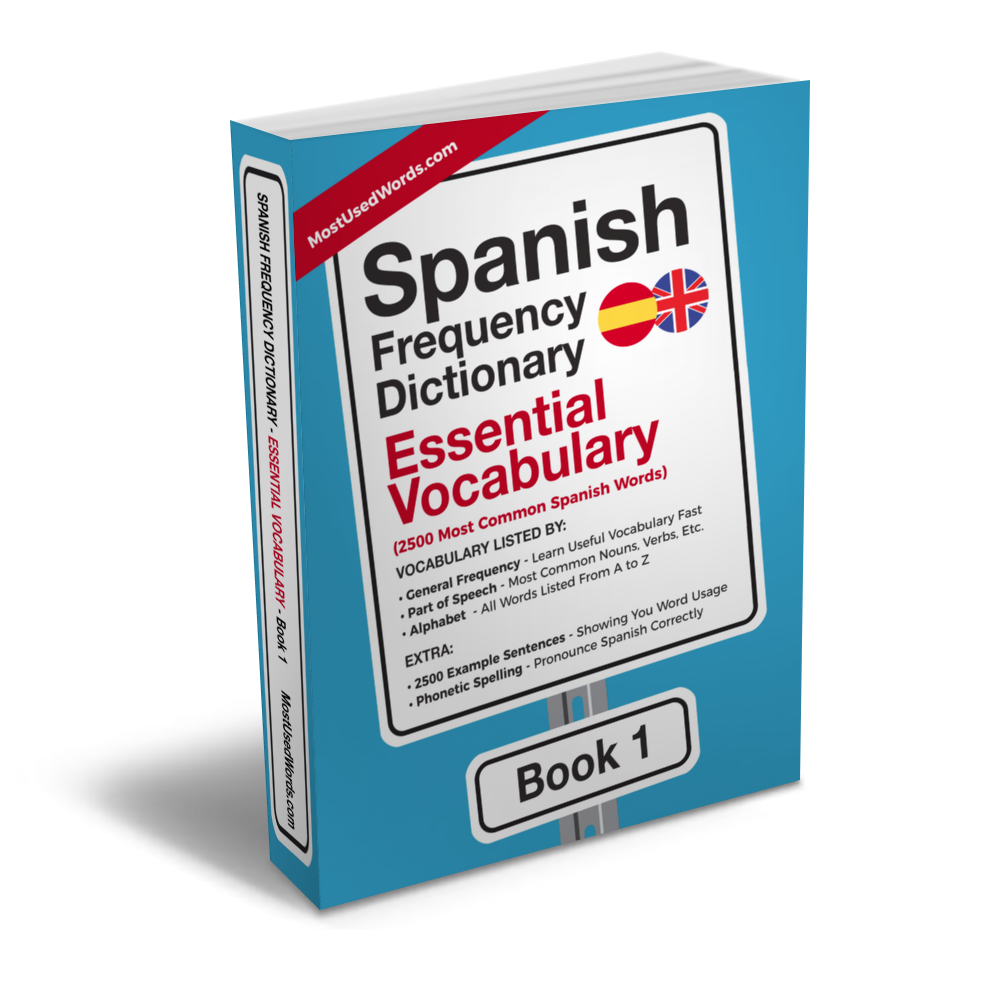
The fastest way to grow your Spanish vocabulary is to start with the words you'll actually encounter every day. The Spanish Frequency Dictionary covers the 2,500 most common Spanish words, each with IPA pronunciation, an English translation, and bilingual example sentences.
Browse the full range of Spanish frequency dictionaries to find the volume that matches your level.