How to Say Since in Spanish | MostUsedWords.com
As of 2026, understanding how to say "since" in Spanish is crucial for expanding your vocabulary. In this article, we will explore different ways to express the concept of "since," including the usage of 'desde' and other phrases that convey similar meanings.

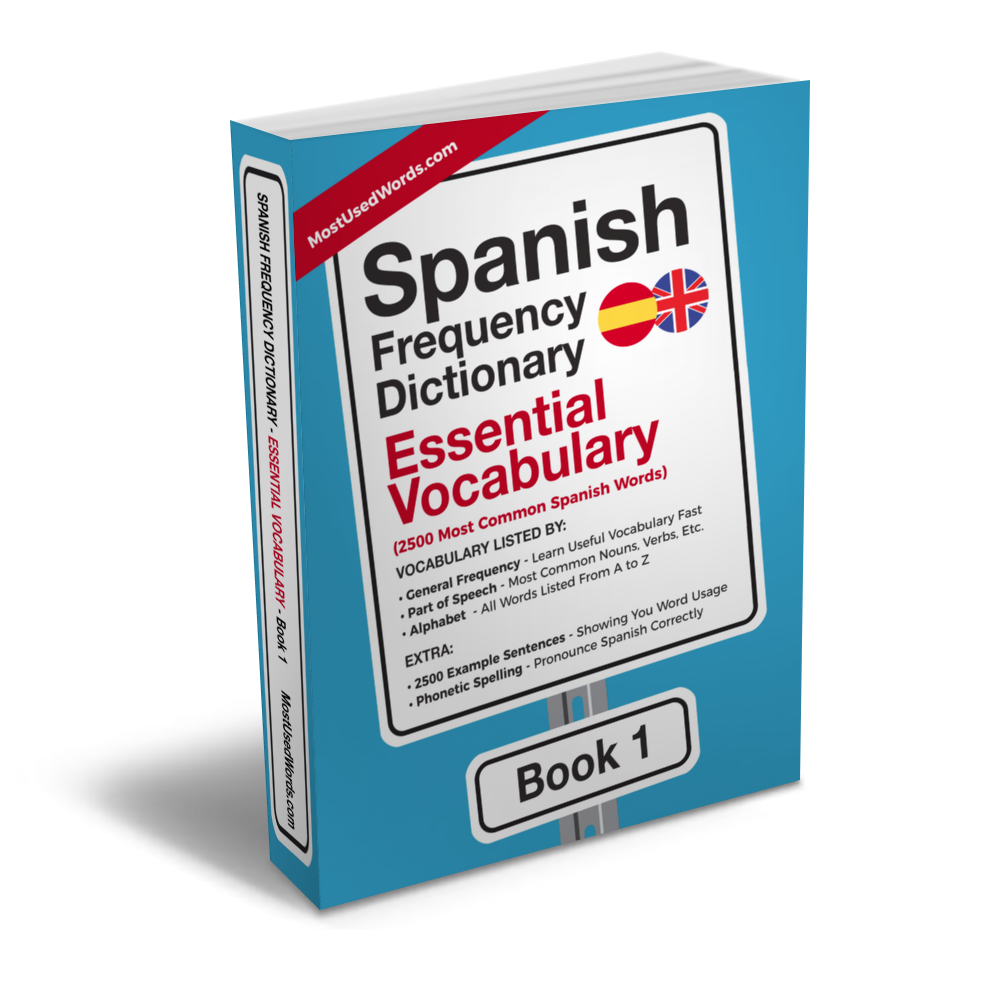
2,500 most common Spanish words with IPA pronunciation & bilingual example sentences
How to Use "Desde" in Spanish
When we talk about "since" in English, it often refers to the period of time that has passed after a specific moment or event. In Spanish, the most common translation for "since" is "desde." However, it's important to note that Spanish has regional variations and alternative expressions may exist. Here are some detailed explanations on how to use 'desde' in various contexts:
Meaning of "Desde"
Want to improve your Spanish?
The Spanish Frequency Dictionary series covers the 10,000 most common Spanish words — ranked by how often native speakers actually use them, with IPA pronunciation, English translations, and bilingual example sentences at every level.
Browse all 4 volumes →In Spanish, "since" can be translated using different words and phrases depending on the context. Below are common ways to express the concept of "since" in Spanish:
- Desde (IPA: /ˈdes.de/): The most widely used translation for "since," indicating the starting point of an action or the moment something began.
- Vivo en esta ciudad desde que llegué a España.
- Desde hace (IPA: /ˈdes.de ˈa.θe/): This phrase is often used to indicate the duration of an action that started in the past and continues in the present.
- Vivo en esta ciudad desde hace cinco años.
- Desde entonces (IPA: /ˈdes.de enˈton.ses/): This expression is used to refer to a specific point in the past, similar to "since then" in English.
- Me gradué en 2010, y desde entonces, he trabajado como profesor.
- Desde que (IPA: /ˈdes.de ke/): "Desde que" is commonly used to introduce a cause or reason.
- No como carne desde que decidí ser vegetariano.
- A partir de (IPA: /a ˈpar.tir de/): This phrase can be used to convey the meaning of "since" when referring to a future starting point.
- A partir de mañana, trabajaré en un nuevo proyecto.
- Mistaken usage: No iré al cine desde que no tengo dinero.
- Correct usage: No iré al cine si no tengo dinero.
- Desde que empezó la pandemia, he trabajado desde casa.
- Ha llovido mucho desde el verano pasado.
- No hablamos desde hace dos años.
(I have been living in this city since I arrived in Spain.)
(I have been living in this city for five years / since five years ago.)
(I graduated in 2010, and since then, I have been working as a teacher.)
(I haven't eaten meat since I decided to become a vegetarian.)
(From tomorrow, I will be working on a new project.)
Common Mistakes When Using "Desde"
One common mistake is using 'desde' in conditional sentences where it might not fit naturally. For example:
Comparison with Other Languages
While 'desde' is the most common way to express "since" in Spanish, it's interesting to compare this usage with other languages. In French, for instance, you might use "depuis," and in Italian, "da quando." However, each language has its nuances that can differ from Spanish.
How to Say "Since" in Spanish: Sample Sentences
Here are more sample sentences using 'desde' to help you understand the various contexts:
Build Your Spanish Vocabulary Systematically
The fastest way to grow your Spanish vocabulary is to start with the words you'll actually encounter every day. The Spanish Frequency Dictionary covers the 2,500 most common Spanish words, each with IPA pronunciation, an English translation, and bilingual example sentences.
Browse the full range of Spanish frequency dictionaries to find the volume that matches your level.