How to Say Should in Spanish | MostUsedWords.com
Updated for 2026, the English word "should" can be translated into several forms in Spanish depending on the context and regional variations.
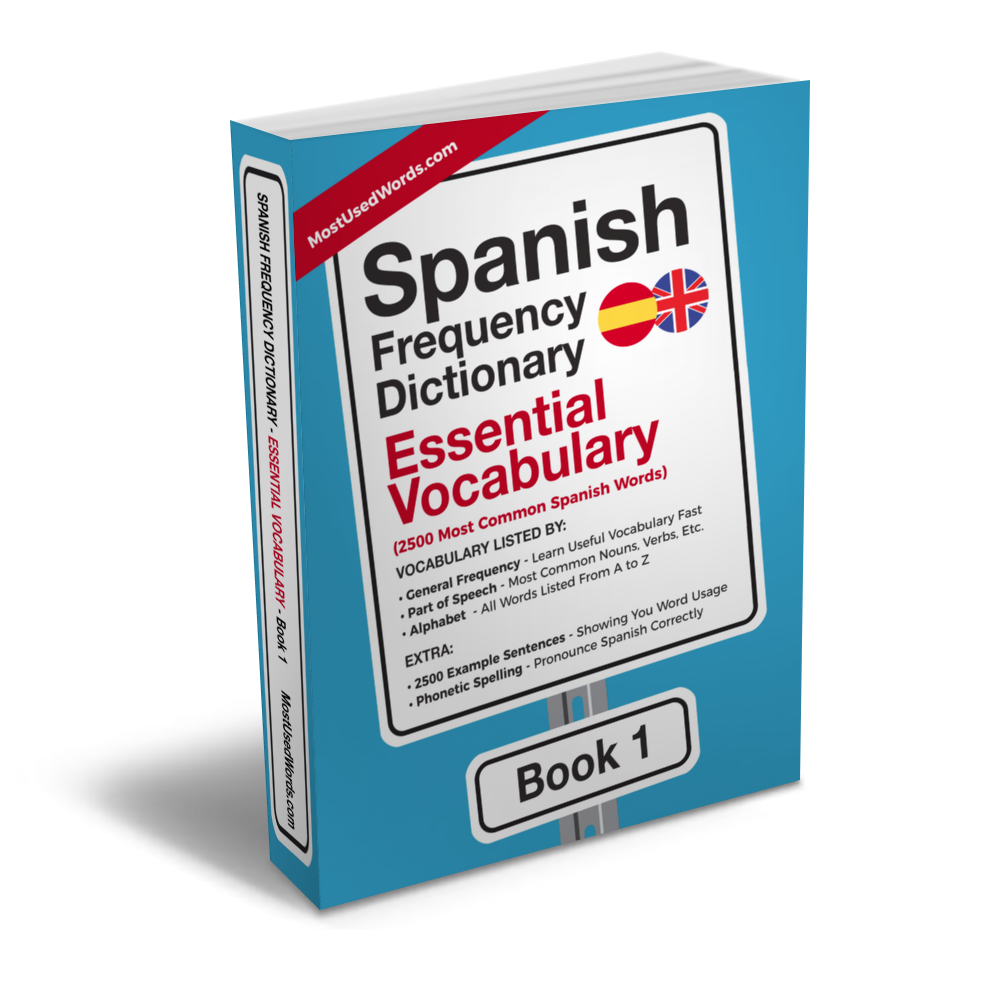
2,500 most common Spanish words with IPA pronunciation & bilingual example sentences
How to Say Should in Spanish
The English term "should" conveys a sense of advisability, expectation, or moral obligation. In Spanish, you have multiple options for expressing this concept:
- Deber (IPA: /ˈde.βeɾ/)
- Tener que (IPA: /ˈte.ner ˈke/)
- Haber de (IPA: /ˈa.βeɾ de/)
- Deber de (IPA: /ˈde.βeɾ de/)
Meaning of Should in Spanish
Want to improve your Spanish?
The Spanish Frequency Dictionary series covers the 10,000 most common Spanish words — ranked by how often native speakers actually use them, with IPA pronunciation, English translations, and bilingual example sentences at every level.
Browse all 4 volumes →In Spanish, "should" can be used to express advisability, expectation, probability, and moral obligation:
- Advisability: You should eat more vegetables. (Deberías comer más verduras.)
- Expectation: She should arrive soon. (Ella debería llegar pronto.)
- Probability: It should rain tomorrow. (Debería llover mañana.)
- Moral obligation: You should apologize for your mistake. (Deberías disculparte por tu error.)
Sample Sentences Using "Should" in Spanish
Here are additional sample sentences to help you understand the usage of each form:
- Deberías estudiar más para el examen. (You should study more for the exam.)
- Tienes que llegar temprano a la reunión. (You should arrive early for the meeting.)
- Deberíamos visitar ese museo cuando estemos en Madrid. (We should visit that museum when we're in Madrid.)
- Ella debería disculparse por su comportamiento grosero. (She should apologize for her rude behavior.)
- No deberías fumar tanto. Es malo para tu salud. (You shouldn't smoke so much. It's bad for your health.)
- Tengo que ir al médico hoy. (I should go to the doctor today.)
- Habrá de haber un error en la cuenta. (There must be a mistake in the account.)
- No deberías comer tanto chocolate. (You shouldn not eat so much chocolate.)
- Deberíamos ir al cine esta noche. (We should go to the cinema tonight.)
Usage in Different Tenses and Contexts
The usage of "should" can vary depending on the tense:
- Present: Deberías estudiar más. (You should study more now.)
- Future: Deberás llegar temprano mañana. (You will have to arrive early tomorrow.)
- Past: Habrías de haber llegado ayer. (You should have arrived yesterday.)
Common Mistakes When Using "Should" in Spanish
A common mistake is confusing the forms of "deber." For example, using "debería" instead of "tendría que" can change the meaning:
- Incorrect: Debería haber ido al médico. (You should have gone to the doctor.)
- Correct: Tendrías que haber ido al médico. (You should have gone to the doctor.)
Build Your Spanish Vocabulary Systematically
The fastest way to grow your Spanish vocabulary is to start with the words you'll actually encounter every day. The Spanish Frequency Dictionary covers the 2,500 most common Spanish words, each with IPA pronunciation, an English translation, and bilingual example sentences.
Browse the full range of Spanish frequency dictionaries to find the volume that matches your level.