How to Say Of in Spanish | MostUsedWords.com
As of 2026, the word "of" in Spanish can be translated as "de," a versatile preposition used extensively across different contexts such as possession, origin, composition, time, distance, cause, reason, and comparison.
How to Use 'De' in Spanish
The word "de" is one of the most commonly used prepositions in Spanish. It serves various purposes including indicating possession, origin, material, time, distance, cause or reason, and comparison. Here are some detailed examples:
- Possession: "El libro de Maria" means "Maria's book."
- Origin: "La casa de Mexico" means "the house from Mexico."
- Material: "Una taza de cafe" means "a cup of coffee."
"De" can also be used to indicate time, distance, cause or reason, and comparison. Here are some examples:
- Time: "Las tres de la tarde" means "three in the afternoon."
- Distance: "A diez kilómetros de aquí" means "ten kilometers from here."
- Cause or Reason: "Me duele la cabeza de tanto estudiar" means "My head hurts from studying so much."
- Comparison: "Este libro es mejor que ese" means "This book is better than that one."
In addition to these basic uses, "de" can be used in conjunction with other prepositions. For example, when indicating possession and origin simultaneously: "La casa de la familia de Maria," which translates to "Maria's family's house." Another complex usage includes sentences like "Ella es amiga de quien ama," meaning "She is a friend of who she loves."
Common Mistakes When Using 'De'
Want to improve your Spanish?
The Spanish Frequency Dictionary series covers the 10,000 most common Spanish words — ranked by how often native speakers actually use them, with IPA pronunciation, English translations, and bilingual example sentences at every level.
Browse all 4 volumes →A common mistake when using "de" is overusing it or misplacing it in sentences. For instance, saying "La casa de Maria y Juan" instead of the correct form "La casa de Maria y de Juan." Another frequent error is forgetting to use "de" where necessary, such as in expressions like "Me encanta la comida de España," which means "I love Spanish food."
Examples of 'De' in Context
To further illustrate the usage of "de," here are more examples:
- Possession with other prepositions: "La casa de la familia de Maria" (Maria's family's house).
- Time and origin: "El libro de historia de España" (the book of Spanish history).
Regional Variations and Dialects
The usage of "de" can vary across different Spanish-speaking regions. For instance, in some Latin American countries, the preposition might be omitted or replaced with other words depending on the context.
Usage in Formal vs. Informal Contexts
The use of "de" can differ between formal and informal settings. In formal contexts, it is often used more strictly to indicate possession or origin, while in informal contexts, it might be omitted for brevity or replaced with other expressions.

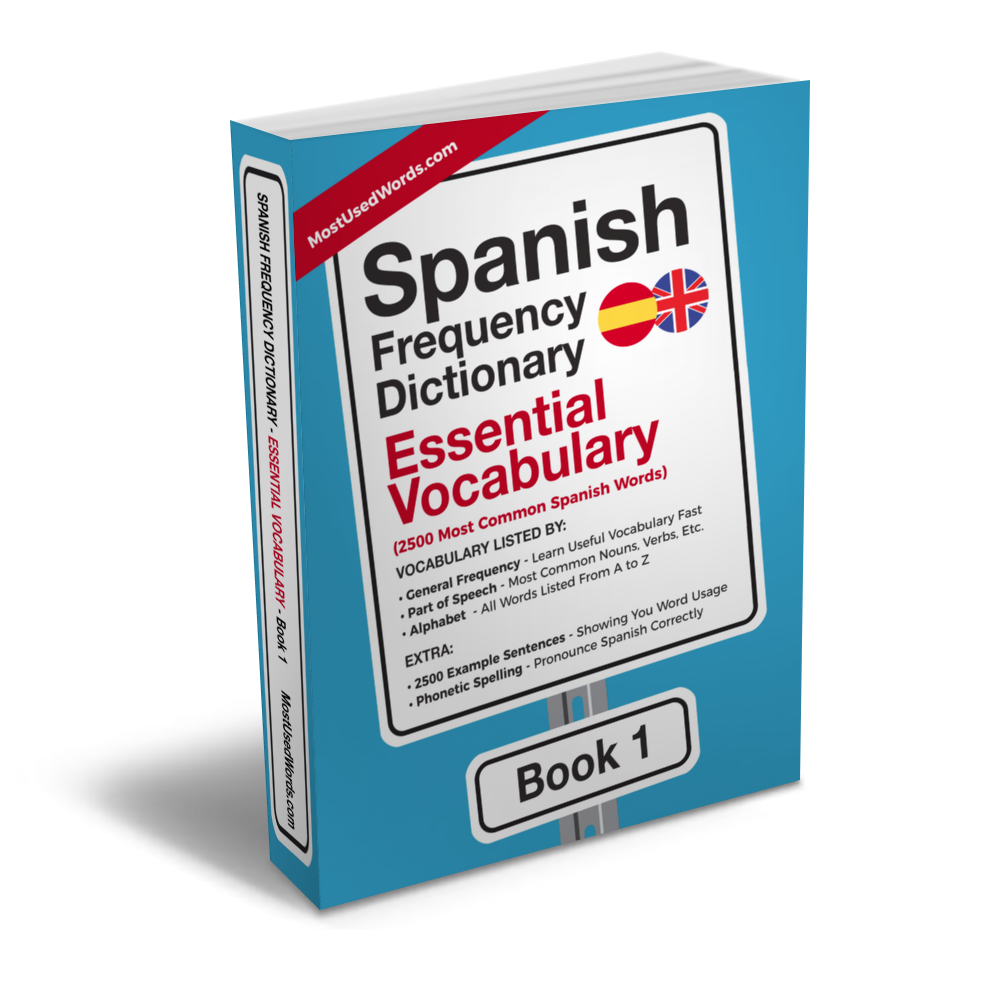
2,500 most common Spanish words with IPA pronunciation & bilingual example sentences
Build Your Spanish Vocabulary Systematically
The fastest way to grow your Spanish vocabulary is to start with the words you'll actually encounter every day. The Spanish Frequency Dictionary covers the 2,500 most common Spanish words, each with IPA pronunciation, an English translation, and bilingual example sentences.
Browse the full range of Spanish frequency dictionaries to find the volume that matches your level.