How to Say Good Evening in Spanish | MostUsedWords.com
As the second most spoken language globally, Spanish offers several ways to greet people depending on the time of day and regional customs. If you're wondering how to say "good evening" in Spanish or how to greet someone in the evening in Spanish, this article will provide you with various options for a friendly and polite greeting.
Fast track your vocabulary with the 10,000 most common Spanish words!
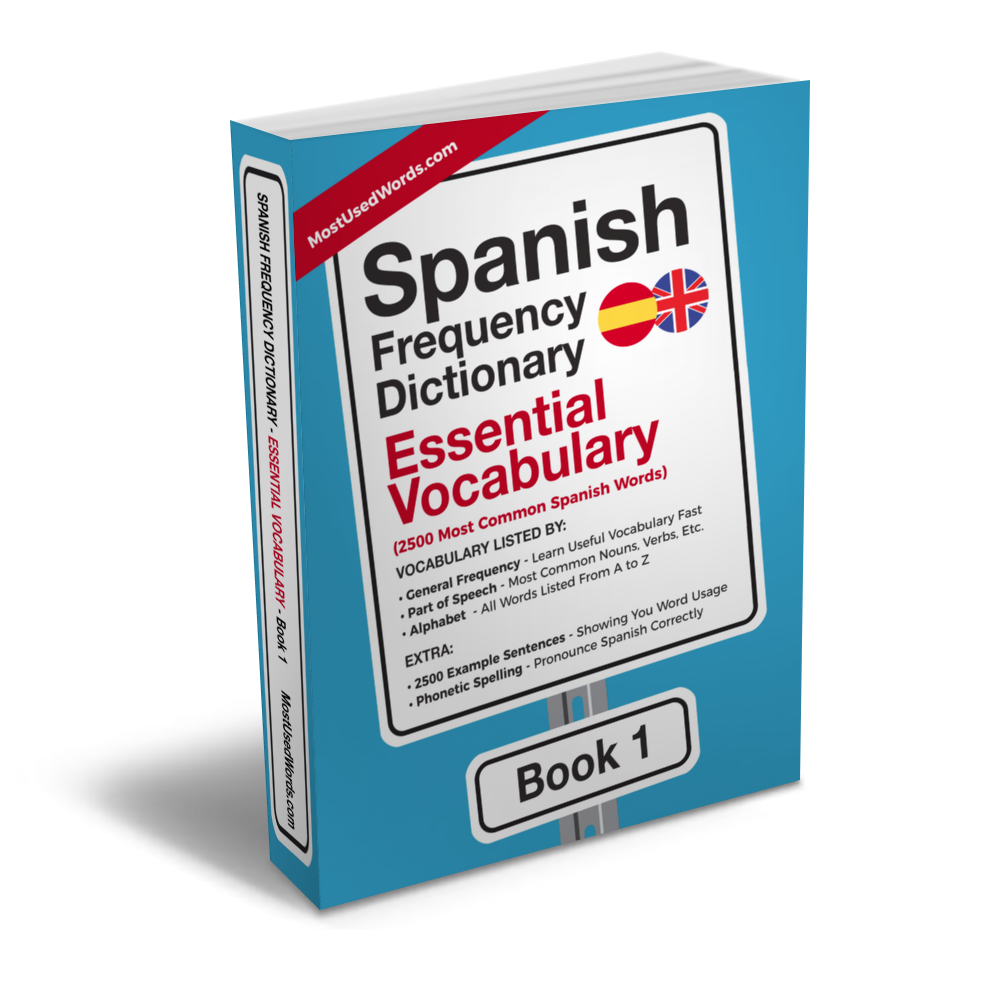
2,500 most common Spanish words with IPA pronunciation & bilingual example sentences
How to Say "Good Evening" in Spanish
In Spanish, greeting someone during the evening involves choosing from several phrases depending on the formality of the situation and regional customs. Here are some common ways to say "good evening" in Spanish:
- Buenas tardes (IPA: /ˈbwe.nas ˈtaɾ.ðes/): This is the most commonly used phrase, meaning "good afternoon." It's appropriate from around 1 pm until about 8 pm.
- Buena tarde (IPA: /ˈbwe.na ˈtaɾ.ðe/): Less common but still used in some Latin American countries like Mexico and Guatemala.
- Buenas noches (IPA: /ˈbwe.nas ˈno.tʃes/): This phrase means "good night" literally, but it's also used from around 8 pm until midnight. In Andalusia, Spain, it can be used as early as 2 pm.
- Buena noche (IPA: /ˈbwe.na ˈno.tʃe/): Another variation, less common than "buenas noches," but still used in countries like Colombia and Venezuela.
Cultural Context and Customs for Greeting Someone in the Evening
Want to improve your Spanish?
The Spanish Frequency Dictionary series covers the 10,000 most common Spanish words — ranked by how often native speakers actually use them, with IPA pronunciation, English translations, and bilingual example sentences at every level.
Browse all 4 volumes →In Spanish-speaking cultures, using the right greeting is not just about choosing the correct phrase; it's also about understanding when to use "buenos días" versus "buena tarde." The choice depends on the time of day and the formality of the situation. For instance, in business settings or formal gatherings, "buenas tardes" might be more appropriate than "buenas noches."
Formal vs. Informal Settings for Greeting Someone
The context in which you use these greetings can vary widely. In a casual setting like meeting friends at a café or greeting someone on the street, any of the above phrases would be suitable depending on the time. However, in formal settings such as business meetings or official events, "buenas tardes" is generally preferred over "buenas noches."
Regional Differences
The use of these greetings can vary significantly across different Spanish-speaking regions. For example, in Andalusia, Spain, "buenas noches" might be used from 2 pm to midnight, whereas in Catalonia, it's more common to use "buenas tardes" until 9 pm. In Latin America, the usage of these phrases can also differ by country.
How to Say "Good Evening" in Spanish: Sample Sentences
To help you understand how to use these greetings in context, here are some sample sentences:
- Buenas tardes, ¿cómo estás?
- (Good evening, how are you?)
- ¡Buenas noches! Espero que tengas una buena cena.
- (Good evening! I hope you have a good dinner.)
- Buena tarde, ¿cómo estás hoy?
- (Good afternoon/evening, how are you today?)
- ¡Buenas noches a todos!
- (Good evening to everyone!)
- Buena noche, hasta mañana.
- (Good night/evening, see you tomorrow.)
You can find the paperbacks on Amazon (we have frequency dictionaries for beginners, intermediates, advanced and near-fluent students), or get the eBooks directly from us here.(They are affiliate links. That means we might get a small commission if you make a purchase after clicking these links, at no extra cost to you.)
Build Your Spanish Vocabulary Systematically
The fastest way to grow your Spanish vocabulary is to start with the words you'll actually encounter every day. The Spanish Frequency Dictionary covers the 2,500 most common Spanish words, each with IPA pronunciation, an English translation, and bilingual example sentences.
Browse the full range of Spanish frequency dictionaries to find the volume that matches your level.