How to Say Furniture in Spanish | MostUsedWords.com
Updated for 2026, if you are looking for the term "furniture" in Spanish, it is muebles (IPA: /ˈmwe.βles/). This article delves into various aspects including etymology, cultural significance across different Spanish-speaking cultures, and comparisons with other Romance languages.
The word 'muebles' originates from the Latin term 'mobilia', meaning movable property. Over time, this evolved into the Spanish 'muebles', reflecting its usage in describing items that can be moved or rearranged within a home.
Cultural Significance of Furniture in Spanish-Speaking Cultures
In many Spanish-speaking cultures, furniture is not just about practicality but also aesthetics and tradition. For instance, the design and arrangement of furniture often reflect cultural values and social status.
Meaning of "Furniture" in Spanish
Want to improve your Spanish?
The Spanish Frequency Dictionary series covers the 10,000 most common Spanish words — ranked by how often native speakers actually use them, with IPA pronunciation, English translations, and bilingual example sentences at every level.
Browse all 4 volumes →In Spanish, "muebles" refers to any movable object that supports human activities such as seating, sleeping, and storage. This term also includes accessories like rugs, curtains, and lamps.
Translating “Furniture” to Spanish
To translate "furniture" into Spanish, use the word "muebles". Here are some additional translations for related terms:
- Chair: Silla (IPA: /ˈsi.ʎa/)
- Table: Mesa (IPA: /ˈme.sa/)
- Bed: Cama (IPA: /ˈka.ma/)
- Dresser: Cómoda (IPA: /ˈko.mo.ða/)
- Cabinet: Armario (IPA: /arˈma.ɾjo/)
Regional Differences in Usage of "Furniture" Terms
In Spanish, regional variations exist for terms related to furniture:
- Mexico and Central America: The term "muebles" is most commonly used.
- Argentina and Uruguay: In these countries, the term mobiliario (IPA: /mo.biˈlia.ɾjo/) may be preferred over "muebles".
- Spain: The word "mueble" is used in legal and administrative contexts.
Sample Sentences Using “Muebles”
Here are five sample sentences to help you understand how to use "muebles" in different contexts:
- Dónde puedo comprar muebles para mi casa?
- (Where can I buy furniture for my house?)
- Tengo que pintar los muebles antes de mudarme.
- (I need to paint the furniture before moving.)
- Los muebles nuevos encajan perfectamente con la decoración.
- (The new furniture fits perfectly with the decoration.)
- No tengo suficiente espacio para todos los muebles.
- (I don't have enough space for all the furniture.)
- Los muebles antiguos son una parte importante de la historia familiar.
- (The old furniture is an important part of family history.)
Idiomatic Expressions Using "Muebles"
Here are some common idiomatic expressions using the term 'muebles':
- Tener un mueble en la cabeza: This expression means someone is not very smart or clever.
- Vender el cuadro y pintar la pared: This idiom refers to selling something and then getting a replacement that's even better, often used metaphorically in the context of furniture.
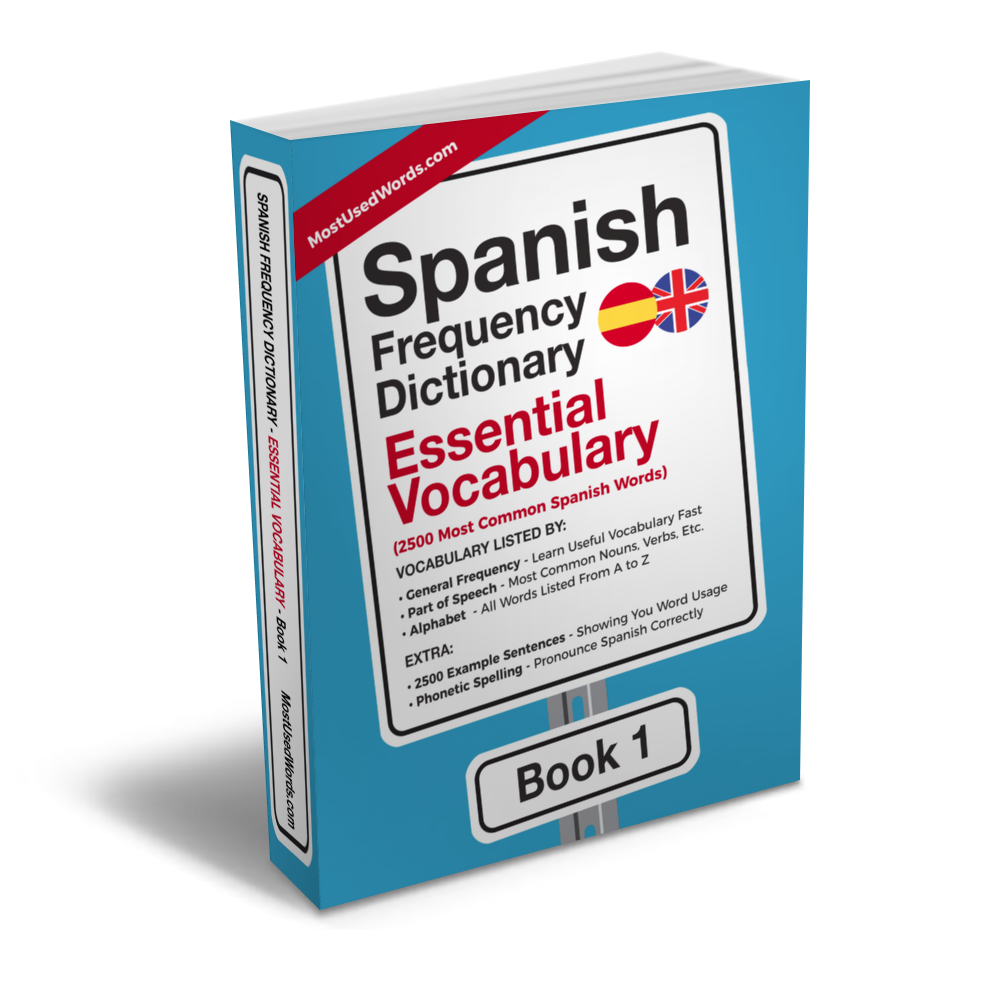
2,500 most common Spanish words with IPA pronunciation & bilingual example sentences
Build Your Spanish Vocabulary Systematically
The fastest way to grow your Spanish vocabulary is to start with the words you'll actually encounter every day. The Spanish Frequency Dictionary covers the 2,500 most common Spanish words, each with IPA pronunciation, an English translation, and bilingual example sentences.
Browse the full range of Spanish frequency dictionaries to find the volume that matches your level.