How to Say Articles in Spanish - MostUsedWords.com
As of 2026, learning how to say "articles" in Spanish is an essential step towards mastering the language's grammatical nuances and expanding your vocabulary. In this article, we delve into the various meanings of "articles," provide examples for each context, and highlight common mistakes to avoid.

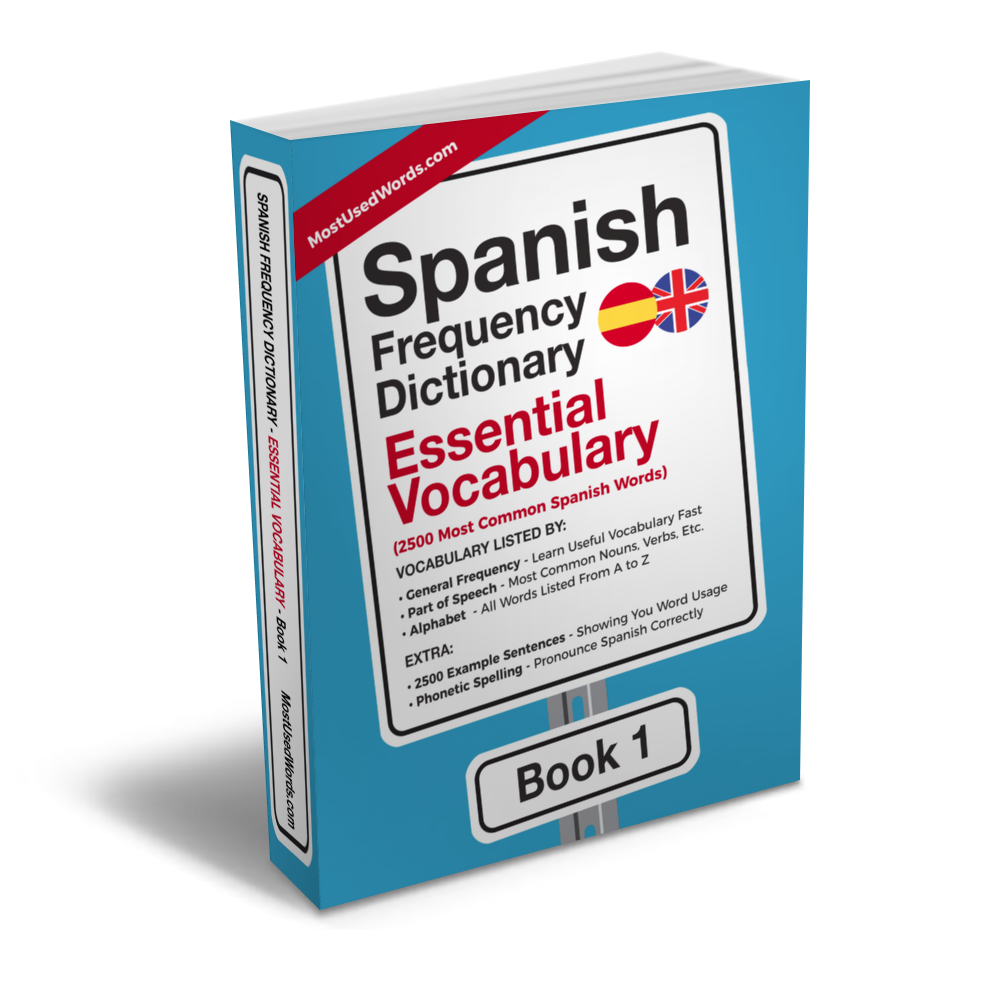
2,500 most common Spanish words with IPA pronunciation & bilingual example sentences
Understanding Articles in Spanish
In Spanish, the term "articles" refers to grammatical elements used before nouns to determine their gender and number. However, when translating the word "articles," there are several options: Artículos (IPA: /aɾˈti.ku.los/), Artículos determinados (IPA: /aɾˈti.ku.los de.teɾ.miˈna.ðos/): and Piezas escritas (IPA: /ˈpjeθ.as esˈkɾi.tas/).
Meaning of "Articles" in Spanish
Want to improve your Spanish?
The Spanish Frequency Dictionary series covers the 10,000 most common Spanish words — ranked by how often native speakers actually use them, with IPA pronunciation, English translations, and bilingual example sentences at every level.
Browse all 4 volumes →The word "articles" in Spanish has multiple meanings, each with its own context:
- Artículos: Refers to words that accompany nouns and indicate their gender and number. In Spanish, articles can be either definite or indefinite. Definite articles are "el," "la," "los," and "las," used to refer to something specific. Indefinite articles are "un," "una," "unos," and "unas," used for non-specific or unknown items.
- Artículos determinados: These are the definite articles ("the") that specify a particular, known noun. They indicate that both the speaker and listener know which specific item is being referred to.
- Piezas escritas: Refers to texts or documents of any kind, including essays, reports, novels, poems, etc., encompassing all forms of written expression.
To effectively use articles in Spanish, it's crucial to understand their role and application. For instance, the indefinite article "un" is used before singular nouns that are not specific or known: Un libro (a book). In contrast, the definite article "el" is used when referring to a specific book: El libro que leí ayer (The book I read yesterday).
How to Say "Articles" in Spanish: Sample Sentences
Here are additional sample sentences illustrating how to use the term "articles" in various contexts:
- ¿Dónde puedo encontrar artículos en español?
(Where can I find articles in Spanish?)
- Quiero leer artículos sobre historia latinoamericana.
(I want to read articles about Latin American history.)
- Los artículos determinados en español son "el" y "la".
(The definite articles in Spanish are "el" and "la".)
- ¿Qué tipos de artículos se publican en esta revista?
(What types of articles are published in this magazine?)
- Ella escribe artículos para un periódico local.
(She writes articles for a local newspaper.)
Common Mistakes When Using "Articles" in Spanish
A common mistake when using "articles" in Spanish is confusing the use of indefinite and definite articles. For example, saying Un libro es interesante (A book is interesting) instead of El libro que leí ayer es interesante (The book I read yesterday is interesting).
Another frequent error is using "articles" to refer to written pieces without specifying the context, such as in legal documents or academic papers. It's important to clarify whether you are referring to grammatical articles or written content.
Conclusion
Mastery of vocabulary related to "articles" in Spanish enhances your ability to communicate effectively and comprehend various contexts. Understanding both grammatical rules and practical applications will significantly improve your language skills.
Build Your Spanish Vocabulary Systematically
The fastest way to grow your Spanish vocabulary is to start with the words you'll actually encounter every day. The Spanish Frequency Dictionary covers the 2,500 most common Spanish words, each with IPA pronunciation, an English translation, and bilingual example sentences.
Browse the full range of Spanish frequency dictionaries to find the volume that matches your level.