How to Say After in Spanish | MostUsedWords.com
Updated for 2026, here’s a detailed look at how to express “after” in Spanish. In this article, we will explore various ways to use the word "after" in different contexts, including formal and informal settings.
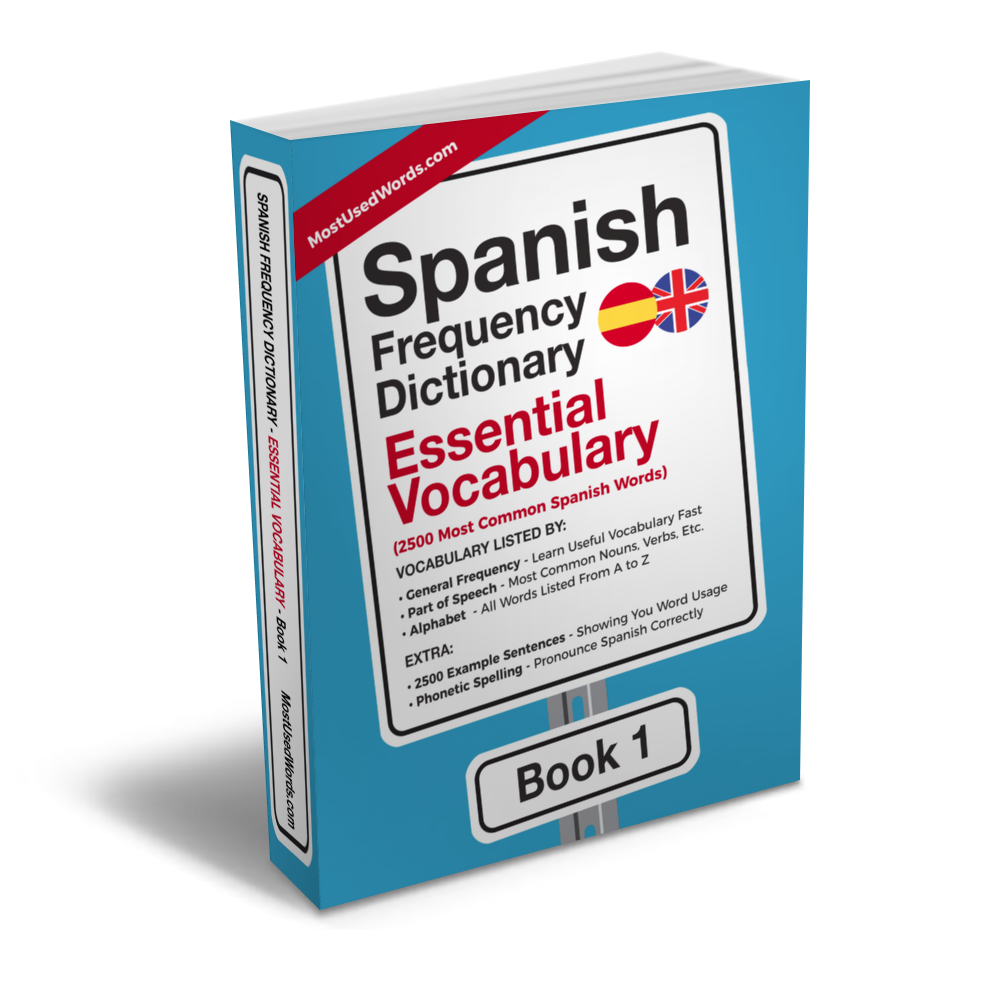
2,500 most common Spanish words with IPA pronunciation & bilingual example sentences
What is "After" in Spanish?
The concept of "after" can be expressed in several ways in Spanish, depending on whether you are referring to time or sequence. This guide will cover common translations like "después," "tras," and more.
Meaning and Translation of "After" in Spanish
Want to improve your Spanish?
The Spanish Frequency Dictionary series covers the 10,000 most common Spanish words — ranked by how often native speakers actually use them, with IPA pronunciation, English translations, and bilingual example sentences at every level.
Browse all 4 volumes →Some common meanings of "after" in Spanish include:
- Después: Indicating something happens at a later time, in the future, or following another event. (IPA: /de'spweθ/)
- Tras: Indicating that something happens immediately after or behind another thing or event. (IPA: /tɾas/)
- Luego: Frequently heard in Latin American Spanish to mean "after" or "later". (IPA: /ˈlweɡo/)
- Posteriormente: Often used in formal or academic contexts to mean "later on". (IPA: /pos.teɾjoɾˈmen.te/)
- Seguidamente: Similar to "a continuación", often used to indicate the order of events. (IPA: /seɣiˈðaːmente/)
- A continuación: Often used in formal settings to mean "next" or "following". (IPA: /ə kontinwaˈθjon/)
Pronunciation Tips for Non-Native Speakers
When pronouncing words like "después," remember that the stress is on the second syllable. For "tras," it's a short, sharp sound at the beginning.
Usage of 'After' in Formal and Informal Contexts
In formal settings, you might use terms such as "posteriormente" or "a continuación." In informal contexts, "después" is more commonly used. For instance:
- Formal: Posteriormente, se realizó una investigación.
- Informal: Después de la reunión, fuimos a comer.
Comparison with Other Spanish-speaking Countries' Dialects
The usage of "luego" is more prevalent in Latin American countries compared to Spain. In Mexico and other parts of Central America, it's common to use "luego" instead of "después."
Sample Sentences for Each Usage of 'After'
- Después de la cena, fuimos al cine.
- Luego nos vemos en el parque.
- A continuación, vamos a discutir los resultados.
Build Your Spanish Vocabulary Systematically
The fastest way to grow your Spanish vocabulary is to start with the words you'll actually encounter every day. The Spanish Frequency Dictionary covers the 2,500 most common Spanish words, each with IPA pronunciation, an English translation, and bilingual example sentences.
Browse the full range of Spanish frequency dictionaries to find the volume that matches your level.