How to Say 58 in Spanish | Pronunciation Guide and Tips
Updated for 2026, the number 58 can be a tricky one for English speakers learning Spanish. In this article, we'll break down how to say "fifty-eight" in Spanish along with tips on pronunciation and common phrases that include this number.
In Spanish, the cardinal form of fifty-eight is "cincuenta y ocho" (IPA: /sinˈkwenta i ˈo.tʃo/). The ordinal form for "58th" is "quincuagésimo octavo" (IPA: /kinkwa'xesimo ok'taβo/) which means the number's position in a sequence.
Pronunciation Guide for 58 in Spanish
To help you master the pronunciation of "cincuenta y ocho" and "quincuagésimo octavo," we've detailed each syllable:
- "cin" is pronounced as /sin/ (IPA)
- "cuen" is pronounced as /ˈkwenta/ (IPA)
- "ta" is pronounced as /ta/ (IPA)
- "y" is pronounced as /i/ (IPA)
- "o" is pronounced as /ˈo/ (IPA)
- "cho" is pronounced as /ˈtʃo/ (IPA)
For the ordinal form:
- "Quincuagésimo" is pronounced as /kinkwaˈxesimo/ (IPA), where:
- "kin-" is pronounced as /kin/ (IPA).
- "-kwa-" is pronounced as /kwa/ (IPA).
- "-xesimo" is pronounced as /ˈxesimo/ (IPA). The stress is on the second syllable.
- "Octavo" is pronounced as /ok'taβo/ (IPA), where:
- "oc-" is pronounced as /ok'/ (IPA).
- "ta" is pronounced as /ta/ (IPA).
- "vo" is pronounced as /βo/ (IPA).
To reinforce your learning, listen to the audio clips below:
Interactive Practice: How-to-Say-58-in-Spanish-Practice
Want to improve your Spanish?
The Spanish Frequency Dictionary series covers the 10,000 most common Spanish words — ranked by how often native speakers actually use them, with IPA pronunciation, English translations, and bilingual example sentences at every level.
Browse all 4 volumes →Test your knowledge with a quick quiz:
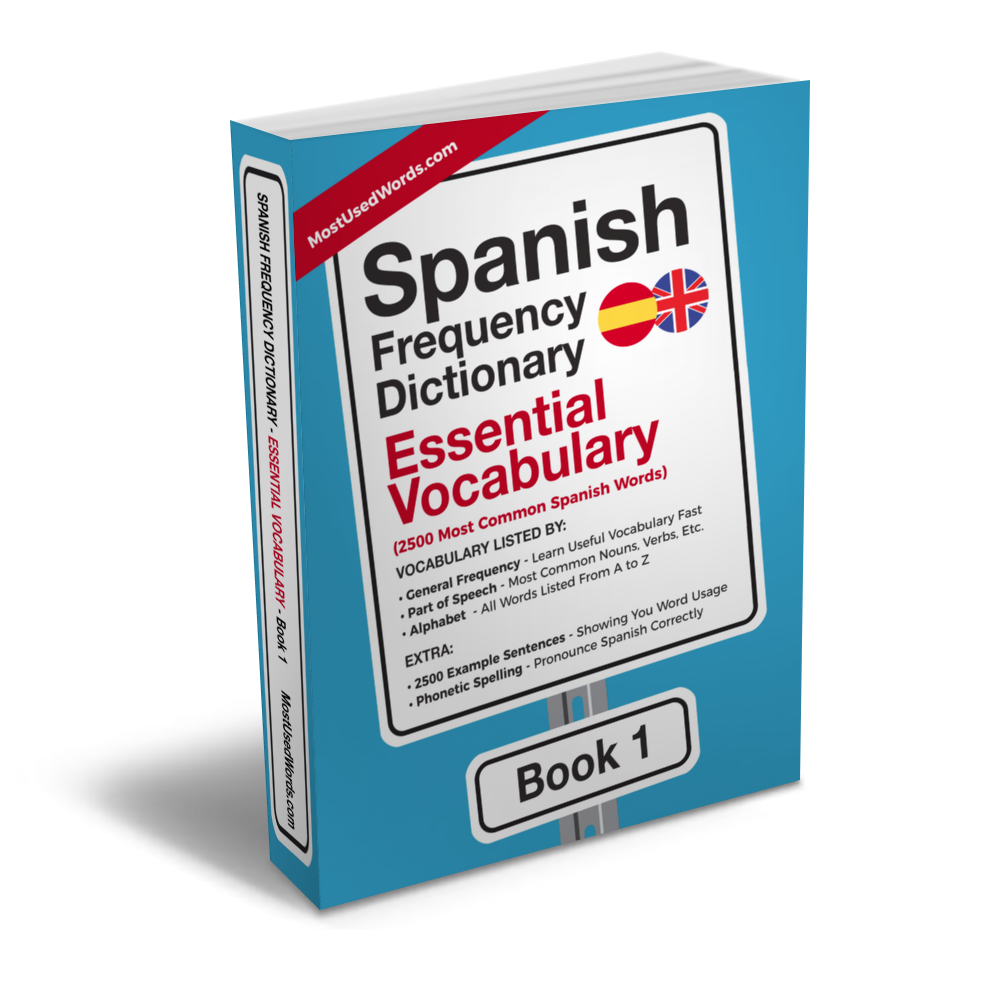
2,500 most common Spanish words with IPA pronunciation & bilingual example sentences
Common Phrases Using 58 in Spanish
Here are some common phrases that include the number fifty-eight:
- Hoy es mi quincuagésimo octavo cumpleaños.
- El libro tiene cincuenta y ocho capítulos.
- Mi abuela nació en mil novecientos sesenta y tres, así que tiene cincuenta y ocho años.
- Practice counting and using numbers in context.
- Listen to native speakers using these numbers in real-life situations.
- Compare Spanish number usage with other languages for a better understanding.
(Today is my 58th birthday.)
(The book has fifty-eight chapters.)
(My grandmother was born in 1963, so she is fifty-eight years old.)
How to Use Spanish Numbers in Everyday Conversations
Understanding how to use numbers like "58" in everyday conversations can be challenging. Here are some tips:
Build Your Spanish Vocabulary Systematically
The fastest way to grow your Spanish vocabulary is to start with the words you'll actually encounter every day. The Spanish Frequency Dictionary covers the 2,500 most common Spanish words, each with IPA pronunciation, an English translation, and bilingual example sentences.
Browse the full range of Spanish frequency dictionaries to find the volume that matches your level.