How to Say 42 in Spanish | Cardinal and Ordinal Numbers
As of 2026, knowing how to say numbers is crucial for effective communication in Spanish. In this article, we will delve into how to say 42 in Spanish, explore its cultural significance across various Spanish-speaking countries, and provide practical examples of using the number in everyday conversations.
Fast track your vocabulary with the 10.000 most common Spanish words!
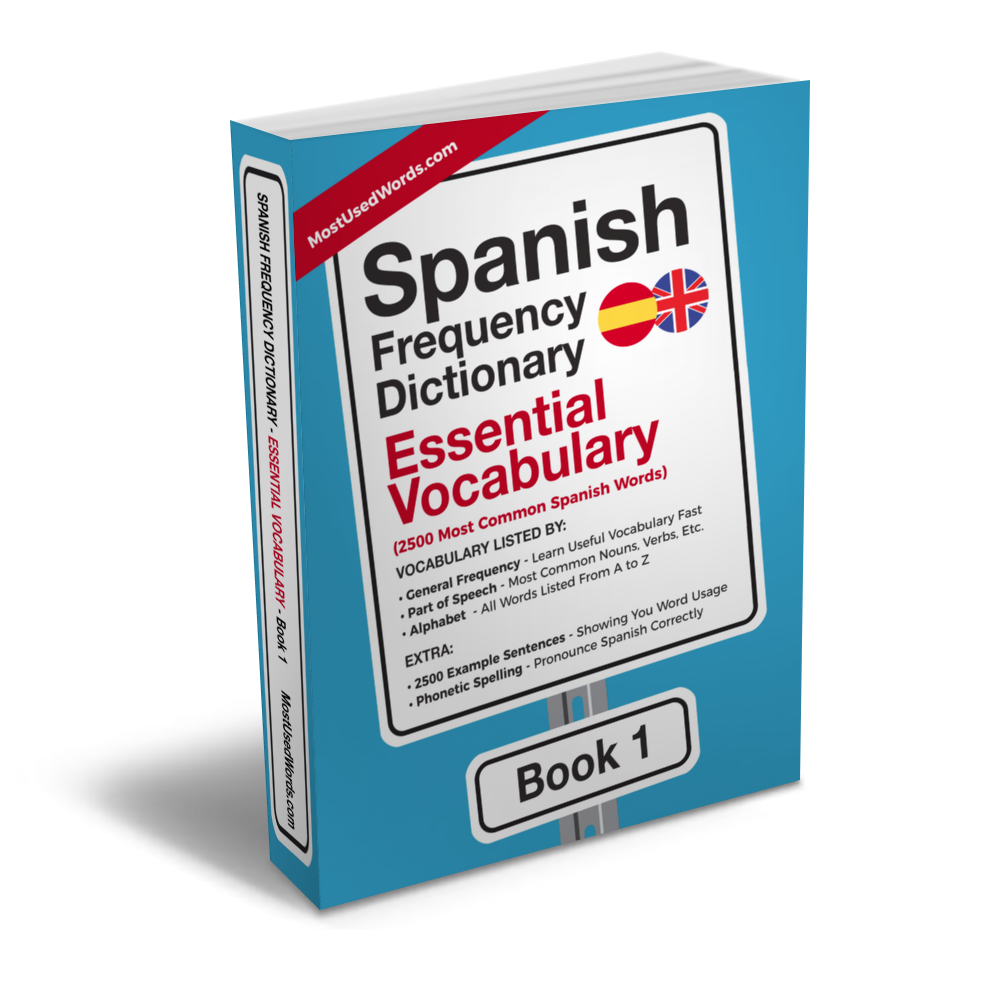
2,500 most common Spanish words with IPA pronunciation & bilingual example sentences
How to Say 42 in Spanish: Cardinal and Ordinal Numbers
In Spanish, numbers are categorized into cardinal and ordinal forms. A cardinal number represents quantity, while an ordinal number indicates position or sequence. Here's how you say "forty-two" in both forms:
- Cardinal Number: Cuarenta y dos (IPA: /kwaˌɾenta i ˈdos/)
- Ordinal Number: Cuadragésimo segundo (IPA: /kwadɾaˌxesimo seˈɡundo/)
To form ordinal numbers, you typically add the suffix "-avo" or "-ésimo". For "cuarenta y dos," it becomes "cuadragésimo segundo" when "-dragésimo" is added to the first syllable of “cuarenta” (“cua") and the cardinal form of “dos”: segundo.
Pronunciation Guide for 42 in Spanish
Want to improve your Spanish?
The Spanish Frequency Dictionary series covers the 10,000 most common Spanish words — ranked by how often native speakers actually use them, with IPA pronunciation, English translations, and bilingual example sentences at every level.
Browse all 4 volumes →To assist you in learning how to say "forty-two" in Spanish, we have included a pronunciation guide with audio clips:
- "Cuarenta" (IPA: /kwaˈɾenta/): Pronounced with a hard "k" sound at the beginning, followed by "wa", "ren", and "ta". The stress is on the second syllable, "ren". (Audio clip)
- "Y" (IPA: /i/): This means "and" in Spanish and is pronounced as a short "i" sound. (Audio clip)
- "Dos" (IPA: /ˈdos/): Pronounced with a soft "d" sound at the beginning, followed by "o", and "s". The stress is on the first syllable, "dos". (Audio clip)
Cultural Significance of Number 42 in Spanish-Speaking Countries
The number 42 holds various cultural significances across different Spanish-speaking countries. For instance, it is often associated with philosophical and literary references, such as Douglas Adams' "The Hitchhiker's Guide to the Galaxy," where 42 humorously represents the answer to life, the universe, and everything.
Common Phrases Using Number 42
Here are some common phrases using the number 42:
- "El resultado de la suma es cuarenta y dos." (The result of the sum is forty-two.)
- "Es mi cuadragésimo segundo cumpleaños." (This is my 42nd birthday.)
- "Tengo cuarenta y dos años de experiencia en el campo." (I have forty-two years of experience in the field.)
How to Say 42 in Spanish: Sample Sentences
To help you practice how to say "forty-two" in Spanish, here are five sample sentences:
- "El resultado de la suma de veinte y veintidós es cuarenta y dos." (The result of adding twenty and twenty-two is forty-two.)
- "Este es mi cuadragésimo segundo año en el negocio." (This is my 42nd year in the business.)
- "El libro tiene cuarenta y dos capítulos." (The book has forty-two chapters.)
- "Son las cuatro menos veinte, es decir, cuarenta y dos minutos a la hora de comer." (It's twenty minutes before four o'clock, which is forty-two minutes to lunchtime.)
-
"Mi número favorito es el cuarenta y dos porque...
Build Your Spanish Vocabulary Systematically
The fastest way to grow your Spanish vocabulary is to start with the words you'll actually encounter every day. The Spanish Frequency Dictionary covers the 2,500 most common Spanish words, each with IPA pronunciation, an English translation, and bilingual example sentences.
Browse the full range of Spanish frequency dictionaries to find the volume that matches your level.
Improve Your Spanish with a Frequency Dictionary (Updated 2026)
Research consistently shows that mastering the top 1,000–3,000 most common words unlocks comprehension of 80–95% of everyday text and conversation. Our Spanish Frequency Dictionary series is built around this principle: curated frequency-ranked word lists, bilingual example sentences in context, phonetic pronunciation, and part-of-speech data — covering A1 through C2 levels.