

Spanish Ceder-Conjugation Guide | MostUsedWords.com
Updated for 2026, the verb ceder is a versatile Spanish term that can be used in various contexts to convey meanings such as "to yield," "to give way," or "to concede." Whether you are learning Spanish as a beginner or looking to expand your conjugation skills, understanding how to properly use and conjugate 'ceder' is essential. In this article, we will provide you with an extensive guide that covers all the main tenses and moods of 'ceder,' including indicative, subjunctive, and imperative forms.
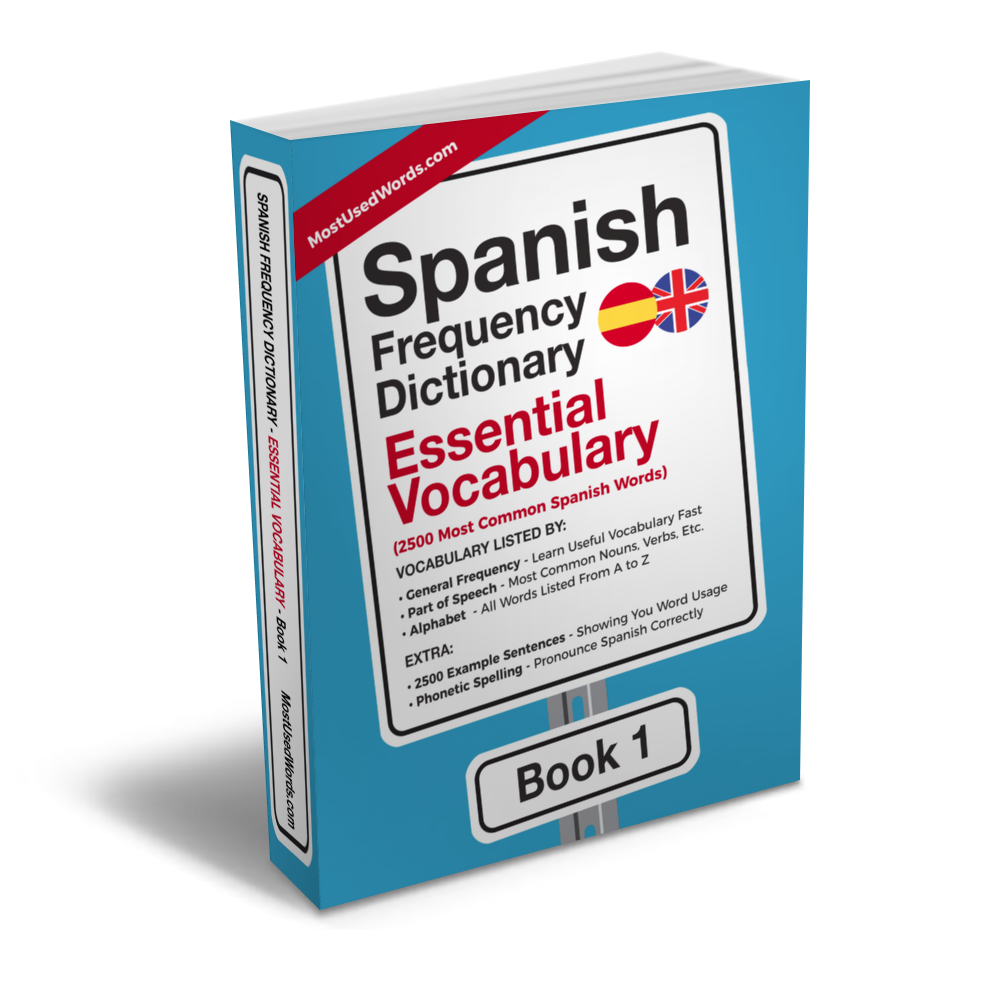
2,500 most common Spanish words with IPA pronunciation & bilingual example sentences
Uses of Ceder in Different Contexts
The verb ceder is commonly used to express yielding or conceding something. It can be applied in various situations such as giving up a position, allowing someone else to take the lead, or accepting an argument. For example:
- Cede el paso. (Yield the way.)
- No cedí ante la presión. (I did not yield under pressure.)
- El edificio cedió debido a los daños estructurales. (The building yielded due to structural damage.)
Comparison with Similar Verbs
Want to improve your Spanish?
The Spanish Frequency Dictionary series covers the 10,000 most common Spanish words — ranked by how often native speakers actually use them, with IPA pronunciation, English translations, and bilingual example sentences at every level.
Browse the full series →The verb ceder is similar in meaning to other verbs like 'ceder,' 'rendirse,' and 'conceder.' However, each has its unique nuances:
- Ceder: To yield or give way.
- Rendirse: To surrender or give up completely.
- Conceder: To grant permission or approval.
Forms of "Ceder" in Spanish
In Spanish, verbs play a fundamental role in expressing actions, states, and conditions. Verbs are highly versatile and can take on different forms based on the subject, mood, and tense. The moods of conjugation in Spanish include the indicative, subjunctive, and imperative. When it comes to tenses in Spanish, they indicate the time and duration of an action. Let us now explain how to conjugate 'ceder' in different tenses and moods.
Indicative Mood: Simple Tenses
- (Yo) cedo
- (Tú) cedes
- (Él/Ella/Usted) cede
- (Nosotros/Nosotras) cedemos
- (Vosotros/Vosotras) cedéis
- (Ellos/Ellas/Ustedes) ceden
Indicative Mood: Imperfect Past
- (Yo) cedía
- (Tú) cedías
- (Él/Ella/Usted) cedía
- (Nosotros/Nosotras) cedíamos
- (Vosotros/Vosotras) cedíais
- (Ellos/Ellas/Ustedes) cedían
Indicative Mood: Simple Past
- (Yo) cedí
- (Tú) cediste
- (Él/Ella/Usted) cedió
- (Nosotros/Nosotras) cedimos
- (Vosotros/Vosotras) cedisteis
- (Ellos/Ellas/Ustedes) cedieron
Indicative Mood: Future
- (Yo) cederé
- (Tú) cederás
- (Él/Ella/Usted) cederá
- (Nosotros/Nosotras) cederemos
- (Vosotros/Vosotras) cederéis
- (Ellos/Ellas/Ustedes) cederán
Indicative Mood: Perfect Tenses
- (Yo) he cedido
- (Tú) has cedido
- (Él/Ella/Usted) ha cedido
- (Nosotros/Nosotras) hemos cedido
- (Vosotros/Vosotras) habéis cedido
- (Ellos/Ellas/Ustedes) han cedido
Indicative Mood: Progressive Tenses (Thin Section)
- (Yo) estoy cediendo
- (Tú) estás cediendo
- (Él/Ella/Usted) está cediendo
- (Nosotros/Nosotras) estamos cediendo
- (Vosotros/Vosotras) estáis cediendo
- (Ellos/Ellas/Ustedes) están cediendo
Subjunctive Mood: Present Subjunctive
- (Yo) ceda
- (Tú) cedas
- (Él/Ella/Usted) ceda
- (Nosotros/Nosotras) cedamos
- (Vosotros/Vosotras) cedáis
- (Ellos/Ellas/Ustedes) cedan
Subjunctive Mood: Imperfect Subjunctive
- (Yo) cediera
- (Tú) cederas
- (Él/Ella/Usted) cediera
- (Nosotros/Nosotras) cediéramos
- (Vosotros/Vosotras) cediéseis
- (Ellos/Ellas/Ustedes) cedieran
Subjunctive Mood: Perfect Subjunctive
- (Yo) haya cedido
- (Tú) hayas cedido
- (Él/Ella/Usted) haya cedido
- (Nosotros/Nosotras) hayamos cedido
- (Vosotros/Vosotras) hayáis cedido
- (Ellos/Ellas/Ustedes) hayan cedido
Imperative Mood: Affirmative Imperatives
- Cede.
- Cedamos.
- Cedan.
Common Idiomatic Expressions Using 'Ceder'
The verb ceder is also used in several idiomatic expressions:
- No ceder a la tentación. (Do not give in to temptation.)
- Ceder el paso a los ancianos. (Yield the way to the elderly.)
- Ceder terreno en una discusión. (Give ground in an argument.)
Frequently Asked Questions
What does 'ceder' mean?
The verb ceder means to yield, give way, or concede. It can be used in various contexts where one needs to give up a position or accept an argument.
How do you conjugate 'ceder' in the present tense?
To conjugate 'ceder' in the present tense, use these forms:
- (Yo) cedo
- (Tú) cedes
- (Él/Ella/Usted) cede
- (Nosotros/Nosotras) cedemos
- (Vosotros/Vosotras) cedéis
- (Ellos/Ellas/Ustedes) ceden
Can 'ceder' be used in the subjunctive mood?
Yes, 'ceder' can be conjugated in the subjunctive mood. For example:
- (Yo) ceda
- (Tú) cedas
- (Él/Ella/Usted) ceda
- (Nosotros/Nosotras) cedamos
- (Vosotros/Vosotras) cedáis
- (Ellos/Ellas/Ustedes) cedan
Build Your Spanish Vocabulary Systematically
The fastest way to grow your Spanish vocabulary is to start with the words you'll actually encounter every day. The Spanish Frequency Dictionary covers the 2,500 most common Spanish words, each with IPA pronunciation, an English translation, and bilingual example sentences.
Browse the full range of Spanish frequency dictionaries to find the volume that matches your level.
