

A Guide to Understanding Spanish Reflexive Verbs - Most Used
Updated for 2026, mastering the use of reflexive verbs is a crucial step towards achieving fluency in Spanish. These verbs are used when the subject performs an action on themselves, making them essential for accurate communication.
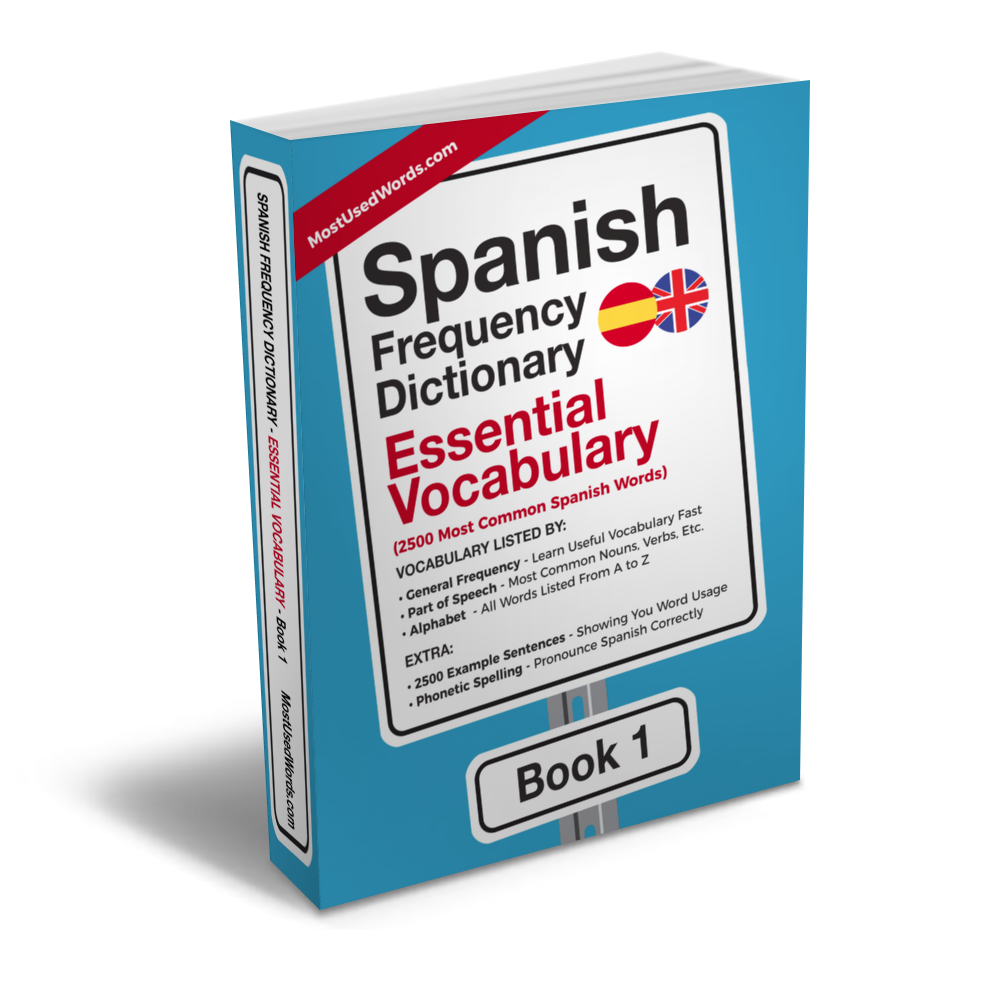
2,500 most common Spanish words with IPA pronunciation & bilingual example sentences
Understanding Reflexive Verbs
Reflexive verbs occur frequently in everyday conversations and mastering their usage can significantly enhance your language skills. However, they often pose challenges due to their unique characteristics and potential for misuse.
Examples of Reflexive Verbs in Context with Translations
Want to improve your Spanish?
The Spanish Frequency Dictionary series covers the 10,000 most common Spanish words — ranked by how often native speakers actually use them, with IPA pronunciation, English translations, and bilingual example sentences at every level.
Browse all 4 volumes →- Me baño: I take a bath (reflexive)
- Se cepilla los dientes: He brushes his teeth (reflexive)
- Nos vistemos: We get dressed (reflexive)
Types of Reflexive Verbs
In Spanish, there are several types of reflexive verbs:
- Verbs with similar non-reflexive meanings: Conocer (to know) vs. Conocerse (to get to know each other); Casar (to marry) vs. Casarse (to get married).
- Verbs with different non-reflexive meanings: Ir (to go) vs. Irsese (to leave); Levantar (to lift) vs. Levantarse (to wake up).
- Verbs only in reflexive form: Arrepentirse (to regret), Suicidarse (to commit suicide).
Common Mistakes with Reflexive Verbs and How to Avoid Them
A common mistake is confusing reflexive verbs with regular ones, especially when the meaning changes entirely in a reflexive form. For instance, while "ir" means “to go,” "irse" means “to leave.” Recognizing these distinctions is vital for clear communication.
Reflexive Pronouns in Spanish: A Guide
A reflexive verb is always accompanied by a reflexive pronoun, which can be the direct or indirect object of the sentence. Here’s a table detailing these pronouns:
| Singular | Plural | |
| 1st Person | Me (myself) | Nos (ourselves) |
| 2nd Person | Te (yourself, informal) | Os (yourselves, informal in Spain) |
| 3rd Person | Sé (himself/herself/itself/yourselves formal) | Sé (themselves/yourselves informal) |
Reflexive Verbs in Different Tenses and Common Idiomatic Expressions Using Reflexive Verbs
To fully master reflexive verbs, it’s important to understand how they function across various tenses. For example:
- Present tense: Me lavo las manos (I wash my hands).
- Future tense: Nos bañaremos mañana (We will bathe tomorrow).
Additionally, here are some common idiomatic expressions using reflexive verbs:
- Darse cuenta de algo: To realize something.
- Hacerse cargo de algo: To take charge of something.
- No hacerse problema: Not to make a fuss about it.
Build Your Spanish Vocabulary Systematically
The fastest way to grow your Spanish vocabulary is to start with the words you'll actually encounter every day. The Spanish Frequency Dictionary covers the 2,500 most common Spanish words, each with IPA pronunciation, an English translation, and bilingual example sentences.
Browse the full range of Spanish frequency dictionaries to find the volume that matches your level.
Improve Your Spanish with a Frequency Dictionary (Updated 2026)
Research consistently shows that mastering the top 1,000–3,000 most common words unlocks comprehension of 80–95% of everyday text and conversation. Our Spanish Frequency Dictionary series is built around this principle: curated frequency-ranked word lists, bilingual example sentences in context, phonetic pronunciation, and part-of-speech data — covering A1 through C2 levels.