

How to Say You're Welcome in German - MostUsedWords.com
Updated for 2026, learning how to say "you’re welcome" in German is essential for polite communication.
In German, the most common way to express gratitude or acknowledgment after someone thanks you is by saying Bitte schön. This phrase translates directly as “please beautiful” and carries a sense of politeness and warmth. Here’s how to use it effectively:
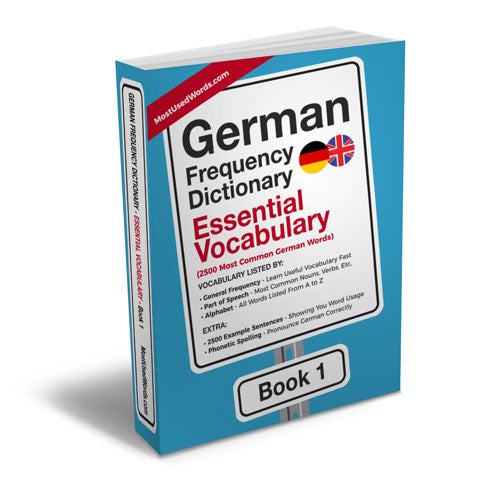
2,500 most common German words with IPA pronunciation & bilingual example sentences
Bitte schön [ˈbɪtə ʃøːn] - You’re Welcome
The standard response when someone thanks you in German is Bitte schön. This phrase can be used formally or informally, making it versatile for various situations. Pronounced as “bee-te shoen,” this expression conveys a sense of gratitude and politeness.
Variations of "You’re Welcome" in German:
Want to improve your German?
The German Frequency Dictionary series covers the 10,000 most common German words — ranked by how often native speakers actually use them, with IPA pronunciation, English translations, and bilingual example sentences at every level.
Browse all 4 volumes →In addition to Bitte schön, there are other ways to express you're welcome in German, such as:
- Gern geschehen [ɡɛɐ̯ ˈɡeʃçən] - You’re Welcome (literally "I'm happy it happened")
- Keine Ursache [kəni ˈuːʁzakə] - Don't Mention It (literally "No Cause")
- Nichts zu danken [nɪçts tsu danɡən] - No Need to Thank Me
Using "You’re Welcome" in Different Contexts:
The phrase Bitte schön can be used not only as a response to thanks but also as an offer or invitation. For example, when passing dishes at the table, you might say “Möchten Sie bitte?” (Would you like please?) followed by “Bitte schön.” This usage adds a layer of politeness and warmth to social interactions.
Pronunciation Guide:
To ensure clarity when speaking German, here are the pronunciations for some common phrases:
- Bitte Schön [ˈbɪtə ʃøːn]
- Gern Geschehen [ɡɛɐ̯ ˈɡeʃçən]
- Keine Ursache [kəni ˈuːʁzakə]
- Nichts zu danken [nɪçts tsu danɡən]
Related Articles
- How to Say I Love You in German | MostUsedWords.com
- How to Say Good Night in German - Gute Nacht Pronunciation a
Build Your German Vocabulary Systematically
The fastest way to grow your German vocabulary is to start with the words you'll actually encounter every day. The German Frequency Dictionary covers the 2,500 most common German words, each with IPA pronunciation, an English translation, and bilingual example sentences.
Browse the full range of German frequency dictionaries to find the volume that matches your level.