

How to Say Stop in German - Halt and Stopp Explained
Knowing how to say "stop" in German is crucial for effective communication, whether you're asking someone to pause during a conversation or reading traffic signs.
How Do You Say Stop in German
In many situations, the word "stop" translates to either Halt or Stopp. The choice between these terms depends on context and formality.
Stop! As a Command
Want to improve your German?
The German Frequency Dictionary series covers the 10,000 most common German words — ranked by how often native speakers actually use them, with IPA pronunciation, English translations, and bilingual example sentences at every level.
Browse all 4 volumes →The interjection Halt!, pronounced [halt], is commonly used to command someone to cease an action. Here are some examples:
- Halt! Hier können Sie nicht durch. – Stop! You can’t pass here.
- Georg, halt, es ist doch wichtig! – George, stop, this is important!
In formal situations or historical contexts, such as World War II movies, you might hear Halt, oder ich schieße. (Stop, or I will shoot!) This usage underscores the command's authority and urgency. Additionally, in casual settings like telling someone to stop doing something, you can use "Hör auf!" which literally means "stop" but is more commonly used for ongoing actions.
Halt vs. Stopp; What Is the Difference?
The colloquial term Stopp, pronounced [ʃtɔp], is another way to say "stop." It’s an imperative form of the verb stoppen. Here are some examples:
- Stopp, hier ist kein Platz mehr! – Stop, there isn’t any room left.
- Halt, stopp, nicht bewegen! – Stop, wait, don’t move! (You can use both for emphasis.)
- Er hätte es stoppen können. – He could have stopped it.
The choice between Halt and Stopp often depends on the speaker's preference or regional dialect, reflecting cultural nuances in language use. In other Germanic languages like Dutch (stoppen) and Swedish (stanna), similar verbs exist with slightly different connotations.
Cultural Nuances of 'Halt'
In Southern Germany and Austria, Halt can also mean "just" or "well," as in:
- Die Prüfung ist halt zu schwer. – The exam is just too difficult.
- So ist das halt im Leben. – Well, that’s life.
This informal usage adds a layer of cultural understanding to the word's versatility. However, it's crucial to recognize its different meanings depending on context.
Different Contexts for 'Stop' in German
In sports, traffic signs, and formal situations, the usage of "stop" can vary. For instance:
- Sport: Halt! – Stop! (Used by referees)
- Traffic Signs: Halt! or Stopp – Stop sign (depending on region and formality)
- Formal Situations: Halt! – Stop! (used in commands, like security checks)
Understanding these contexts helps you use the correct term effectively. Additionally, common phrases that include "stop" such as "Hör auf damit!" (Stop doing that!) are essential for everyday conversations.
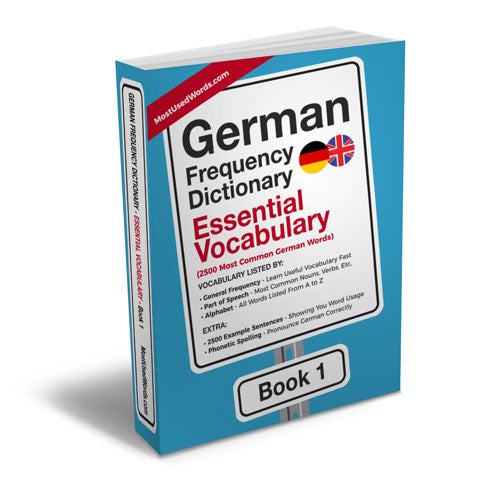
2,500 most common German words with IPA pronunciation & bilingual example sentences
Build Your German Vocabulary Systematically
The fastest way to grow your German vocabulary is to start with the words you'll actually encounter every day. The German Frequency Dictionary covers the 2,500 most common German words, each with IPA pronunciation, an English translation, and bilingual example sentences.
Browse the full range of German frequency dictionaries to find the volume that matches your level.
Improve Your German with a Frequency Dictionary (Updated 2026)
Research consistently shows that mastering the top 1,000–3,000 most common words unlocks comprehension of 80–95% of everyday text and conversation. Our German Frequency Dictionary series is built around this principle: curated frequency-ranked word lists, bilingual example sentences in context, phonetic pronunciation, and part-of-speech data — covering A1 through C2 levels.