

How to Say Stay in German - Most Used Words
The most common way to express “stay” in German is through the verb bleiben. This versatile word can be used in various contexts, from formal situations to everyday conversations.
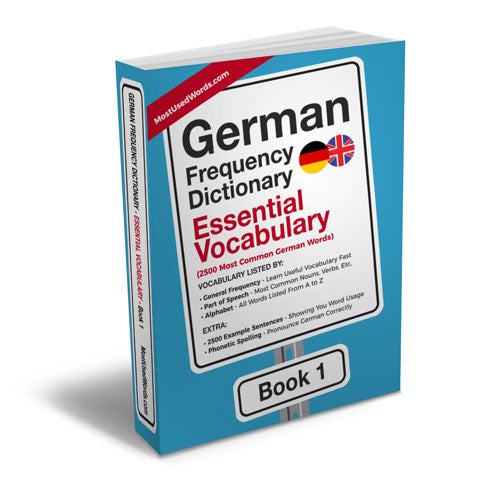
2,500 most common German words with IPA pronunciation & bilingual example sentences
How Do You Say Stay in German?
In German, the primary translation for "stay" is the verb bleiben, which means both “to stay” and “to remain.” This versatile word can be used in a wide range of scenarios.
Usage Scenarios for 'Bleiben'
Want to improve your German?
The German Frequency Dictionary series covers the 10,000 most common German words — ranked by how often native speakers actually use them, with IPA pronunciation, English translations, and bilingual example sentences at every level.
Browse all 4 volumes →The verb bleiben is commonly used to express staying at a place, continuing an action, or not changing one's mind. Here are some examples:
- To remain – Viele Schüler bleiben nach der Schule für sportliche Betätigungen. – A lot of pupils stay after school for sports activities.
- To continue – Es wird auch in der Zukunft so bleiben. – It will continue to be the case in the future, as well.
- To not change (e.g., your mind or decision) – Ich bleibe bei meiner Meinung. – I will stick with my opinion.
Pronunciation Guide for 'Bleiben'
The pronunciation of bleiben is [ˈblaɪ̯bən]. It has irregular past forms: blieb – geblieben, and the auxiliary verb used with it is sein.
Comparison with Other Languages
In English, “stay” can be translated as either "bleiben" or other verbs depending on the context. For instance, when talking about staying at a place for accommodation, you might use different words like wohnen. In contrast to this, in French, the verb "rester" is often used similarly to German's "bleiben."
Cultural Context Around Staying in Germany
In German culture, the concept of staying can vary depending on whether you are referring to a temporary visit or a long-term residence. For instance:
- Temporary Stay: If you're visiting for a short period, such as during tourism or business trips, Germans often use “bleiben” in this context.
- Long-Term Residence: For longer stays, especially when living somewhere temporarily as a visitor, the verb wohnen is more appropriate. The pronunciation of wohnen is [ˈvɔnən].
Additional Verbs for Staying in German
In addition to "bleiben," there are other verbs that can be used depending on the context:
- To live (in a place): The verb wohnen, pronounced [ˈvɔnən], is commonly used when talking about living in a specific location.
- To reside: The verb leben, pronounced [ˈlɛbn̩], can also be used to express residing or dwelling somewhere. However, it's less common than "wohnen" for temporary stays.
Build Your German Vocabulary Systematically
The fastest way to grow your German vocabulary is to start with the words you'll actually encounter every day. The German Frequency Dictionary covers the 2,500 most common German words, each with IPA pronunciation, an English translation, and bilingual example sentences.
Browse the full range of German frequency dictionaries to find the volume that matches your level.