
How to Say Please in German - Master Bitte and More Polite P
The word “please” translates to bitte in German, a versatile term used in various contexts to express politeness and courtesy.
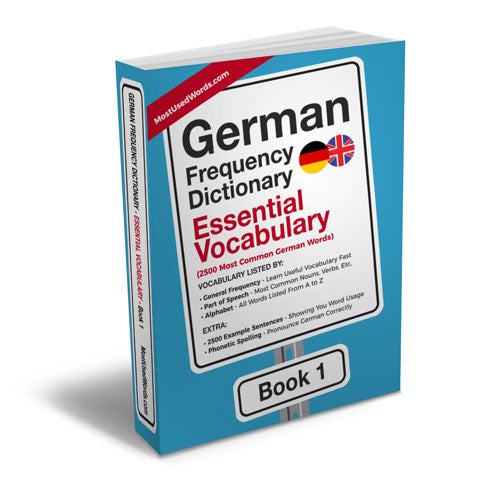
2,500 most common German words with IPA pronunciation & bilingual example sentences
Pronunciation and Usage of Bitte
Bitte, pronounced [ˈbɪtə] (IPA), is the most common translation for “please” in German. It can be used in multiple scenarios:
- To request something: Die Rechnung, bitte (Check, please) when dining out.
- To encourage someone: Herein bitte (Please come in).
- In agreement: Respond with "Bitte" to convey permission for a request like "Darf ich das Fenster aufmachen?" ("May I open the window?").
- To ask for clarification: (Wie) bitte?, meaning "Pardon me?" or "Could you repeat that please?"
Bitte in Written Communication and Formal Emails
Want to improve your German?
The German Frequency Dictionary series covers the 10,000 most common German words — ranked by how often native speakers actually use them, with IPA pronunciation, English translations, and bilingual example sentences at every level.
Browse all 4 volumes →In formal emails, using bitte is essential for maintaining a polite tone. For instance:
- Betreff: Bitte um Rückmeldung zu unserer Anfrage (Subject: Requesting a response to our inquiry)
- Ich möchte Sie bitten, uns die benötigten Informationen zu übermitteln. (I would like to kindly ask you to provide us with the necessary information.)
Common Phrases Accompanying Bitte
To enhance politeness and clarity:
- Schnell bitte: Please quickly.
- Sehr gerne, bitte: With pleasure, please.
- Bitteschön, meaning “you’re welcome,” is often used in formal settings. However, the Duden dictionary recommends writing it as two separate words unless it's a noun (das Bitteschön).
Cultural Context and Etiquette of Bitte
The use of bitte varies based on the level of politeness required in different situations. Understanding these nuances is crucial for effective communication:
- In formal settings, using bitte shows respect and courtesy.
- In informal contexts among friends or family, it can be used more casually without losing its meaning of politeness.
Please in German Polite Form
To express a higher level of politeness:
- Ich bitte Sie: I kindly ask you (used for formal requests).
- Können Sie mir bitte helfen?: Could you please help me?
Common Mistakes When Using Bitte
Misusing bitte can sometimes lead to misunderstandings:
- Sarcastic use might not convey the intended message clearly in all contexts.
- Omitting it in formal situations may come across as rude or abrupt.
Alternative Phrases for Emphasis
To emphasize politeness or enthusiasm:
- Gern geschehen: You're welcome (used more casually).
- Haben Sie bitte Verständnis für...: Please understand that...
Build Your German Vocabulary Systematically
The fastest way to grow your German vocabulary is to start with the words you'll actually encounter every day. The German Frequency Dictionary covers the 2,500 most common German words, each with IPA pronunciation, an English translation, and bilingual example sentences.
Browse the full range of German frequency dictionaries to find the volume that matches your level.
Improve Your German with a Frequency Dictionary (Updated 2026)
Research consistently shows that mastering the top 1,000–3,000 most common words unlocks comprehension of 80–95% of everyday text and conversation. Our German Frequency Dictionary series is built around this principle: curated frequency-ranked word lists, bilingual example sentences in context, phonetic pronunciation, and part-of-speech data — covering A1 through C2 levels.