

How to Say Dog in German and More Animal Names
The word for "dog" in German is (der) Hund, pronounced [hʊnt]. This article will guide you through the vocabulary related to dogs in German, including how to say other animals and useful dog-related idioms.
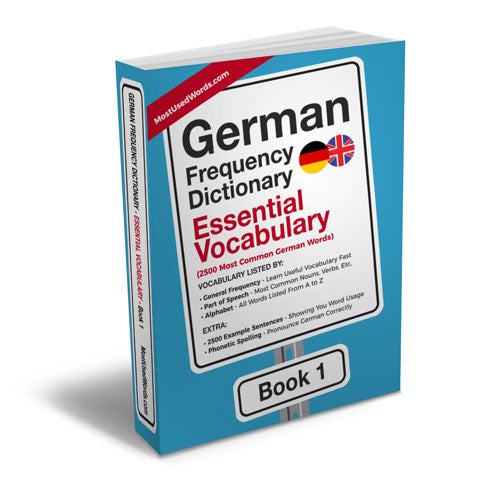
2,500 most common German words with IPA pronunciation & bilingual example sentences
How Do You Say Dog in German?
The word for "dog" in German is (der) Hund, pronounced [hʊnt]. The plural form of "dogs" is Hunde.
Vocabulary Related to Dogs and Other Animals
Want to improve your German?
The German Frequency Dictionary series covers the 10,000 most common German words — ranked by how often native speakers actually use them, with IPA pronunciation, English translations, and bilingual example sentences at every level.
Browse all 4 volumes →German dog owners often use phrases like braver Hund, which means a well-behaved dog, to praise their pets.
Dog Commands in German
It’s not uncommon for English-speaking owners to train their dogs using German commands. Here are some common ones:
- Sitz! – Sit! (Pronounced [ˈzɪts])
- Platz! – Place! (Pronounced [plats])
- Bleib! – Stay! (Pronounced [blaip])
- Steh! – Stand! (Pronounced [ʃteː])
- Aus! – Drop it! (Pronounced [aʊs])
- Bring! – Fetch! (Pronounced [bʁɪŋ])
More Examples and Context for Dog Commands
To better understand these commands, here are some examples:
- If you want your dog to sit down, simply say Sitz!
- To ask your dog to stay in one place, use the command Bleib!
Names of Dog Breeds in German
The majority of police dogs are German shepherds. In German, they are called deutscher Schäferhund (singular) or deutsche Schäferhunde (plural).
Dachshunds and Schnauzers in German
The name Dachshund is of German origin, meaning "badger dog." Germans sometimes call dachshunds Dackel. The same goes for Schnauzer (der Schnauzer).
Cultural Significance of Dogs in Germany
In Germany, dogs are not just pets but often considered part of the family. They play a significant role in German culture and daily life.
How to Ask About Dog Ownership or Care in German
If you're interested in asking about dog ownership or care in German, here are some useful phrases:
- Haben Sie einen Hund? – Do you have a dog?
- Können Sie mir etwas über den Hundevertrag erzählen? – Can you tell me something about the pet contract?
Dog-Related Idioms and Expressions in German
German has several idiomatic expressions involving dogs. For example, Hundert Jahre! means "a hundred years!" (used to express disbelief or exaggeration).
More Examples of Dog-Related Sentences
- Der Hund bellt nicht immer umsonst. – The dog doesn’t bark for nothing. (Meaning: There’s a reason behind every action.)
- Ich bin wie ein Hund in der Wüste. – I’m like a dog in the desert. (Meaning: Extremely thirsty or hungry)
German Words for Pets and Other Animals
In addition to "dog," here are some other common animal names:
- Katze – Cat
- Huhn – Chicken
- Fisch – Fish
- Pferd – Horse

Build Your German Vocabulary Systematically
The fastest way to grow your German vocabulary is to start with the words you'll actually encounter every day. The German Frequency Dictionary covers the 2,500 most common German words, each with IPA pronunciation, an English translation, and bilingual example sentences.
Browse the full range of German frequency dictionaries to find the volume that matches your level.
Improve Your German with a Frequency Dictionary (Updated 2026)
Research consistently shows that mastering the top 1,000–3,000 most common words unlocks comprehension of 80–95% of everyday text and conversation. Our German Frequency Dictionary series is built around this principle: curated frequency-ranked word lists, bilingual example sentences in context, phonetic pronunciation, and part-of-speech data — covering A1 through C2 levels.
Mary
Please add some female names too. And names for cute little lap dogs.